

Art Deco Interior Design: How to Get the Look Right
5 min read
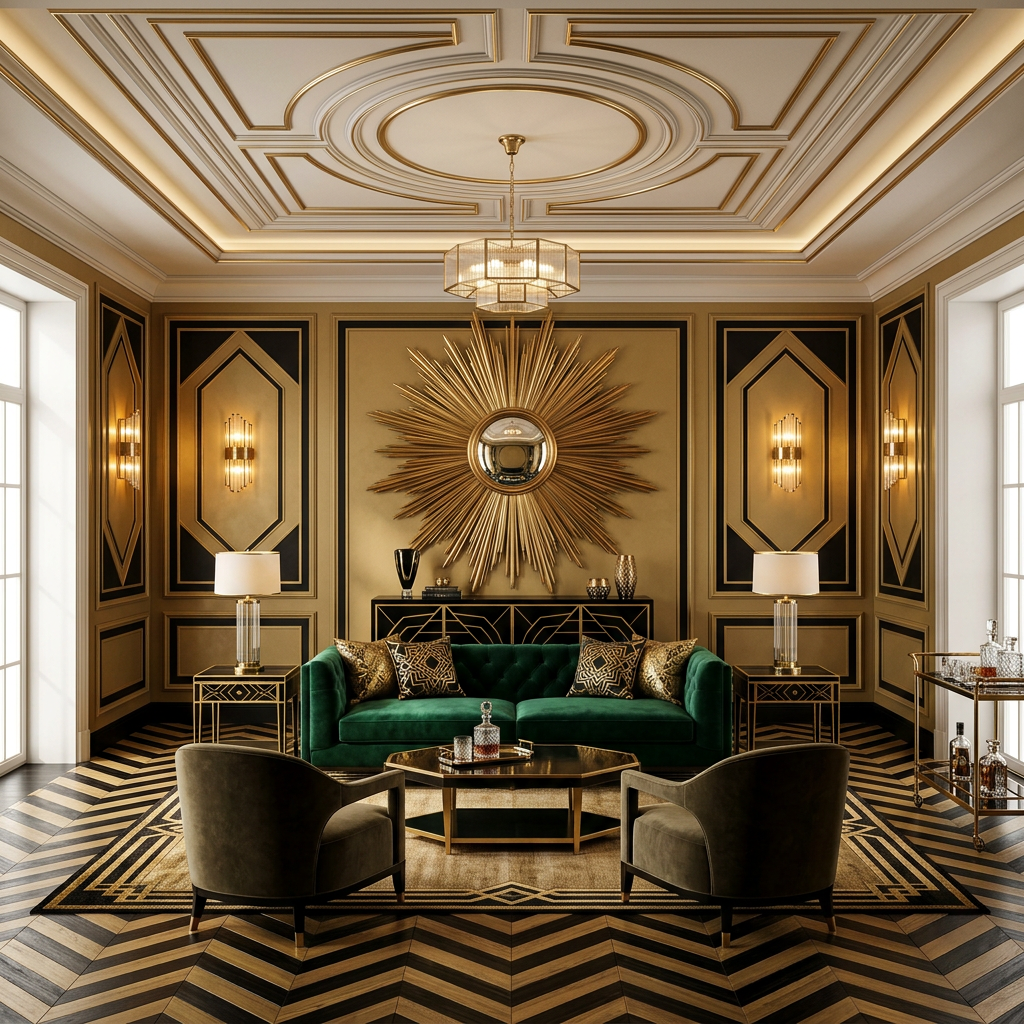
Art deco is one of the most recognizable design styles in the world — and one of the most frequently misunderstood. The combination of bold geometry, rich materials, and unapologetic glamour makes it immediately compelling. But the line between art deco done well and art deco that feels like a themed hotel lobby is narrower than most people think.
The style originated in 1920s Paris and reached its peak in the 1930s, influencing everything from architecture and furniture to jewelry and film. Today it's experiencing a significant revival — and the designers doing it best aren't copying the past. They're translating its principles into contemporary spaces that feel both timeless and genuinely current.
At Interior Design Awards (IDA), art deco submissions consistently earn strong community votes. Here's what separates the ones that work from the ones that don't.
Art deco is built on geometry. Chevrons, sunbursts, stepped forms, zigzags, fan shapes, and strong symmetrical compositions — these are the visual vocabulary of the style. Before thinking about materials or color, a successful art deco interior needs to establish geometric rhythm.
This shows up in every element: the pattern of the floor, the shape of mirrors and light fixtures, the profile of moldings, the silhouette of furniture. In the best art deco rooms, geometry repeats and echoes across scales — the large chevron pattern on the floor relates to the smaller one on a cushion, which relates to the inlaid detail on a side table.
The geometric logic is what gives art deco rooms their sense of visual cohesion. Without it, you have expensive materials arranged without a unifying principle. With it, even a restrained space reads immediately as art deco.
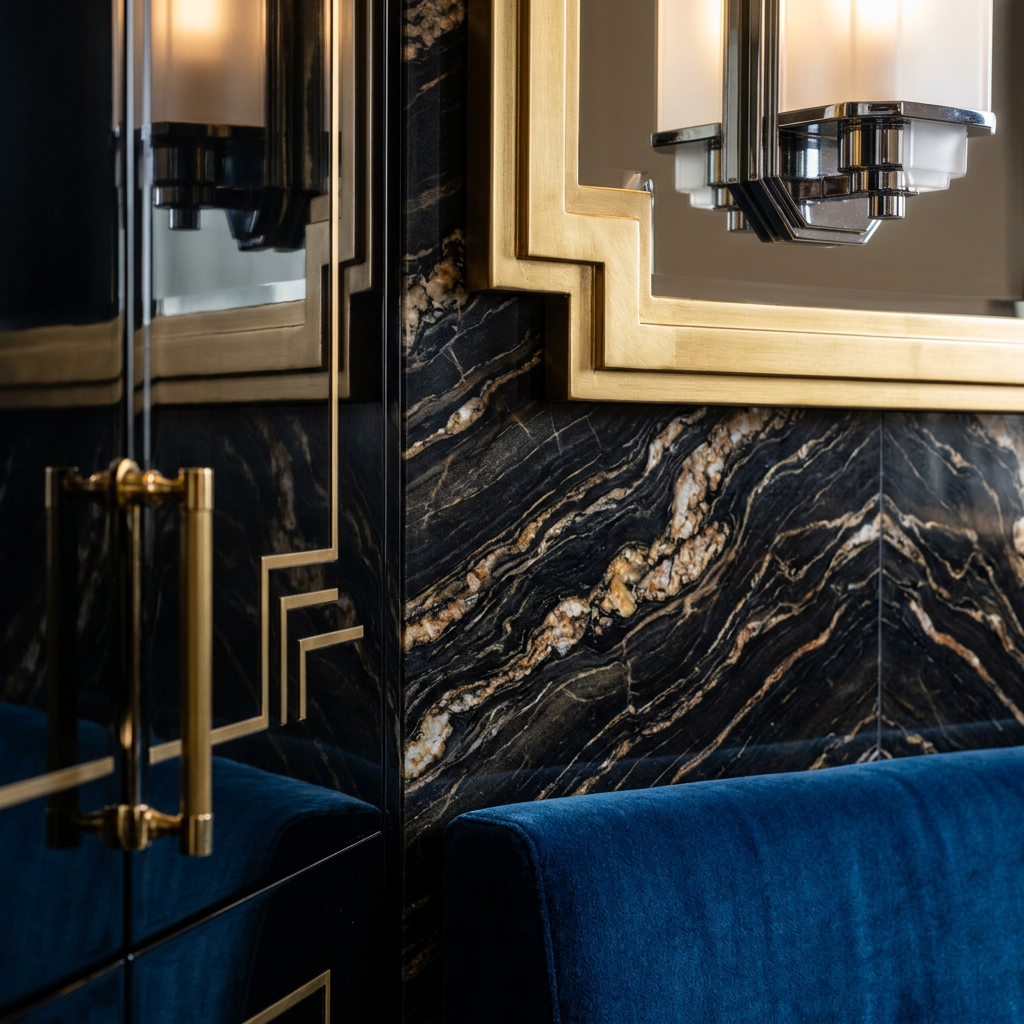
Art deco celebrates material luxury in a way that few other styles match. The palette is built on contrast: dark lacquered surfaces against polished brass, black marble against gilded details, deep jewel tones against chrome and mirror.
The key materials of the style: lacquered wood in black, dark walnut, or ebony; polished brass and gold-toned metals; black and gold-veined marble; mirror glass; velvet in deep jewel tones — emerald, sapphire, burgundy, deep teal; chrome details; frosted glass.
What makes these materials work together is contrast and polish. Art deco rooms gleam. Surfaces are reflective, finishes are luxurious, and the interplay of light across different materials creates visual depth and movement. A matte, understated surface can exist in an art deco room, but only to set off something more reflective beside it.
IDA designers who execute art deco successfully always start with the material palette and get the contrasts right before anything else.
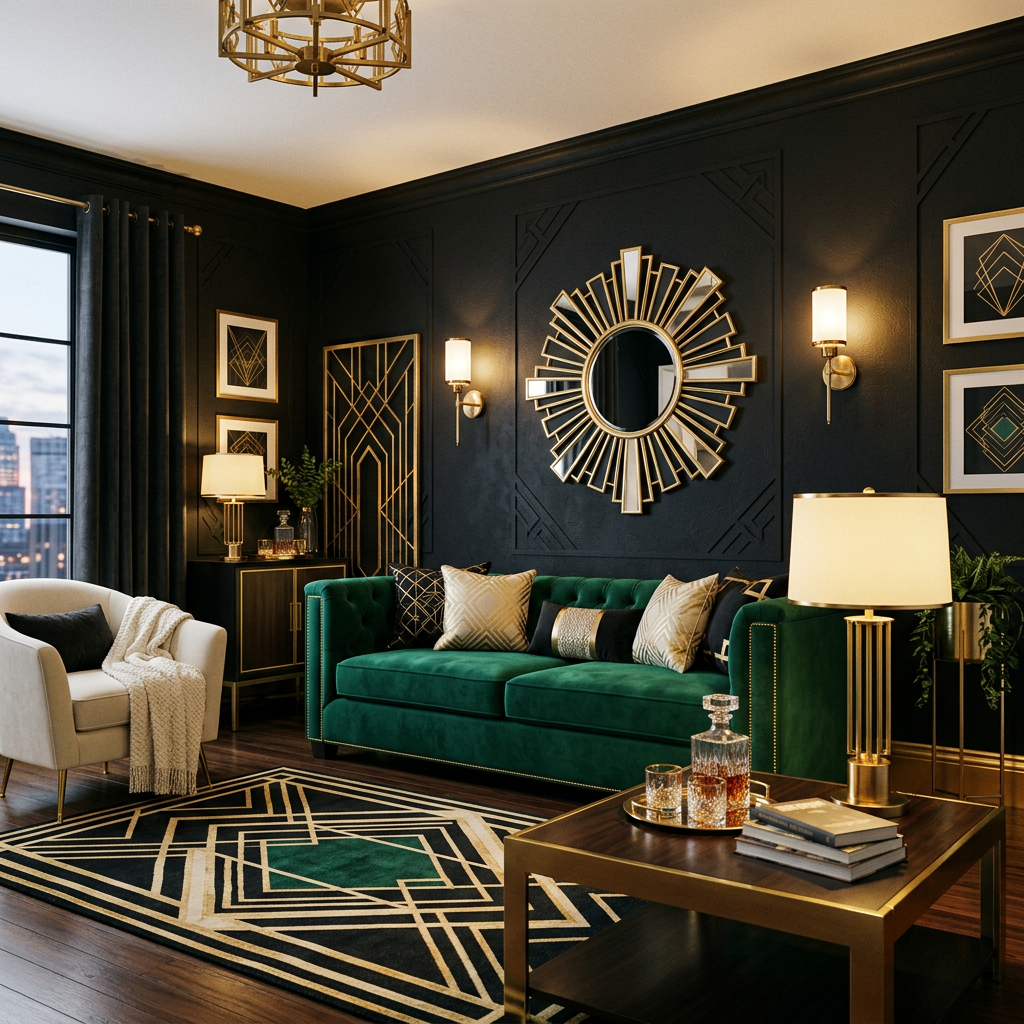
Art deco color is dramatic but never chaotic. The palette operates within a clear hierarchy: a dominant dark or neutral tone, a metallic accent, and one or two jewel-toned accents. Everything is deliberate.
The classic combinations: black and gold, navy and brass, emerald and chrome, burgundy and gilded bronze. These pairings create the contrast and visual richness that defines the style. Pastels and muted natural tones don't belong in art deco — the style has no interest in understatement.
The mistake most people make is adding too many colors. Art deco looks best when the palette is ruthlessly edited: pick one jewel tone and let the metallics and darks do the heavy lifting. Three colors maximum, with the metallic threading through everything.
In IDA submissions, the art deco rooms that score highest maintain this discipline. One strong jewel tone against dark walls and gold metal — repeated and varied, not multiplied.
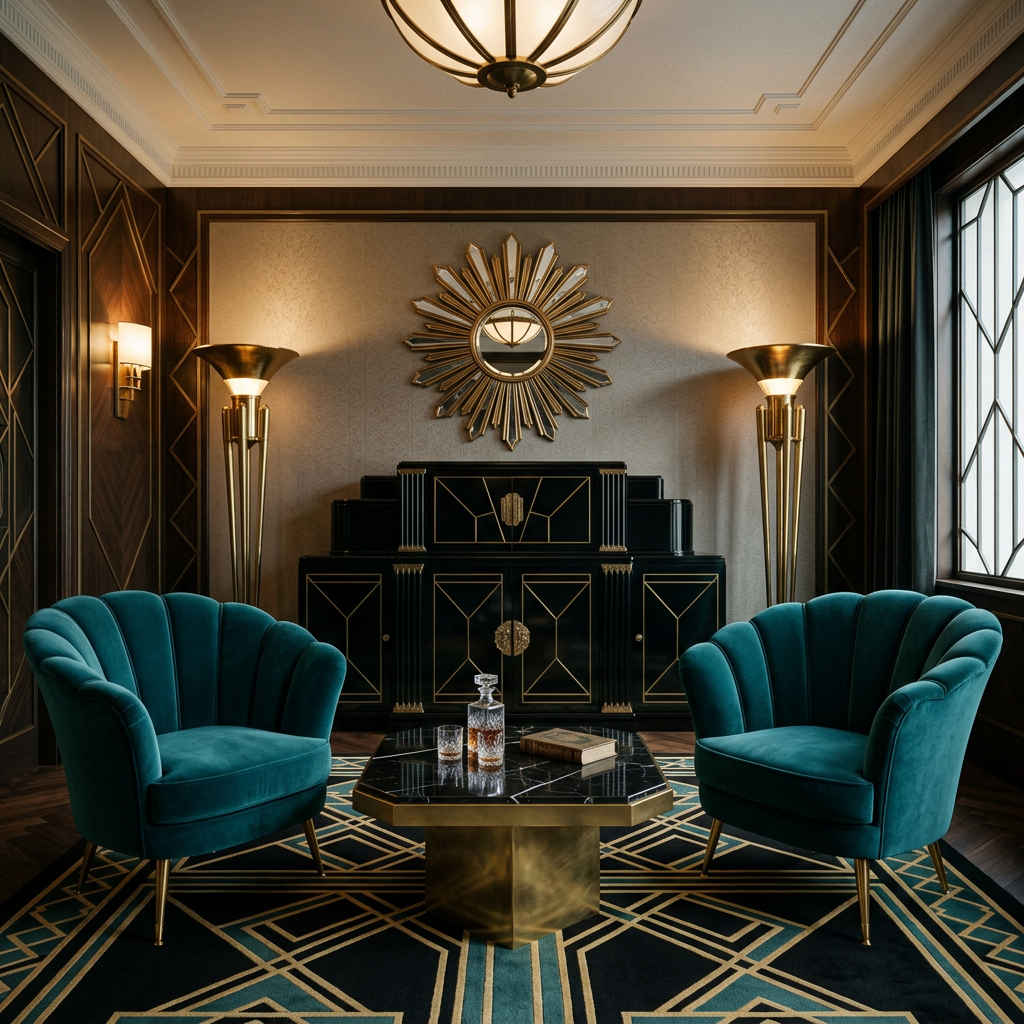
Art deco furniture has an unmistakable silhouette. Stepped profiles, fan-shaped backs, strong geometric bases, architectural proportions — these pieces look like they were designed at the same time as the Chrysler Building, because they were.
The furniture is substantial and sculptural. Art deco chairs and sofas have presence — they're upholstered in rich velvets with clearly defined shapes, not organic or casual. Case pieces like credenzas and wardrobes use stepped profiles, geometric inlay, and strong hardware to make storage look monumental.
Symmetry is essential. Art deco rooms are arranged formally — pairs of chairs flanking a sofa, matching lamps on either side of a headboard, mirror-image arrangements wherever possible. This symmetry reinforces the geometric logic of the style and gives rooms their sense of controlled grandeur.
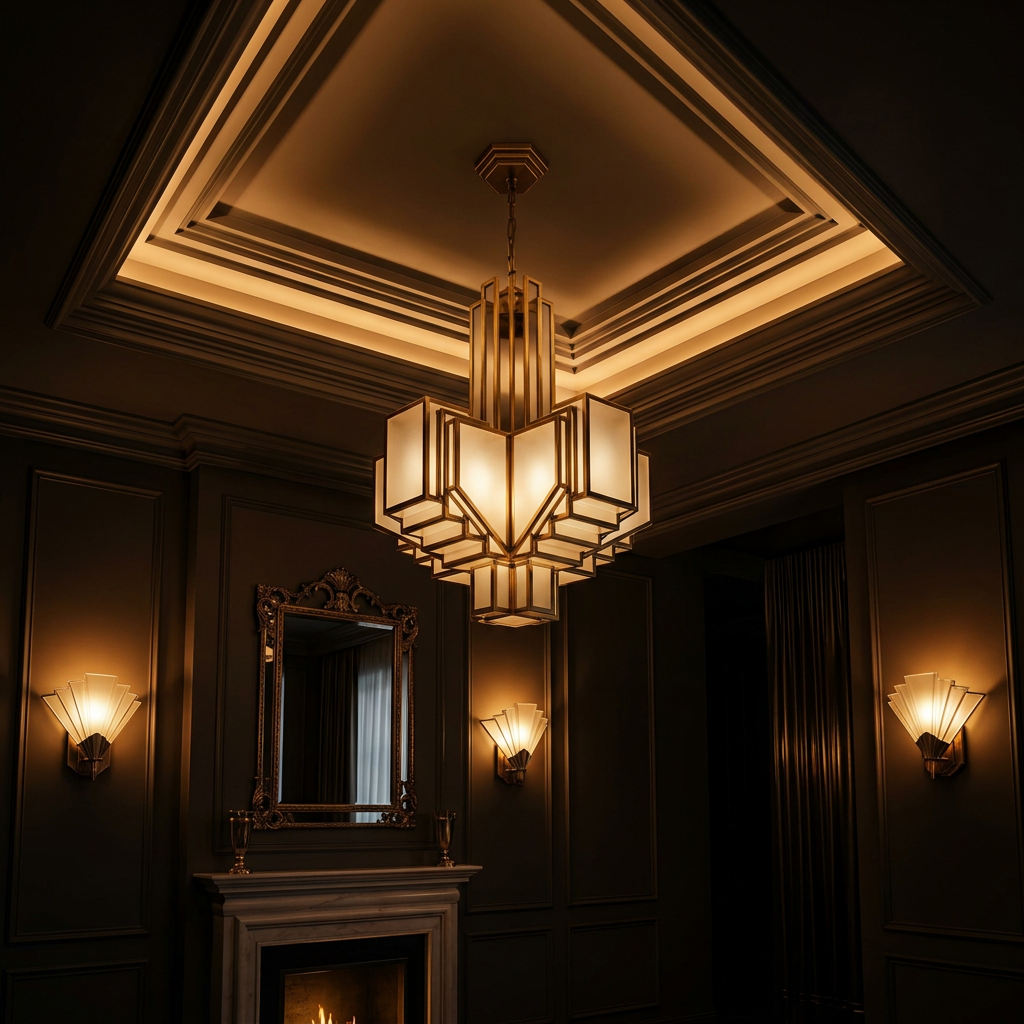
In art deco design, lighting is never an afterthought. The style's original practitioners understood that light transforms architecture — and they designed fixtures to be as sculptural and significant as any piece of furniture.
Art deco light fixtures are bold, geometric, and made of materials that hold their own against the richness of everything else in the room. Brass and frosted glass. Chrome with geometric cut crystal. Fan-shaped wall sconces. Stepped torchieres. Chandeliers with concentric geometric forms.
The lighting scheme itself should create drama: pools of warm light from side sources, with ceiling lighting used sparingly or integrated into architectural coffers. Art deco rooms are theatrical — the light should feel like it's setting a scene, not illuminating an office.
This is one of the most common places where attempted art deco interiors fail. Generic pendant lights or recessed downlights in an otherwise art deco room immediately break the spell. Get the fixtures right and the room holds together. Get them wrong and nothing else compensates.
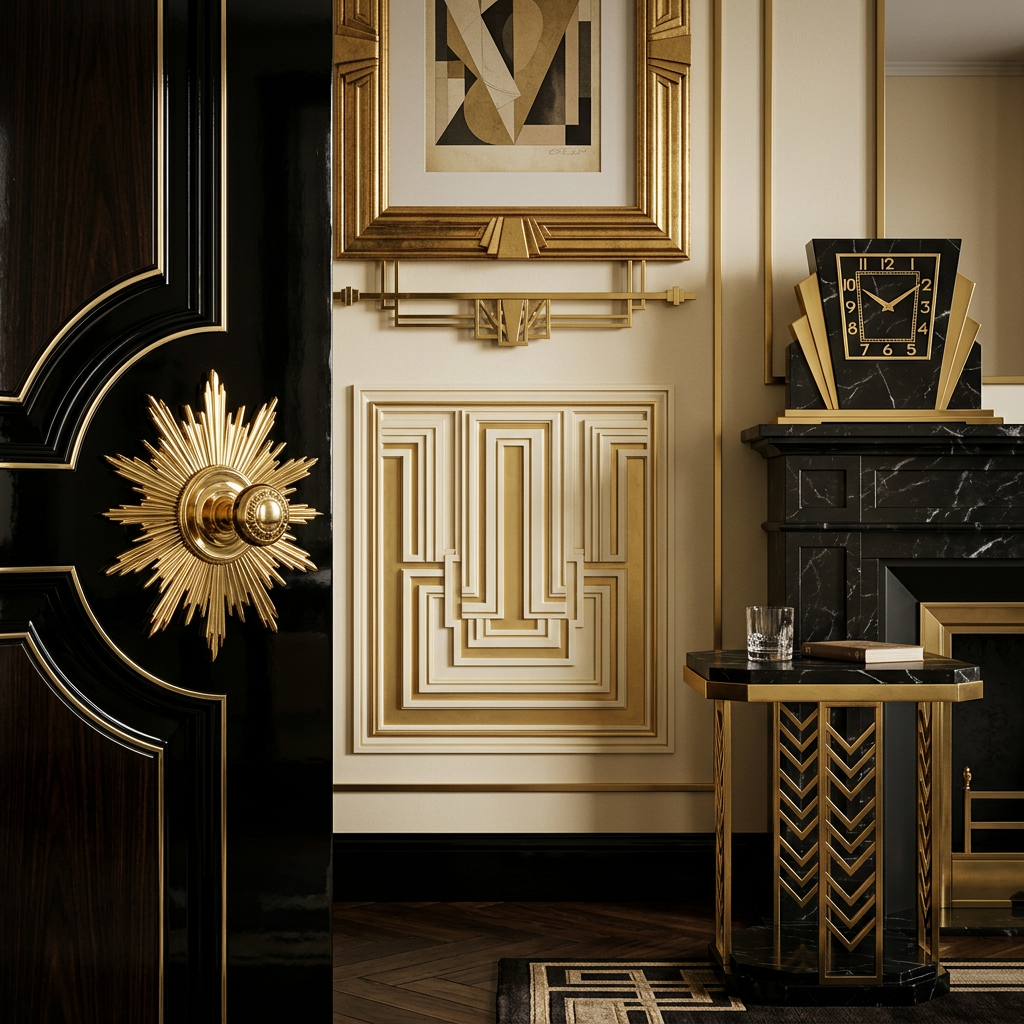
Art deco is a style that rewards close attention. The broad strokes — geometry, rich materials, jewel tones — create the framework. The details are what make a room genuinely exceptional.
Look at original art deco interiors from the 1920s and 1930s and the craftsmanship in the details is extraordinary: inlaid geometric patterns in wood and metal, raised plasterwork in stepped and fan motifs, door hardware that functions as sculpture, light switch plates that echo the geometry of the ceiling moldings.
Contemporary art deco doesn't need to replicate every historical detail, but it does need some element of that intentionality. Geometric brass door hardware instead of standard brushed nickel. A picture rail at the correct height with frames that relate to each other. A small decorative object — a clock, a vase, a sculptural piece — that speaks the same formal language as the furniture.
The IDA community responds to this quality in art deco submissions consistently. Rooms where the detail layer is considered — where the small things hold up to scrutiny — earn significantly higher votes than rooms with the right broad strokes but generic details.
Art deco has survived a century because its principles are genuinely strong: geometry gives visual coherence, rich materials create sensory pleasure, bold color and contrast generate drama, and symmetry produces calm. These aren't period curiosities — they're enduring design truths.
The art deco revival happening now isn't nostalgic. The designers doing it best are using the style's logic to create spaces that feel confident and considered — places that push back against the beige minimalism that dominated the previous decade and assert that design can be bold without being chaotic.
The IDA community votes reflect this. In a feed full of neutral spaces and organic shapes, a well-executed art deco submission stops the scroll.
Every month, designers submit their best interior projects across 17 categories on Interior Design Awards. The community votes, and the top 3 earn recognition and cash rewards.
Browse art deco submissions and see what the community is voting for — or submit your own bold space.
→ Browse this month's projects
→ Submit your design and compete
Interior Design Awards (IDA) is a platform where designers share room projects, the community votes monthly, and the top designers earn recognition and rewards. Based in the US, open to designers worldwide.