

Farmhouse Bathroom Design: How to Get the Look Right
5 min read
Farmhouse style is one of the most requested looks in American residential design — and the bathroom is where it's hardest to execute well. Kitchens and living rooms have room to layer wood and texture. Bathrooms are smaller, wetter, and full of hard surfaces that need to function first and look good second.
The farmhouse bathrooms that actually work don't just add a few barn-style accessories to a standard bathroom. They build the look from the materials up — and they understand which farmhouse details are functional heritage and which ones are just decoration.
At Interior Design Awards (IDA), farmhouse and modern farmhouse bathroom submissions consistently score well with the community. Here's what the designers behind the best ones are doing.
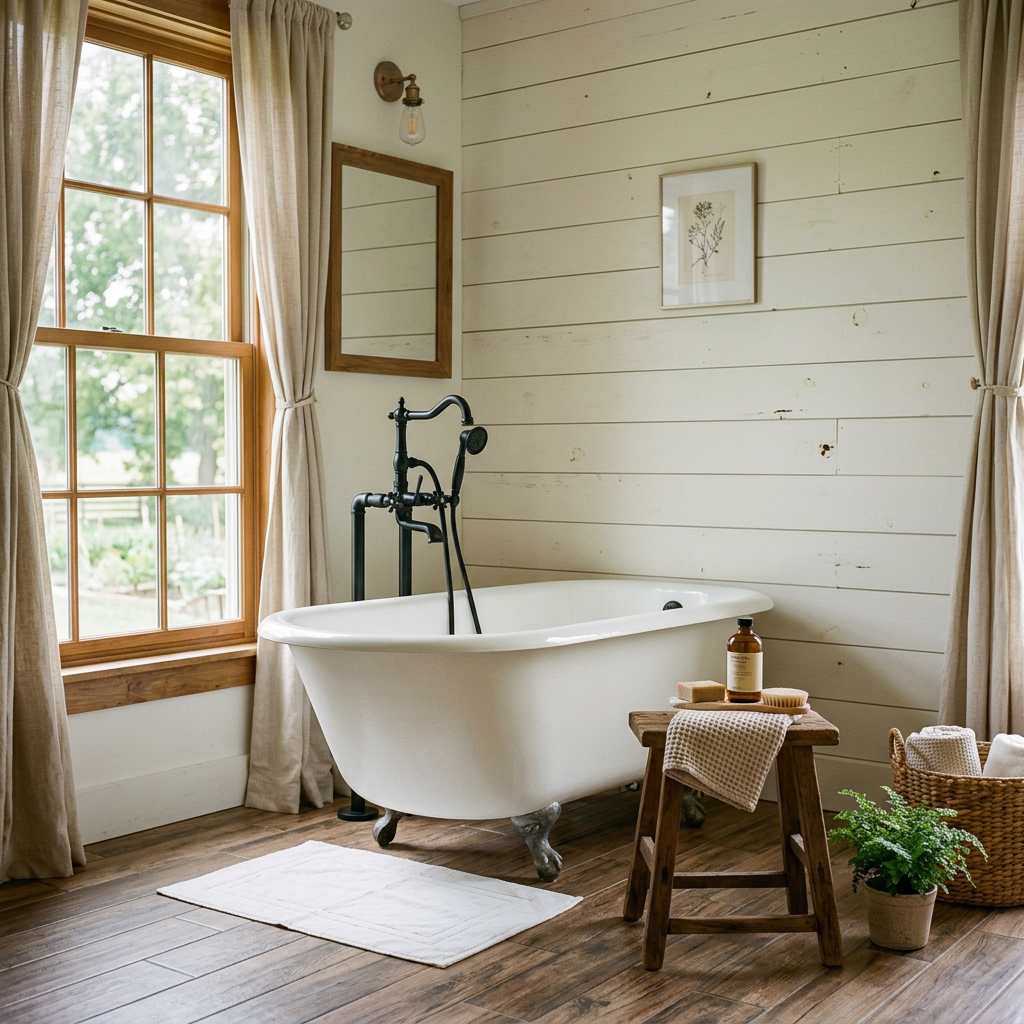
The centerpiece of a great farmhouse bathroom is almost always the tub or the sink — and it needs to read as substantial and slightly old-fashioned, even if it was installed last month.
A freestanding clawfoot or slipper tub is the classic choice. Its rounded, slightly old-world silhouette immediately signals farmhouse heritage in a way no boxy built-in tub can. For sinks, a trough-style or apron-front basin — the kind that looks like it was repurposed from a working farm sink — does the same job for the vanity area.
The detail that makes this work: exposed plumbing. A floor-mounted tub filler with visible matte black pipe, or a wall-mounted faucet with an exposed trap under the sink, reads as authentic in a way that fully concealed modern plumbing doesn't. Farmhouse style has always shown its bones rather than hiding them.
The IDA bathrooms that score highest in this category almost always lead with one of these two fixtures as the visual anchor of the room.
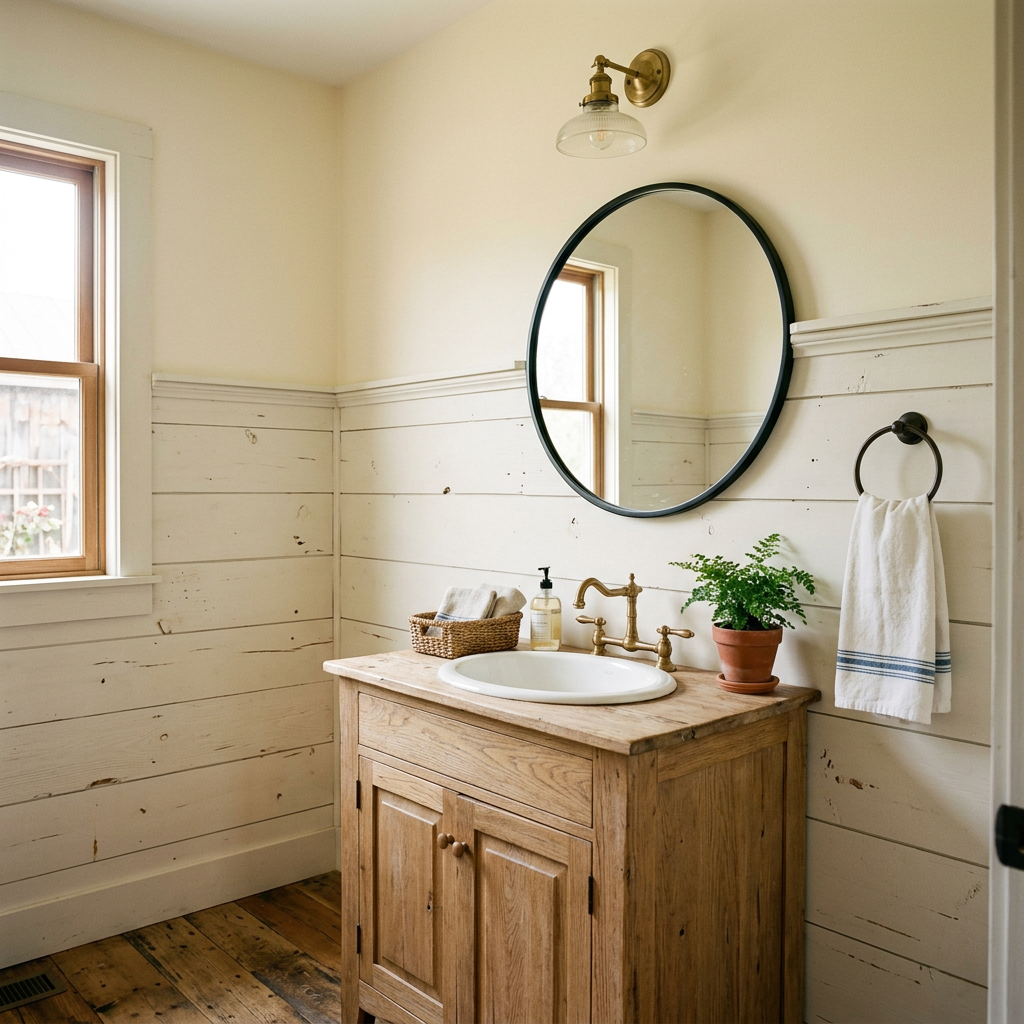
Shiplap is the single most recognizable signature of farmhouse design, and it's also the easiest element to overdo. Used well, it grounds a bathroom in warmth and texture. Used everywhere, it starts to feel like a theme rather than a style.
The most successful approach: shiplap on one wall, or up to chair-rail height around the room, with a painted wall above. This gives the texture and warmth shiplap provides without turning the entire bathroom into wood paneling. White or warm off-white paint on the shiplap keeps the room feeling bright despite a small footprint — important in a room that's often windowless or small.
Real wood shiplap is ideal, but PVC or MDF versions with the same plank profile work in wet areas where moisture resistance matters, as long as the finish and proportions are correct — boards roughly 6-8 inches wide, with visible gaps between planks.
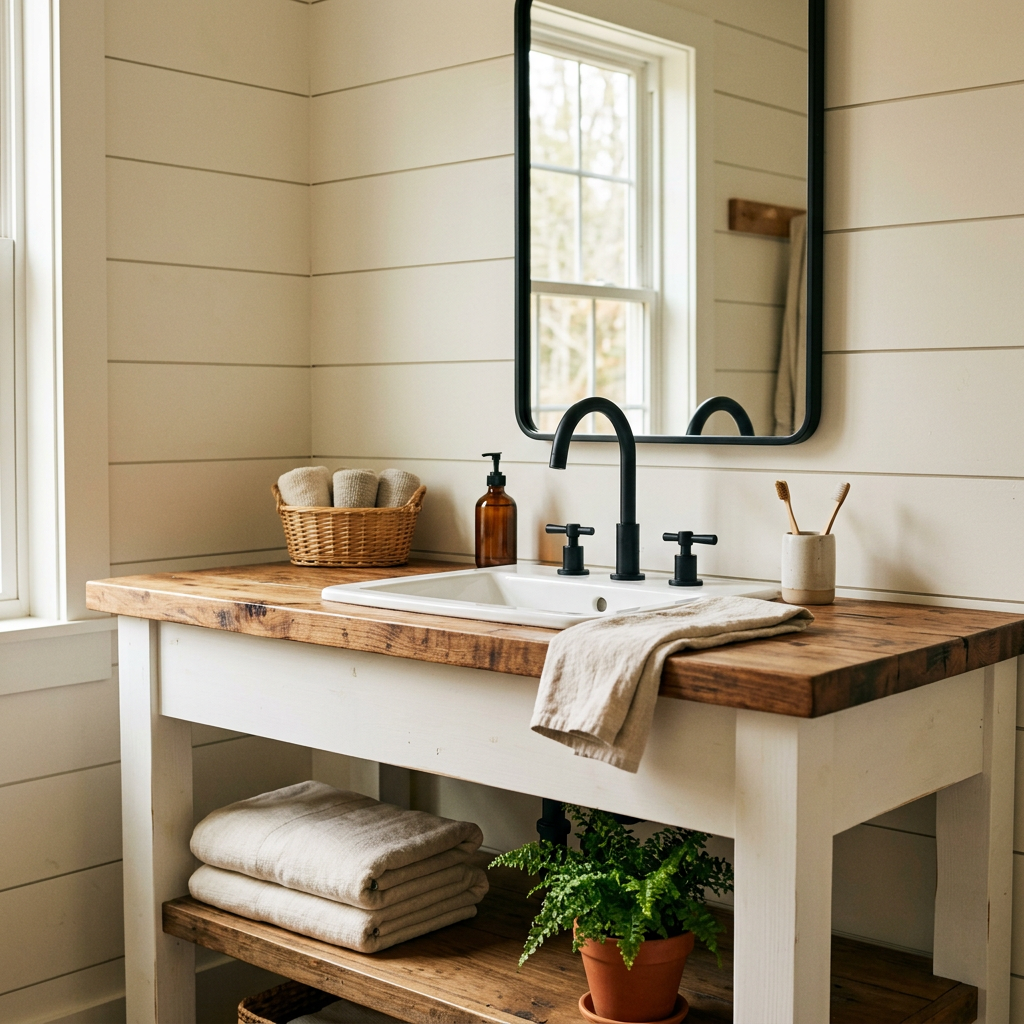
The hardware finish you choose does more to set the tone of a farmhouse bathroom than almost any other decision. Matte black has become the defining metal finish for the style, and for good reason — it reads as substantial, slightly industrial in an old-barn-hardware way, and it photographs beautifully against warm white surfaces.
Cross-handle faucets, exposed black hinges, black-framed mirrors, black sconces — using the same dark matte finish consistently across all the hardware in the room creates visual cohesion. Mixing chrome, brass, and black in a small bathroom makes the space feel disorganized; picking one dark finish and using it everywhere makes even a modest farmhouse bathroom feel curated.
Butcher block or wood-look countertops paired with black fixtures complete the look — warm wood tones and black metal is one of the most reliable farmhouse pairings, in bathrooms and kitchens alike.
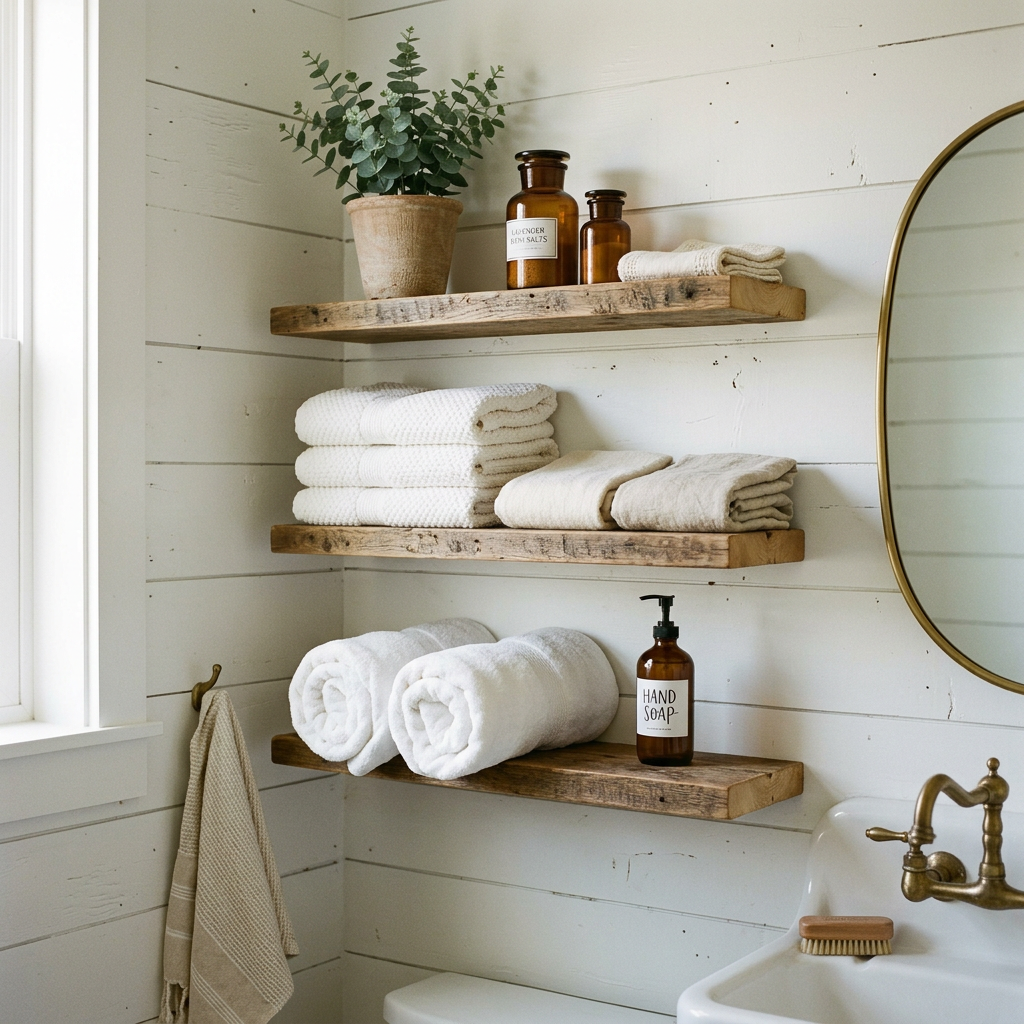
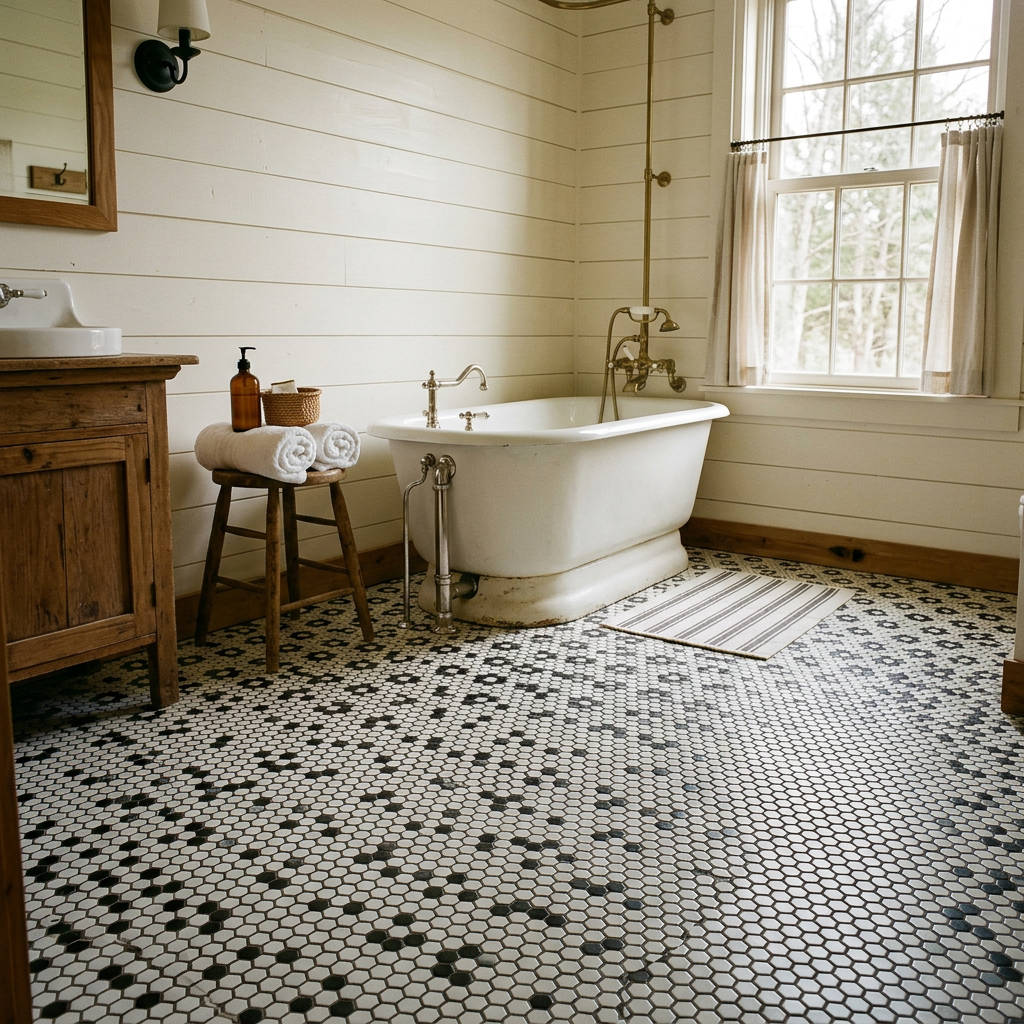
If shiplap and open shelving create the warmth in a farmhouse bathroom, patterned tile creates the vintage character. Small-format hexagon or penny round tile, typically in black and white or two contrasting neutrals, references the bathrooms of early-20th-century farmhouses without feeling like a costume.
The key is restraint. Patterned tile works best on the floor only, with plain walls above — shiplap, painted plaster, or simple subway tile. Patterned tile on both floor and walls overwhelms a small room and starts to feel busy rather than charming.
Subway tile, when used, should be installed with the classic offset brick pattern rather than a stacked modern layout, and finished with a contrasting dark grout for definition — another small detail that separates an authentic farmhouse bathroom from a generic white-tiled one.
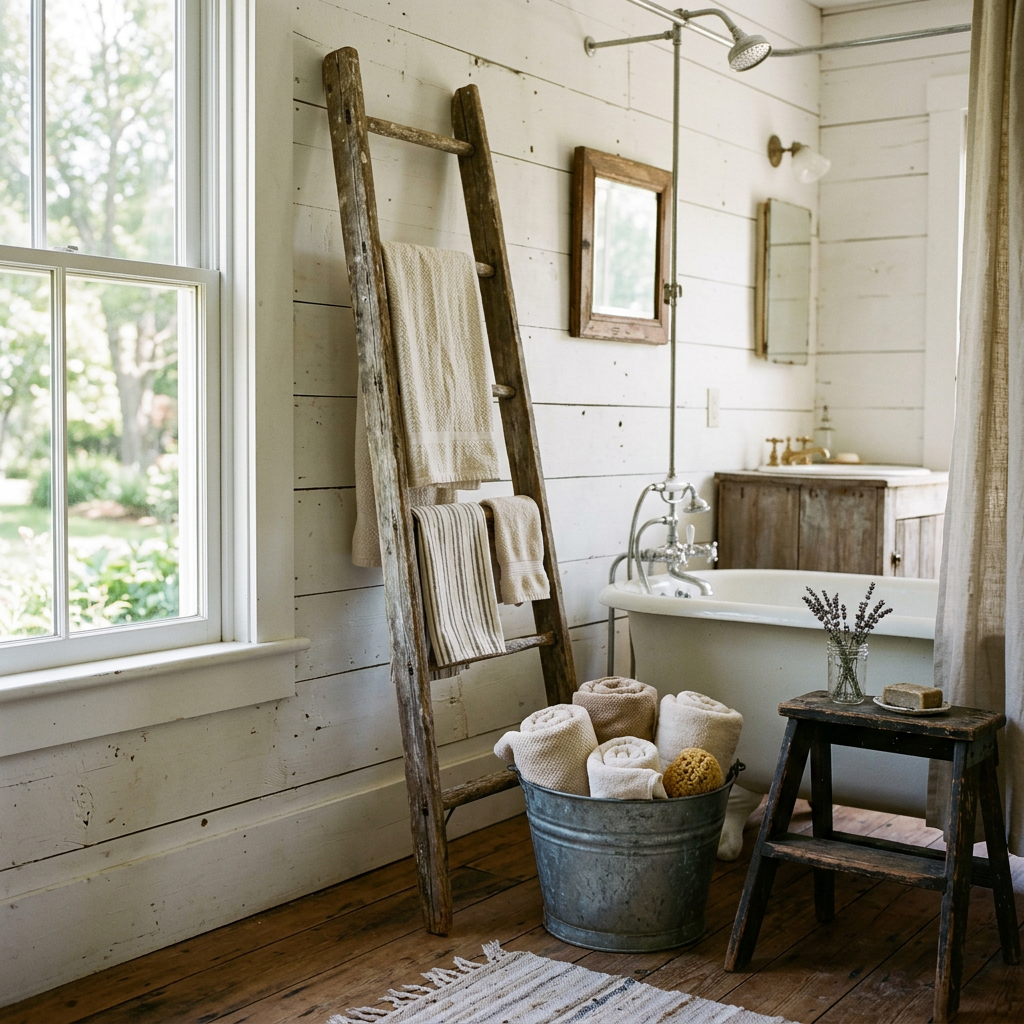
The same principle that applies to farmhouse bedrooms applies here: one genuinely vintage or reclaimed object does more for authenticity than ten items from a "farmhouse decor" aisle.
A small wooden ladder leaned against the wall and used to hang towels. A galvanized metal bucket or wash basin repurposed to hold rolled towels. An old wooden step stool tucked beside the tub. These objects carry a sense of having a history, even a fabricated one, and that quality is what separates farmhouse style from farmhouse-themed decoration.
In IDA bathroom submissions, this detail consistently distinguishes the highest-voted farmhouse projects from competent but generic ones. It's a small, inexpensive addition with a disproportionate visual payoff.
The line is the same one that applies across every farmhouse room: real materials, functional details shown rather than hidden, and at least one object that looks like it has a story.
A farmhouse bathroom built from a single big-box "farmhouse collection" — matching faucet, matching mirror, matching shelf, all purchased together — will look coordinated but flat. A farmhouse bathroom built material by material, with one freestanding tub, one shiplap wall, one open shelf styled with intention, and one object that feels found rather than bought, will look like it belongs in the house.
The IDA community votes confirm this pattern consistently across every farmhouse submission category.
Every month, designers submit their best bathroom projects on Interior Design Awards. The community votes, and the top 3 earn recognition and cash rewards.
→ Browse this month's bathroom submissions
→ Submit your farmhouse bathroom design
Interior Design Awards (IDA) is a platform where designers share room projects, the community votes monthly, and the top designers earn recognition and rewards. Based in the US, open to designers worldwide.