

Interior Design Ideas for a Cozy Home: What Actually Works
6 min read
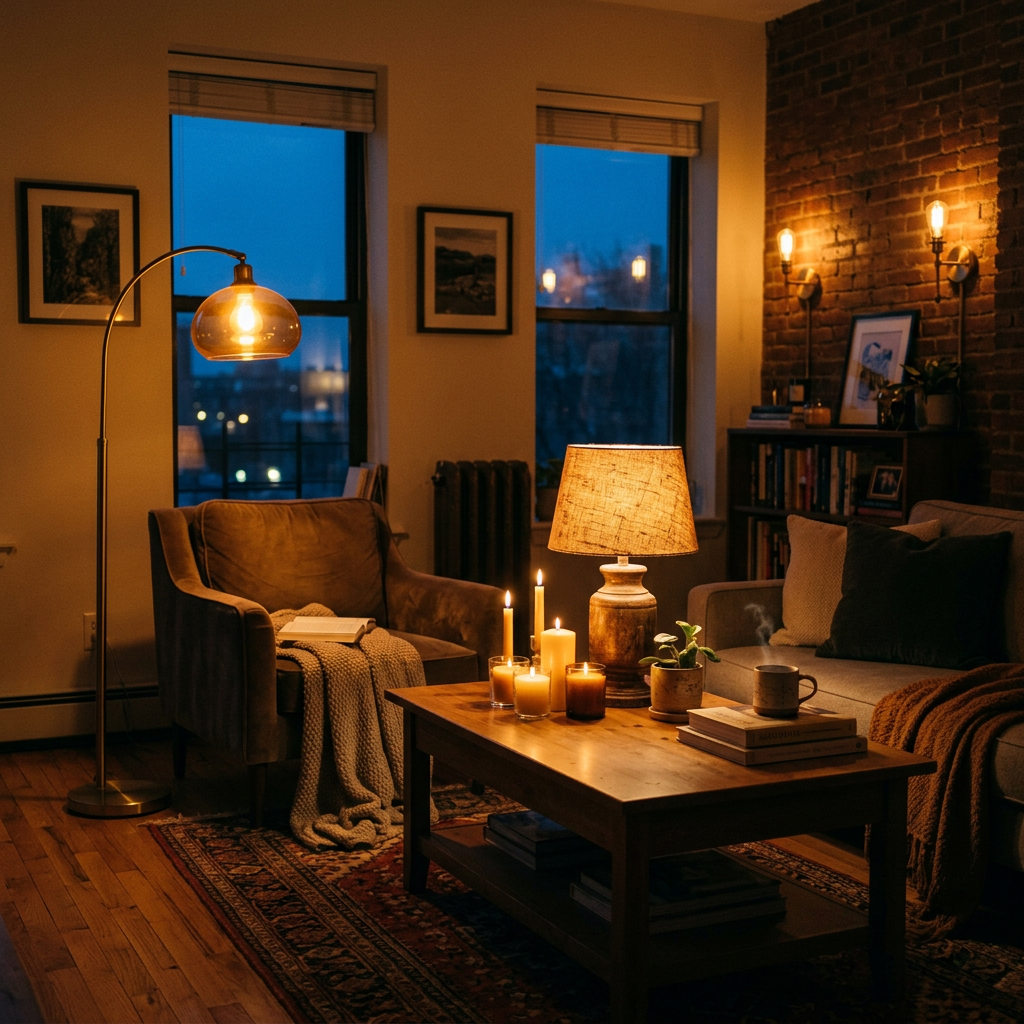
There's a difference between a home that looks cozy in photos and one that actually feels cozy when you're in it. The first is about staging. The second is about design decisions — materials, light, scale, and the relationship between spaces.
At Interior Design Awards (IDA), we see hundreds of room submissions every month. The projects that consistently earn the highest community votes aren't always the most expensive or the most dramatic. They're the ones that feel warm, human, and lived-in. Here's what the designers behind those spaces are actually doing.
The fastest way to make any room feel cold is a single overhead light. The fastest way to make it feel cozy is to turn that light off and replace it with three smaller ones at different heights.
Cozy lighting means layering: a floor lamp in one corner, a table lamp on a side table, maybe a wall sconce or candles on a shelf. The goal is pools of warm light rather than uniform brightness. Color temperature matters too — anything above 3000K starts to feel clinical. Stay at 2700K or below for living rooms and bedrooms.
The most-voted IDA projects in the Living Room and Bedroom categories consistently use this approach. Designers who understand light don't fight it — they shape it.
Quick fix: Replace one overhead bulb with a dimmer and add a single floor lamp. The room will feel 30% cozier for under $50.
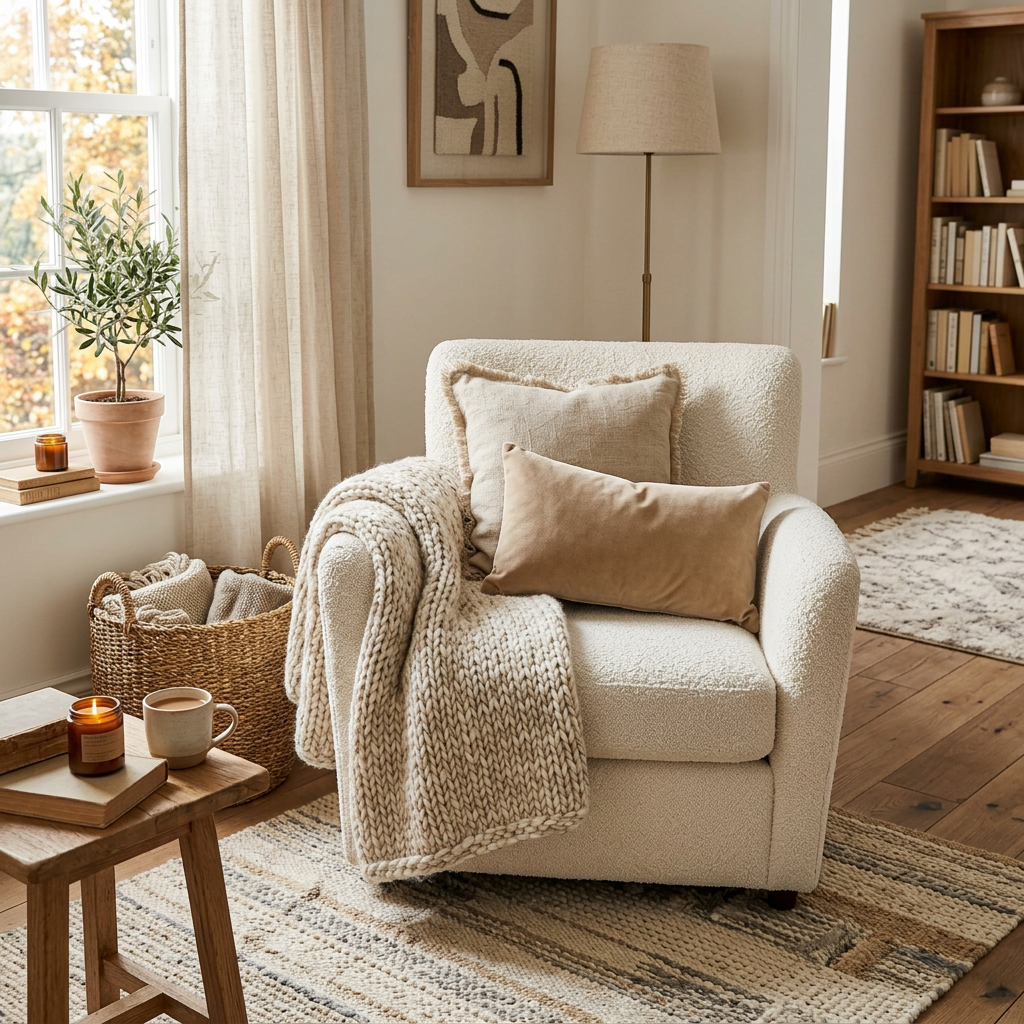
People often think coziness is about color — warm beiges, terracottas, deep greens. Color helps, but texture does more work.
A room with flat surfaces in warm tones can still feel empty. A room with a chunky knit throw over a linen sofa, a woven jute rug underfoot, and a boucle armchair in the corner feels cozy even in a cool palette.
The principle: every surface the eye lands on should have some variation — grain, weave, pile, roughness. Wood instead of laminate. Linen instead of polyester. Unsealed stone instead of polished tile. These aren't always more expensive choices, but they create a tactile richness that photographs can't fully capture but that a person in the room feels immediately.
In IDA submissions, the Living Room and Bedroom projects with the highest engagement almost always feature at least four distinct textures in the same frame.
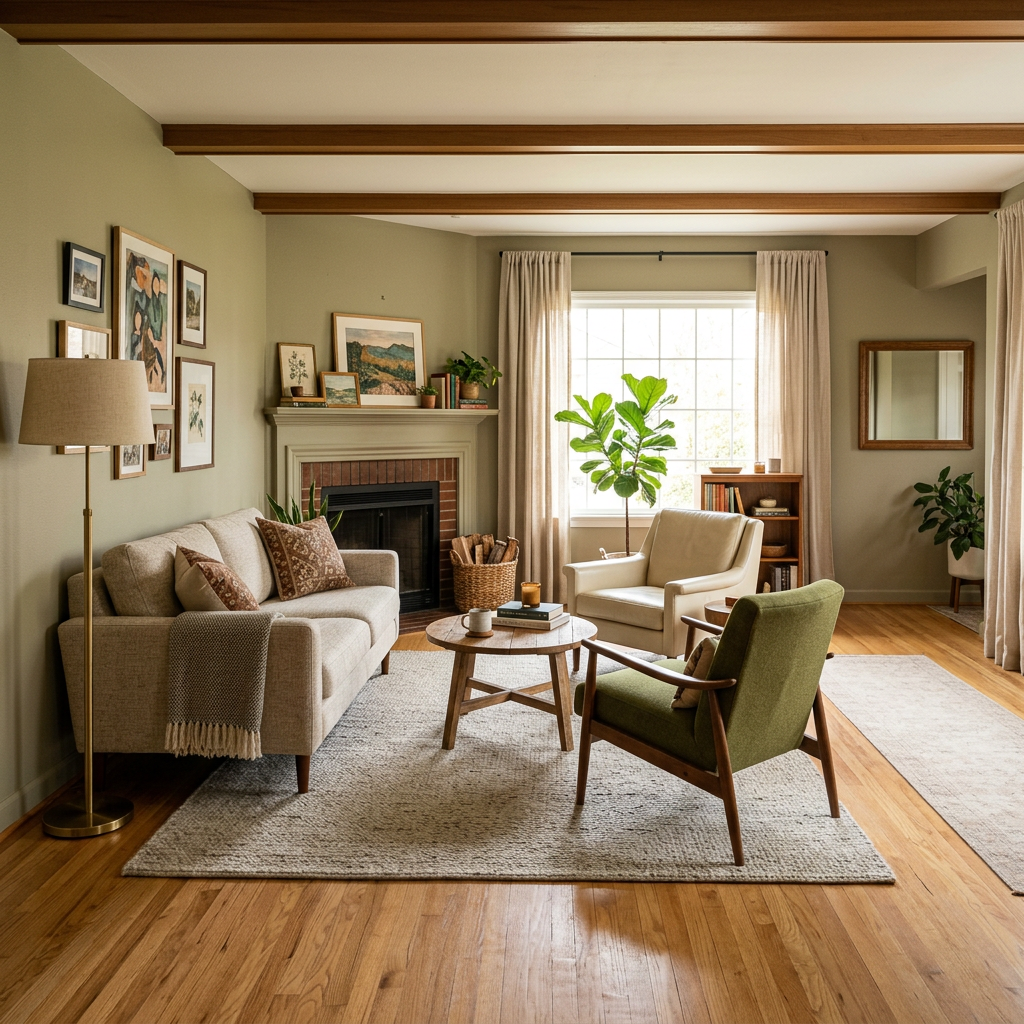
One of the most common mistakes in residential design is furniture that's too large for the room. An oversized sectional in a medium living room doesn't feel grand — it feels cramped. And cramped doesn't feel cozy; it feels anxious.
Cozy comes from rooms where the furniture is in proportion with the space and with the people using it. Smaller sofas with higher arms. Armchairs you can actually curl up in. A dining table that seats six comfortably rather than one that technically fits eight.
The IDA community responds strongly to rooms that feel human-scaled. When designers submit spaces where there's actual room to move — where the furniture invites you to sit rather than just filling the square footage — those projects consistently score higher in votes.
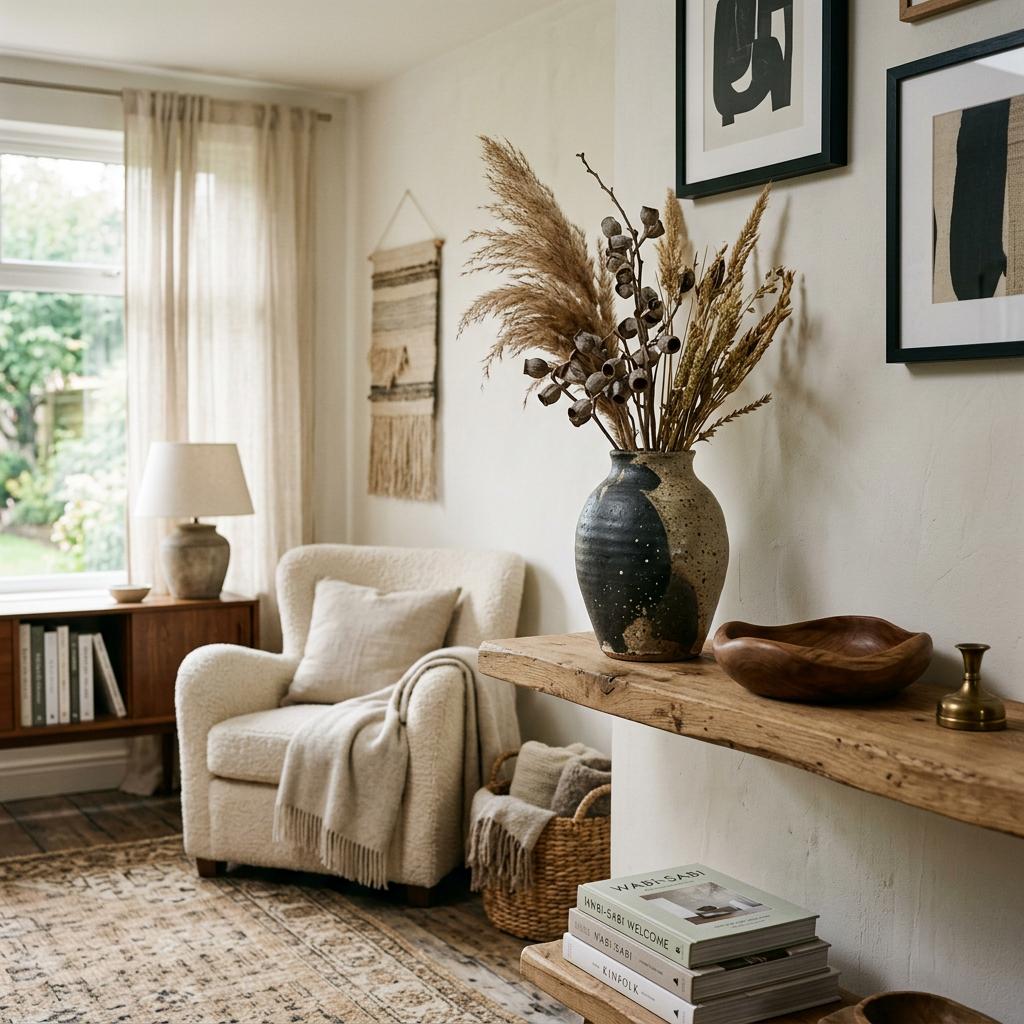
Perfectly styled rooms feel like showrooms. Showrooms don't feel cozy.
The small imperfection — a hand-thrown ceramic bowl, a vintage wooden stool, a branch of dried botanicals, a stack of actual books someone has read — signals that a real person lives here. That signal is what creates warmth.
This is what designers mean when they talk about "soul." It can't be purchased wholesale. It comes from choosing one object that has a story, or a texture, or a slight irregularity that a machine couldn't produce. In a room full of clean lines and considered choices, that one imperfect thing becomes the most interesting thing in the space.
Some of the most celebrated IDA submissions — including recent Bathroom and Living Room winners — include at least one element that was clearly handmade or vintage. The community notices.
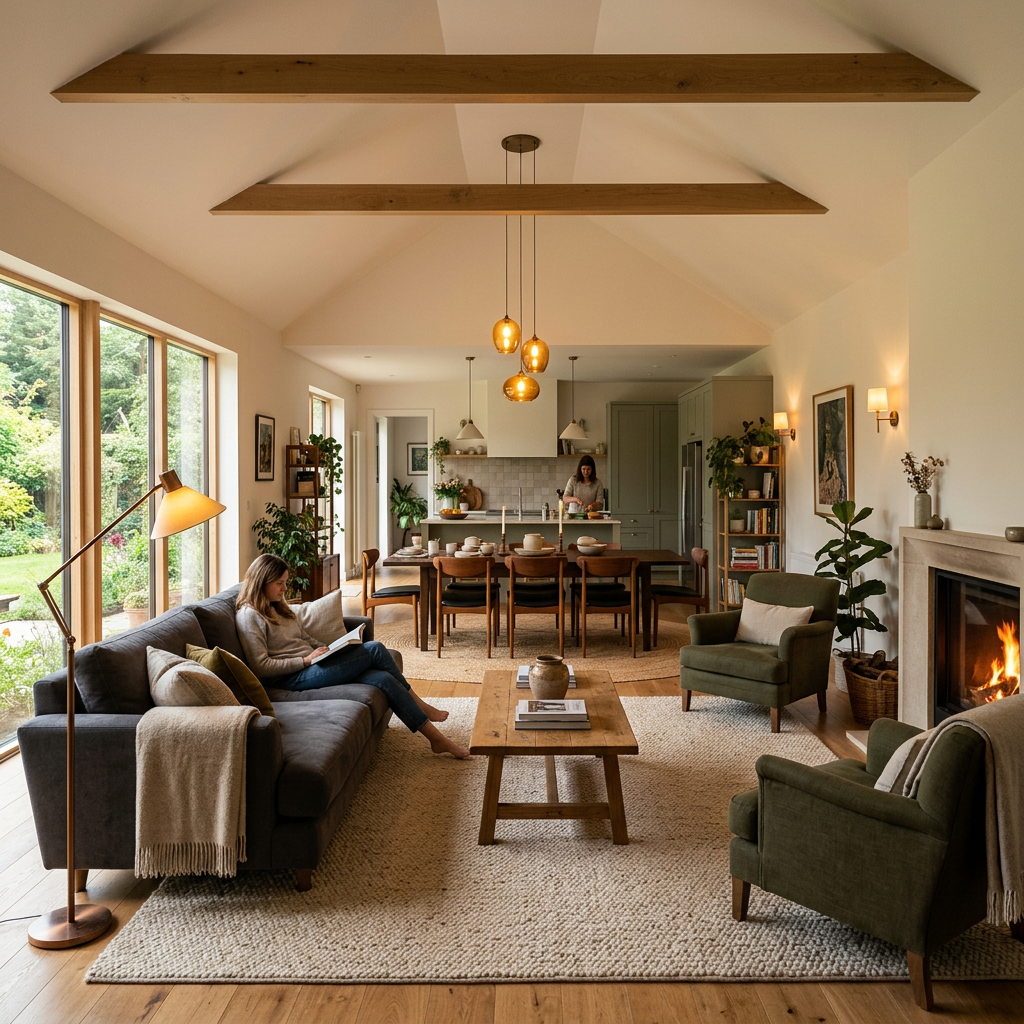
Open-plan layouts are popular for good reason — they feel spacious, social, and filled with light. But they can also feel cold and directionless if every square foot looks the same.
The solution is zoning: creating smaller, defined areas within the larger space that each have their own character. A rug anchors the seating area. A pendant light marks the dining zone. A bookshelf or half-wall creates a reading corner. Each zone should feel like it has a purpose and an edge.
When you break a large open space into smaller defined areas, something interesting happens: the whole space starts to feel cozier, even though it hasn't gotten smaller. The eye and body find places to rest, rather than drifting across an undefined expanse.
IDA designers who work with open-plan layouts and still achieve high coziness scores almost always use this technique.
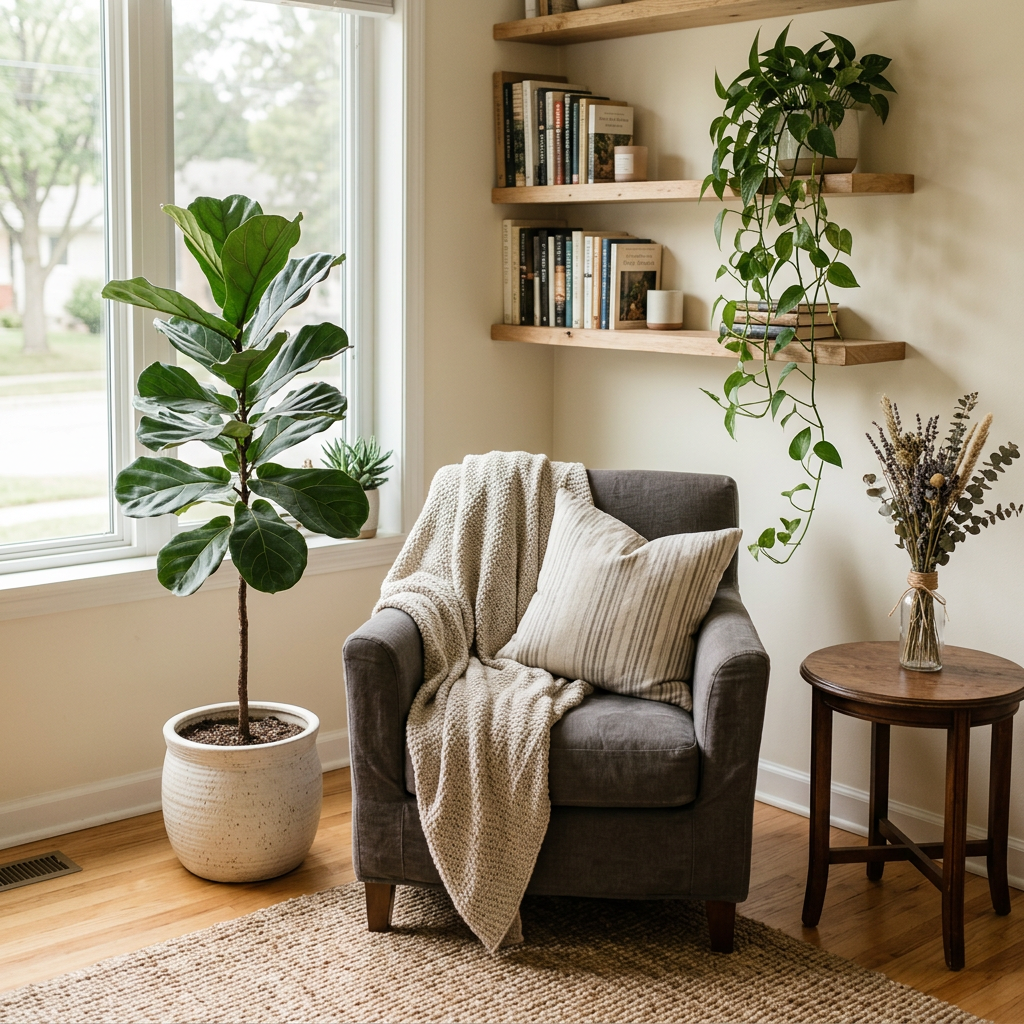
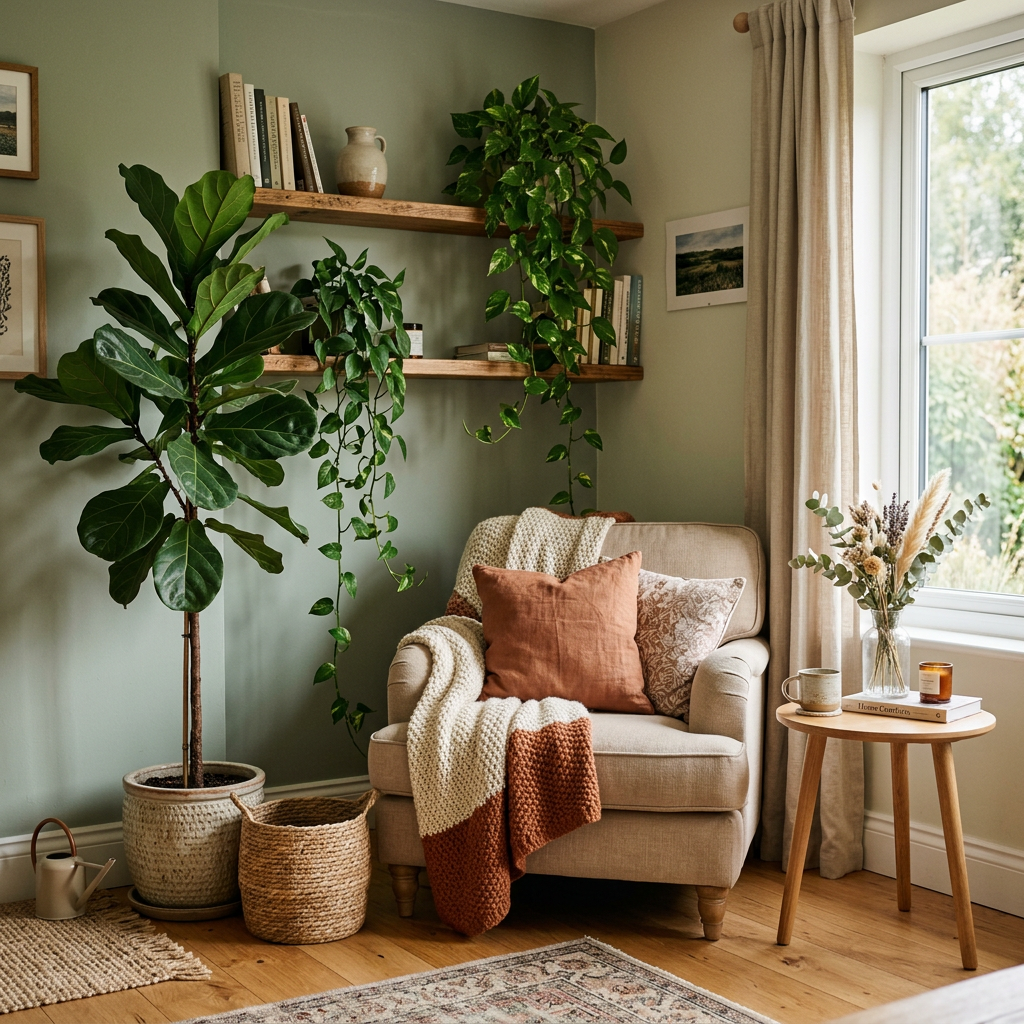
Plants do two things for a room: they add organic texture (see point 2), and they introduce an element that changes — grows, moves slightly in air currents, responds to light. That aliveness makes a room feel inhabited.
You don't need a lot. One large statement plant — a fiddle leaf fig, a monstera, an olive tree — does more work than ten small ones scattered around. Alternatively, a shelf with trailing plants creates a soft, layered element that photographs beautifully and feels genuinely warm in person.
Dried botanicals work for lower-maintenance situations and have the added advantage of adding texture and muted color that integrates with almost any palette.
Coziness isn't a style. It's an effect — something a room either produces or doesn't, regardless of whether it's Japandi, maximalist, coastal, or traditional.
What all these ideas share is attention to the human body: how it responds to light, how it reads texture, how it feels in a space that's scaled for people rather than photography. The rooms that consistently earn the highest votes in IDA competitions are the ones where you can imagine sitting for two hours without wanting to leave.
That's the test. Not whether the room looks cozy. Whether it feels that way.
Every month, interior designers submit their best room projects across 17 categories — from Bathroom and Kitchen to Living Room, Bedroom, and Home Office. The community votes, and the top 3 earn recognition and cash rewards.
If you're looking for real inspiration from working designers — or want to submit your own cozy space — this is where to start.
→ Browse this month's coziest spaces
→ Submit your project and compete
Interior Design Awards (IDA) is a platform where designers share room projects, the community votes monthly, and the top designers earn recognition and rewards. Based in the US, open to designers worldwide.