
Luxury Bathroom Design Ideas: What Sets the Best Apart
5 min read
Luxury in bathroom design is easy to spend money on and surprisingly hard to achieve. The difference between a bathroom that cost $100,000 and one that feels like $100,000 isn't the budget — it's the decision-making behind every material, fixture, proportion, and detail.
At Interior Design Awards (IDA), luxury bathroom submissions consistently earn the highest vote counts of any category. The community responds to spaces that feel genuinely exceptional — not just expensive. Here's what the designers behind the most-voted luxury bathrooms are actually doing.
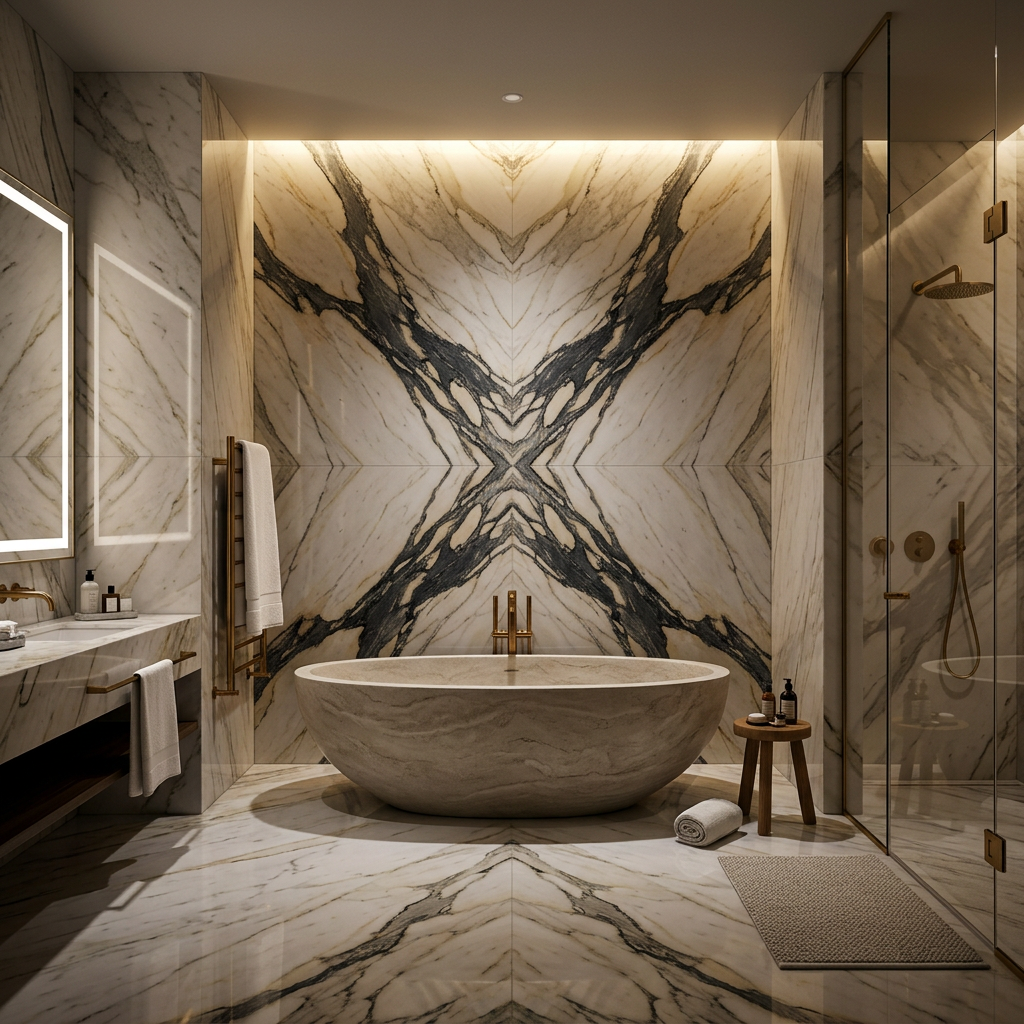
Bookmatching is the practice of opening a stone slab like a book so that adjacent panels mirror each other, creating a symmetrical pattern from the natural veining. It's how luxury hotels and high-end residential projects transform stone from a material into a feature.
The effect is immediately recognizable as premium. Natural stone has inherent variation and beauty, but bookmatched stone has composition — the veining becomes intentional, almost architectural. A bookmatched marble wall behind a freestanding tub turns a bathroom into a destination.
The most celebrated IDA bathroom submissions almost always include natural stone as a primary material. Bookmatching elevates it from surface to centerpiece.
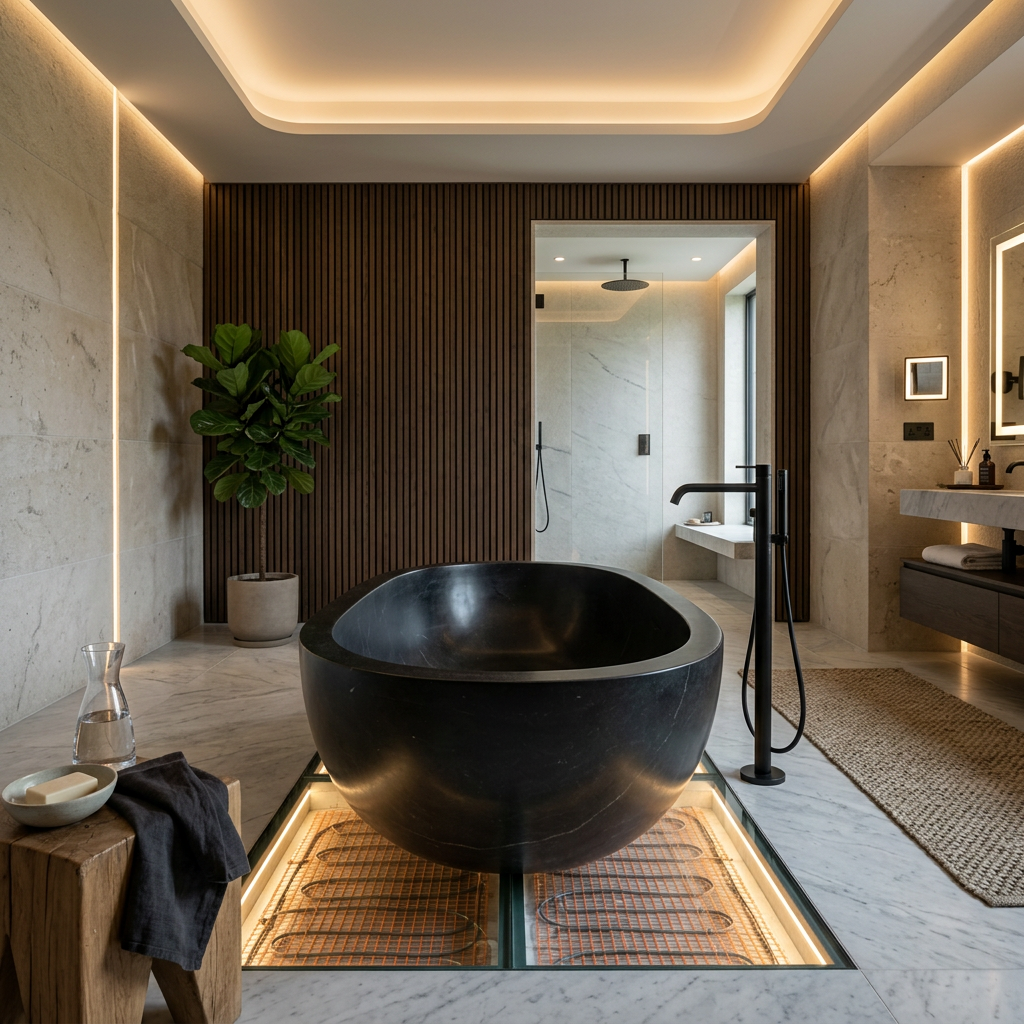
In a luxury bathroom, the freestanding tub isn't just a bathing vessel — it's the room's sculptural centerpiece, and it should be chosen the way an art collector chooses a statement piece.
The most impactful options: carved stone tubs in basalt, travertine, or marble; cast iron tubs with refined silhouettes; concrete tubs with hand-formed edges. What these share is materiality and weight — they look like objects of permanence rather than bathroom fixtures.
Placement matters as much as the tub itself. Center it on a natural stone floor, position it toward a window or a feature wall, and give it room to breathe on all sides. A freestanding tub crowded by other elements loses its power. Given space and a strong backdrop, it transforms the entire room.
IDA's highest-rated bathroom submissions consistently feature a freestanding tub as the dominant design element — and the ones that score highest treat the tub as sculpture first, function second.
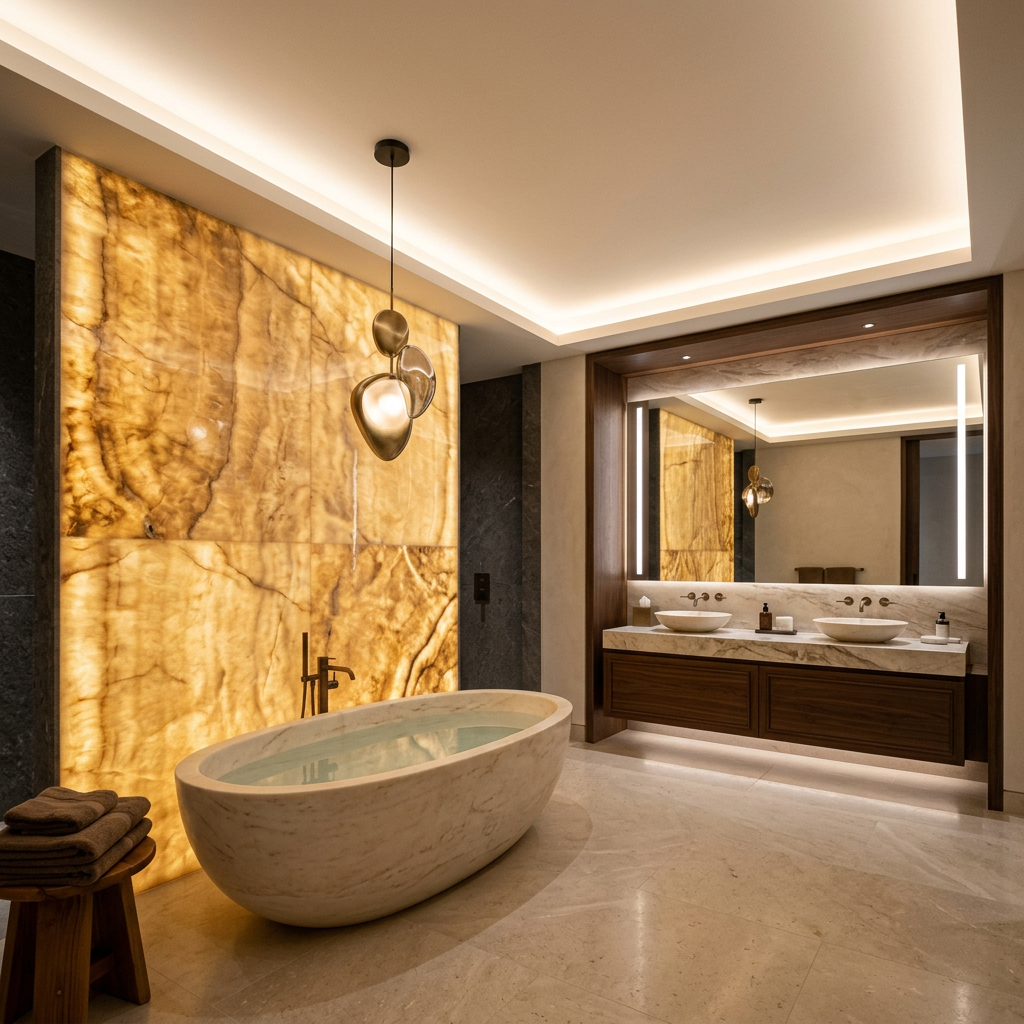
Standard bathrooms are lit from above. Luxury bathrooms are lit architecturally — from within walls, from ceiling coves, from behind stone panels, from strips concealed under floating vanities. The source of light is hidden; only the effect is visible.
This approach — often called indirect or cove lighting — eliminates harsh shadows and creates a soft, enveloping warmth that no ceiling fixture can replicate. Combined with backlit stone panels (translucent onyx is the classic choice), the result is a bathroom where the materials themselves seem to glow.
The practical requirement: lighting must be planned before construction, not added afterward. Cove profiles, recessed slots, and backlit panels are structural decisions. This is why luxury bathrooms always begin with a lighting plan — and why the most-voted IDA bathroom projects almost always show evidence of that planning.
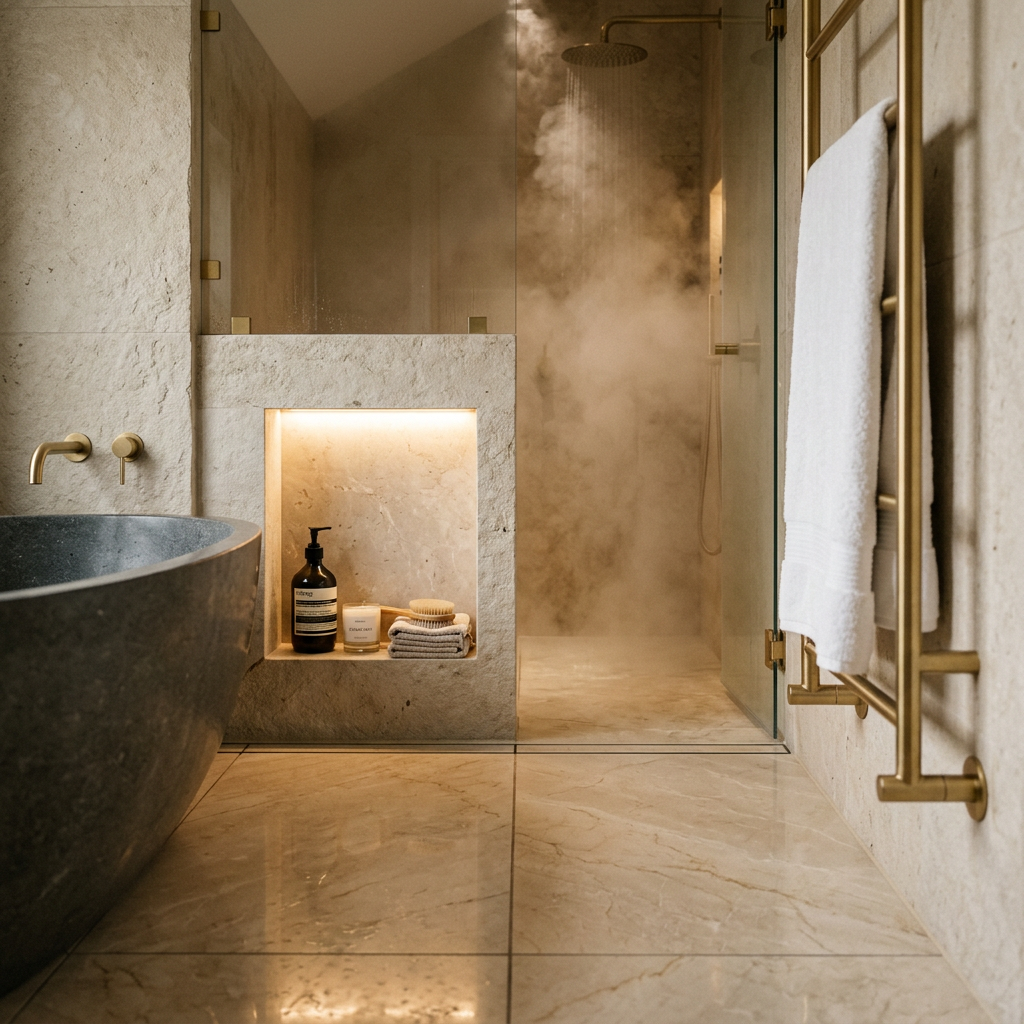
Genuine luxury is felt as much as seen. A bathroom that looks exceptional in photographs but has cold floors, poor ventilation, and inadequate towel storage doesn't feel luxurious to live in — and the IDA community, many of whom are designers and homeowners with experience of luxury interiors, responds to this distinction.
Radiant floor heating under natural stone transforms the experience of stepping out of a tub or shower in a way no material upgrade matches. A heated towel rail in a considered metal finish is both practical and atmospheric. A steam shower with precise temperature control and aromatherapy integration adds a spa dimension that photography barely captures.
These functional luxuries — the ones you feel rather than photograph — consistently distinguish the highest-rated IDA bathroom submissions from those that look impressive but read as surface-level.
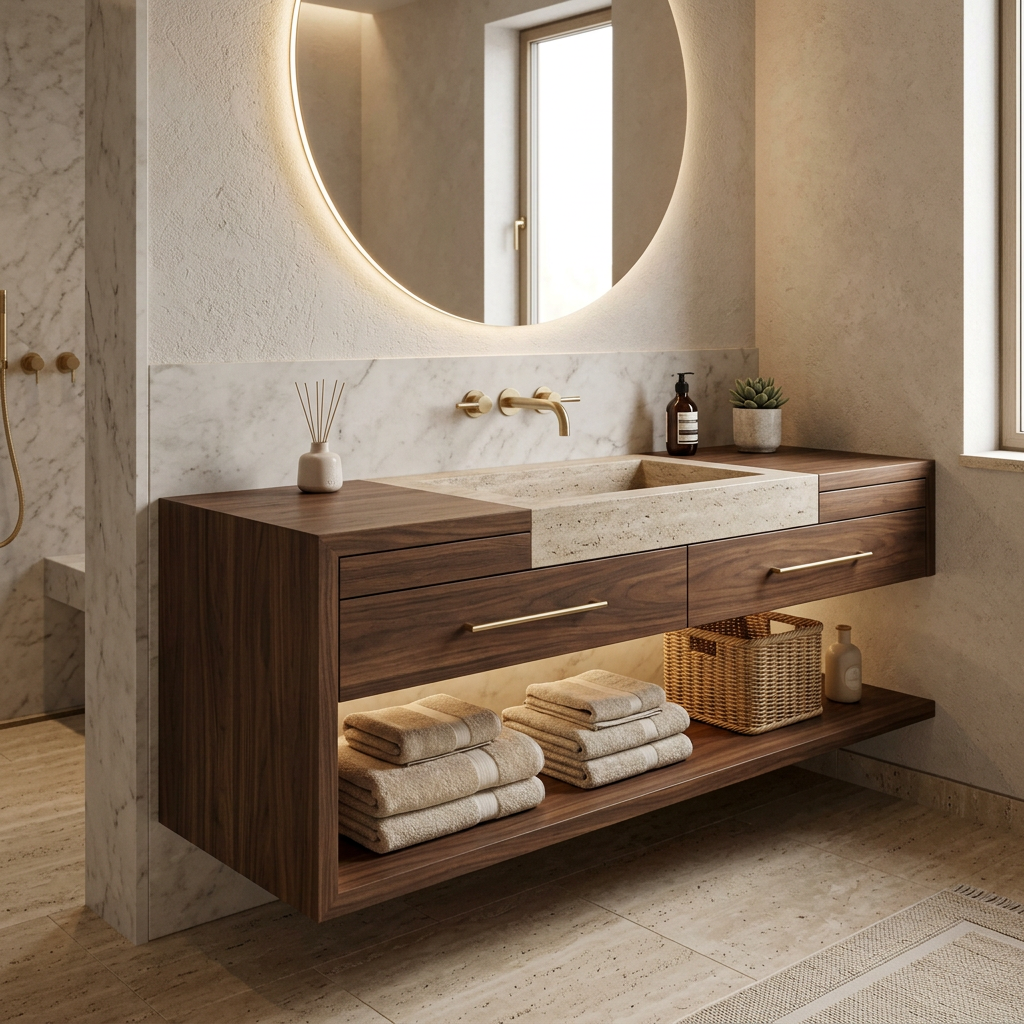
Standard bathroom vanities are storage units with basins. Luxury bathroom vanities are furniture — designed with the same care as a dining table or a credenza, in materials that belong in a living room as much as a bathroom.
The shift: away from white-painted MDF with chrome handles, toward natural stone slabs as countertops, hardwood or lacquered wood as the cabinet body, and hand-finished hardware as the detail layer. The basin itself becomes an object — an above-counter stone vessel, an under-mounted bowl in a contrasting material, or an integrated sink carved from the same block as the countertop.
An illuminated mirror above — backlit around the perimeter rather than a standard bathroom mirror — completes the vanity zone and adds the kind of soft, flattering light that makes the space feel genuinely considered rather than simply expensive.
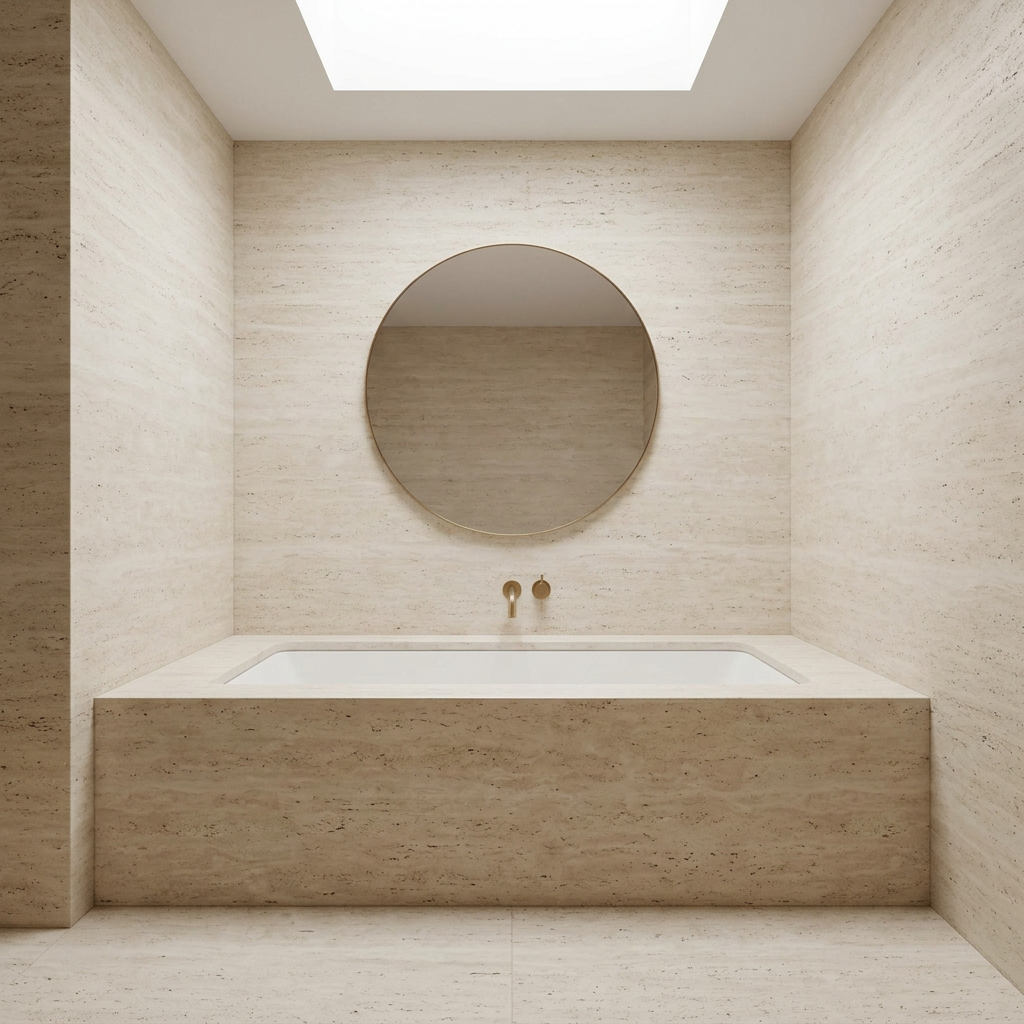
The highest expression of luxury in bathroom design is restraint — the confidence to leave surfaces empty, to use one material throughout rather than five, to let quality speak without assistance from quantity.
A bathroom where a single stone runs continuously from floor to wall to tub surround, with no interruption from grout lines or material changes, communicates a level of intention and budget that no amount of accessories can replicate. A room with one perfect mirror, one considered faucet, and nothing on the counter feels more luxurious than a room crowded with expensive objects.
This is the lesson that the most sophisticated IDA bathroom submissions teach consistently: in luxury design, addition is easy. Subtraction — knowing what to remove and having the confidence to leave it out — is the skill that separates good design from exceptional design.
Every month, interior designers submit their best bathroom projects on Interior Design Awards. The community votes, and the top 3 earn recognition and cash rewards.
The bathroom category consistently produces IDA's most celebrated submissions — spaces where design and material quality combine to create something genuinely extraordinary.
→ Browse this month's luxury bathroom projects
→ Submit your bathroom design and compete
Interior Design Awards (IDA) is a platform where designers share room projects, the community votes monthly, and the top designers earn recognition and rewards. Based in the US, open to designers worldwide.