

Master Bedroom Design Ideas: What Top Designers Are Creating in 2026
6 min read
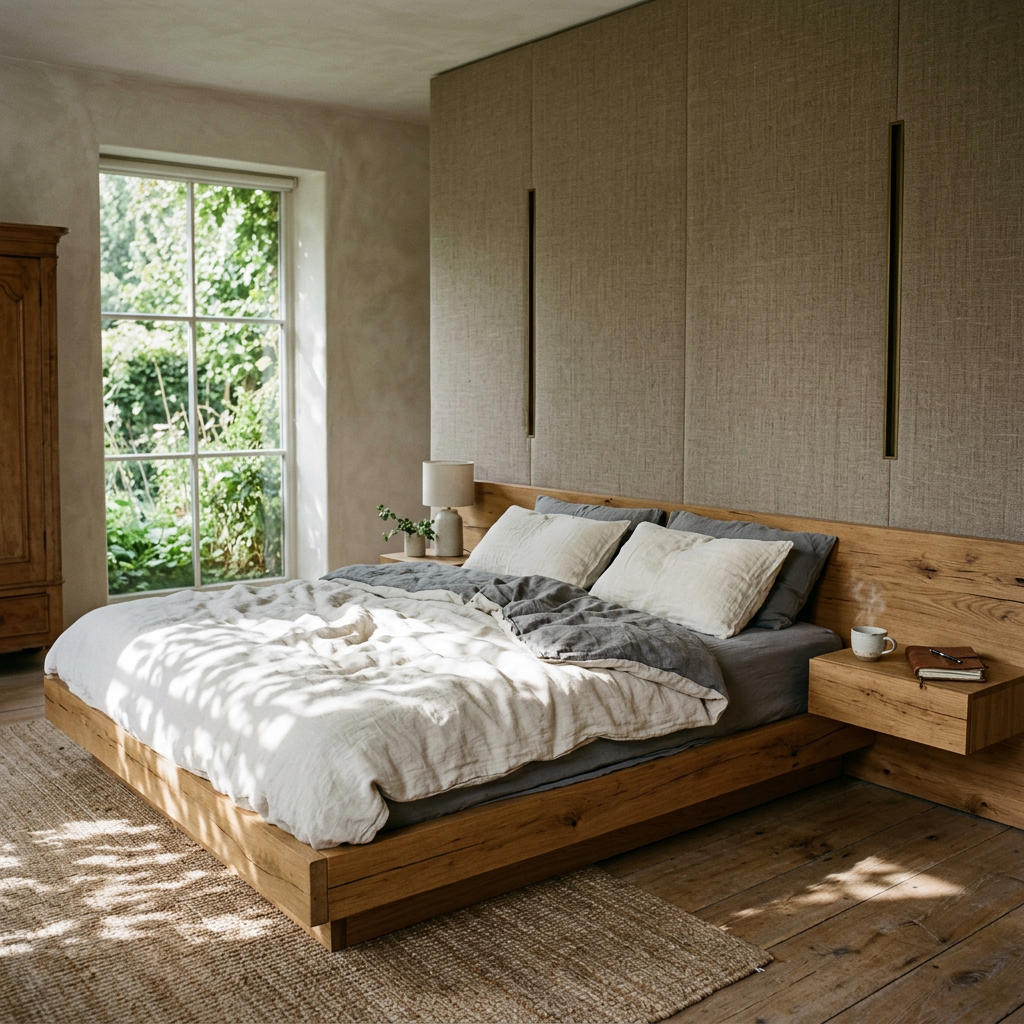
The master bedroom is the one room most people never show anyone. No guests. No clients. No staging. Just you, the space, and whether it actually works.
That's exactly why designers consider it the most honest room in a home — and why the master bedroom category on Interior Design Awards consistently generates the most discussion, the most votes, and the most repeat visitors coming back to look again.
We pulled together the design directions that are resonating most with the IDA community right now. Not trends from a mood board — real ideas from real projects, tested against real votes.
The most-voted master bedrooms on IDA share one consistent feature: the bed doesn't sit in the room — it defines it.
This means moving away from a headboard leaning against a wall toward something more considered. A full upholstered panel that runs floor to ceiling behind the bed. A platform built into a recessed alcove. A four-poster that divides the bedroom from a sitting area without needing a wall.
When the bed becomes architecture, every other decision in the room — lighting, color, materials — aligns around it. The result is a room that feels intentional from the doorway, not assembled piece by piece.
Practical note for designers: This approach photographs extremely well because it gives the room a clear focal point. Projects with architectural bed treatments consistently score higher in IDA community voting than rooms where the bed is furniture among furniture.
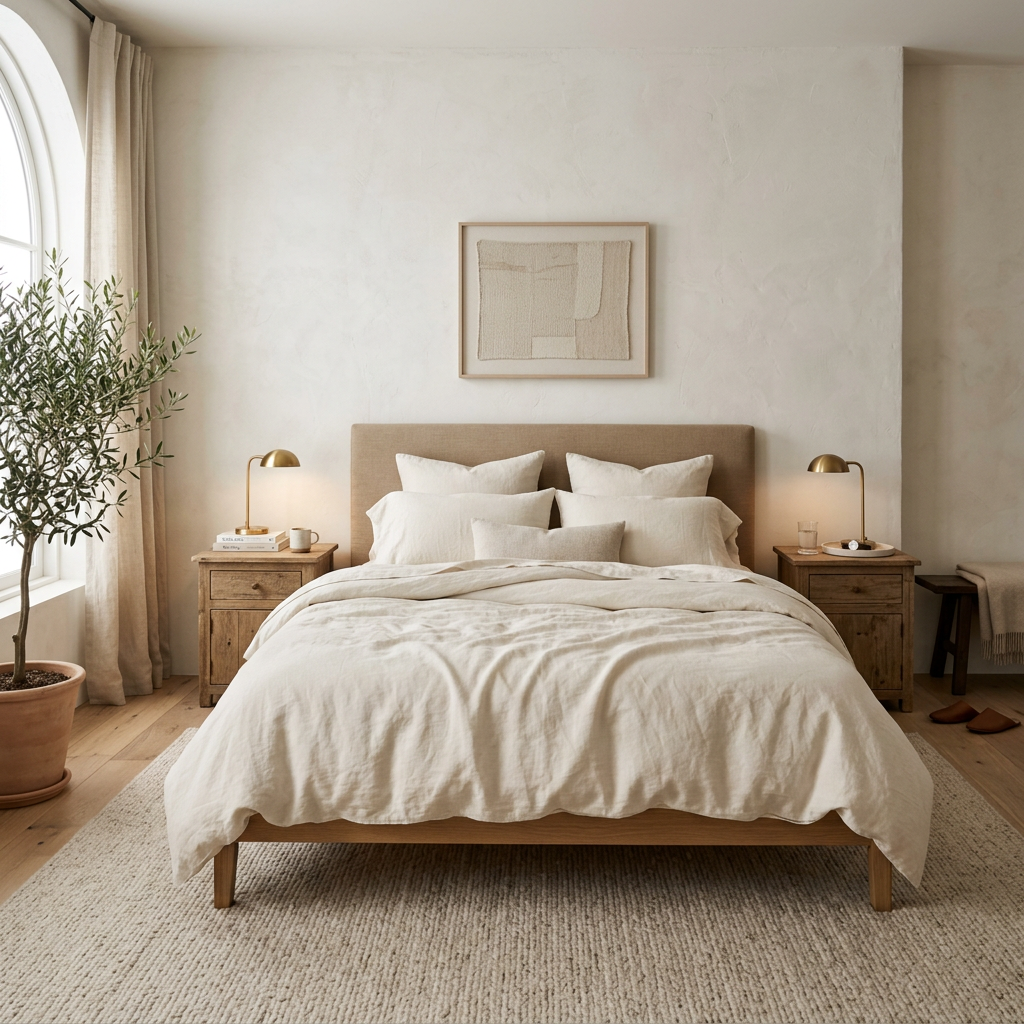
If you've submitted work to IDA in the last twelve months, you've seen this pattern in the voting: rooms with restraint outperform rooms with drama.
Quiet luxury in a master bedroom means a palette of three tones at most — typically a warm white, a natural wood, and one soft accent (sage, dusty rose, warm terracotta). It means linen over polyester, travertine over marble, aged brass over polished chrome.
What it doesn't mean is boring. The designers doing quiet luxury well are deeply focused on texture and proportion. The interest in the room comes from how materials interact — the roughness of linen against the smoothness of plaster, the warmth of wood against the coolness of stone — not from color or pattern.
This direction works particularly well in master bedrooms because the goal of the room is rest. A quiet space that asks nothing of you visually is, paradoxically, a sophisticated design achievement.
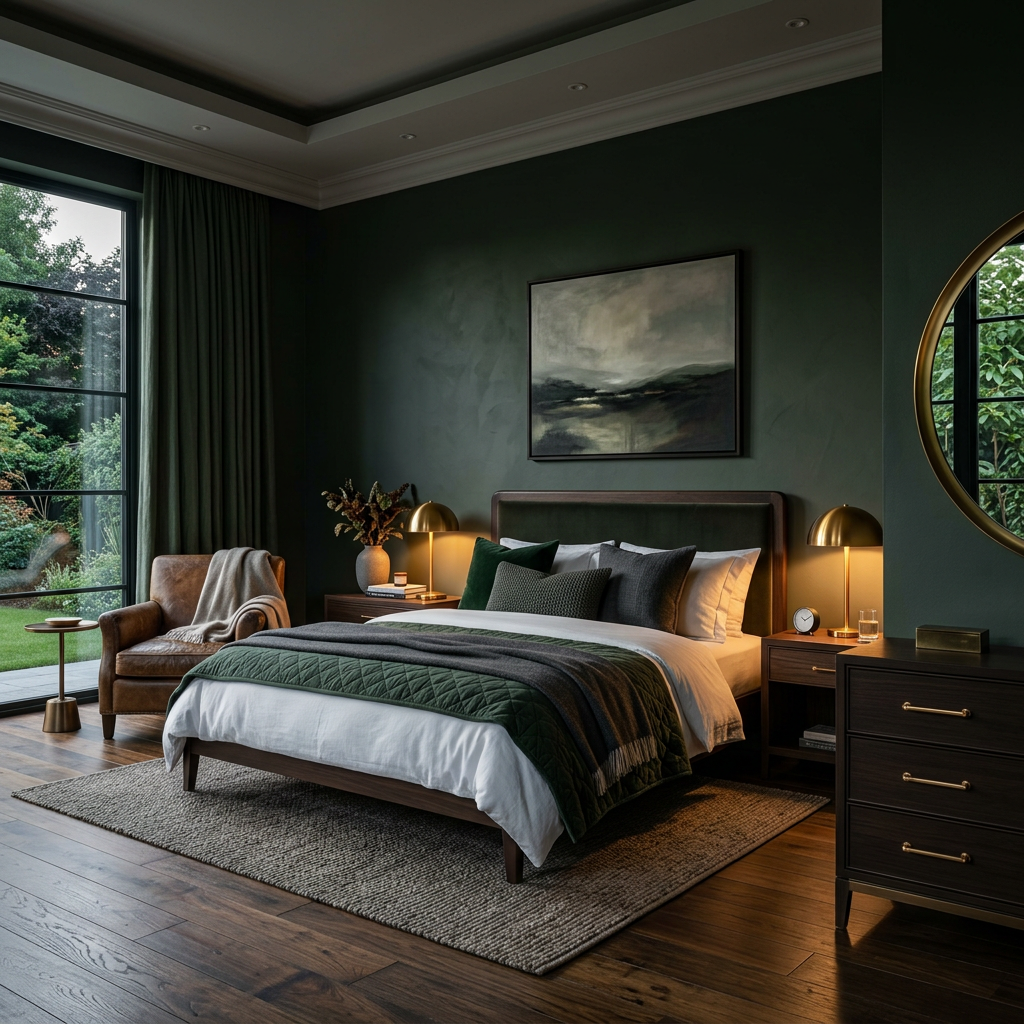
Designing a dark bedroom well is harder than it looks — which is why the ones that land in IDA's top three consistently stand out from the crowd.
The common mistake is treating dark as a color decision alone. Paint the walls charcoal, add black furniture, done. What actually works is treating dark as a lighting design challenge first.
The best dark master bedrooms on IDA layer three or four light sources: ambient (often recessed or cove lighting on a dimmer), task (reading lights that are warm and directional, not overhead), accent (something that draws the eye — a lit alcove, backlit shelving, a lamp with a warm-toned shade), and natural (dark rooms live and die by how they handle daylight — heavy curtains that block completely, or sheers that diffuse without flooding).
When lighting is handled well, a dark bedroom feels like a private world. When it isn't, it just feels like a room that needs more lamps.
Colors the IDA community votes for most in dark bedrooms: forest green with brass, deep navy with aged bronze, charcoal with warm whites and natural wood, burgundy with terracotta accents.
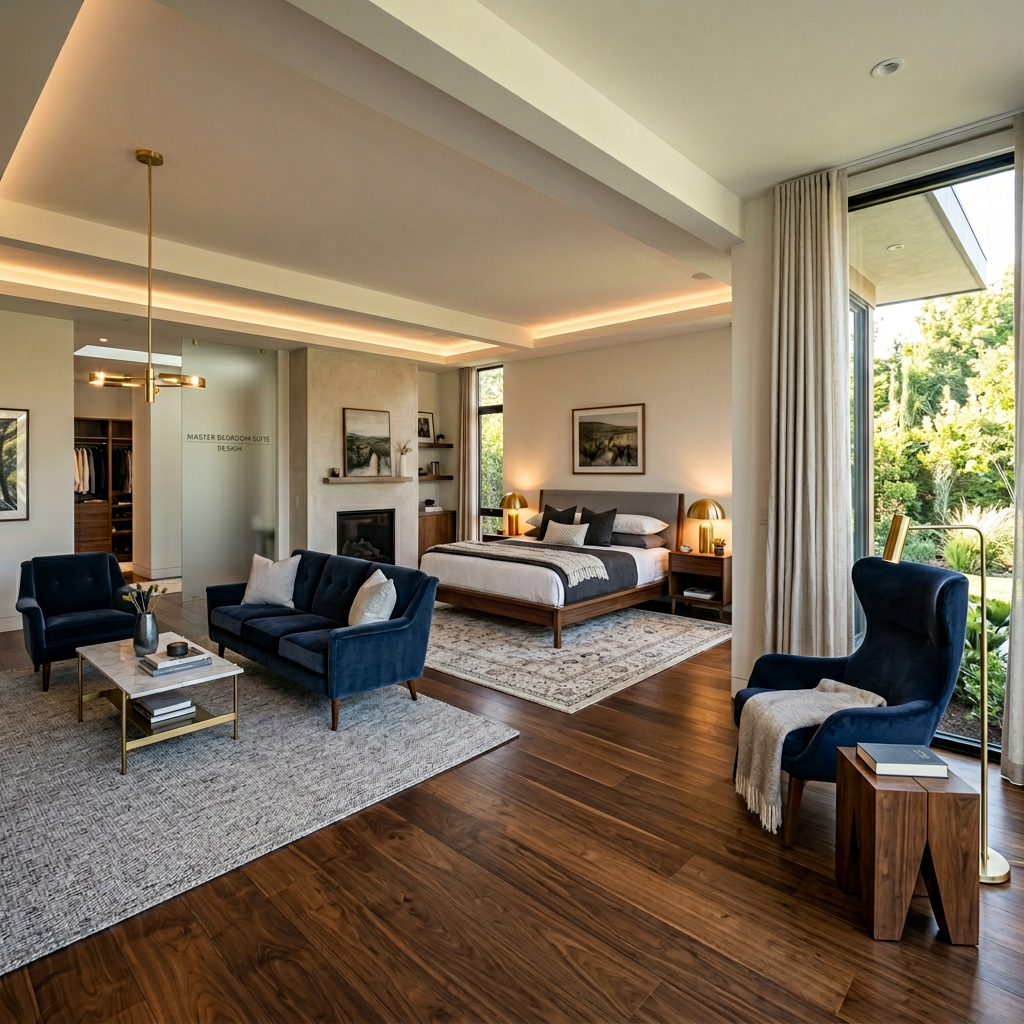
One of the strongest directions in IDA's bedroom submissions isn't about a single room — it's about thinking of the master bedroom as a suite of connected spaces.
This doesn't require a large footprint. It requires clear zoning. A bedroom with a window seat that becomes a genuine reading spot. A sleeping area that flows into a dressing area defined by a run of open shelving. A bed that faces a seating area with two armchairs and a low table — making the room functional for two people who wake up at different times and want different things from the morning.
The key design move is using rugs, lighting, and furniture placement to define zones rather than walls. When it's done well, a 400 sq ft master bedroom can feel like it has three distinct purposes — and none of them compromise the others.
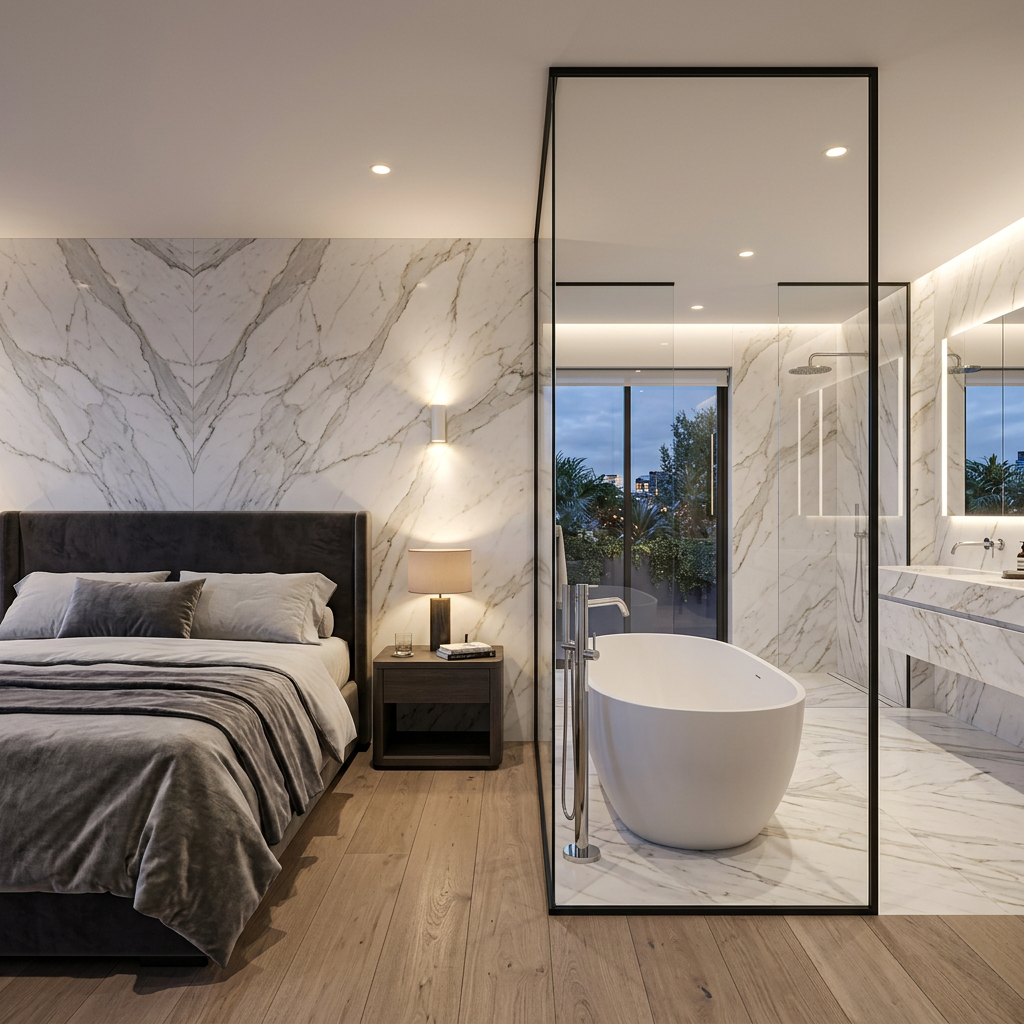
The most ambitious master bedroom projects on IDA don't stop at the bathroom door.
When a designer controls both the bedroom and the en suite, the strongest results come from treating them as one connected space. This might mean the same stone or tile appears in both rooms. A freestanding bath positioned to be visible from the bed — framed by an open doorway or a glass partition — becomes a visual feature of the bedroom as well as a functional bathroom element. The same light fixture family, scaled differently, runs through both spaces.
This approach requires more coordination and a more confident client, but the results — and the IDA votes — reflect that ambition.
After reviewing hundreds of bedroom submissions, the pattern is clear. The projects that reach the top three share these qualities:
One clear point of view. The room knows what it is. Dark and intimate, or light and airy. Minimal, or layered. It doesn't try to be everything.
Lighting that's been thought about. Not "lights in the room" but lighting as a design decision — where the sources are, what temperature they are, how they change the space at different times of day.
Photography that's honest. The winning bedroom projects are shot at the right time of day, with styling that shows how the room is actually used, not staged to within an inch of its life.
A designer who's visible in the work. The rooms that generate the most votes and the most comments are the ones where you can feel someone made specific, personal decisions — not just assembled what looked good on Instagram.
Every month, IDA designers submit projects across 17 room categories. The community votes. The top three earn recognition and cash rewards — and every submission gets eyes from a global design community that's actively looking for what to do next.
If you've designed a master bedroom you're proud of, this is where it belongs.
→ Browse this month's bedroom submissions
→ Submit your project and compete this month
Interior Design Awards (IDA) is a community platform where designers share room projects, the community votes monthly, and the top designers earn recognition and rewards. Open to designers worldwide.