

Rustic Interior Design Bedroom Ideas: How to Get the Look Right
6 min read
Rustic bedroom design is one of the most searched styles in American interior design — and one of the most misunderstood. Done well, a rustic bedroom feels warm, grounded, and deeply personal. Done poorly, it looks like a furniture showroom trying too hard.
The difference comes down to authenticity. Rustic style isn't about buying a set of matching "farmhouse" pieces. It's about understanding the visual and tactile language of natural materials — wood, stone, linen, leather, iron — and knowing how to layer them so the room tells a coherent story.
At Interior Design Awards (IDA), rustic and farmhouse bedrooms consistently rank among the most-voted submissions. Here's what the designers behind the best ones are actually doing.
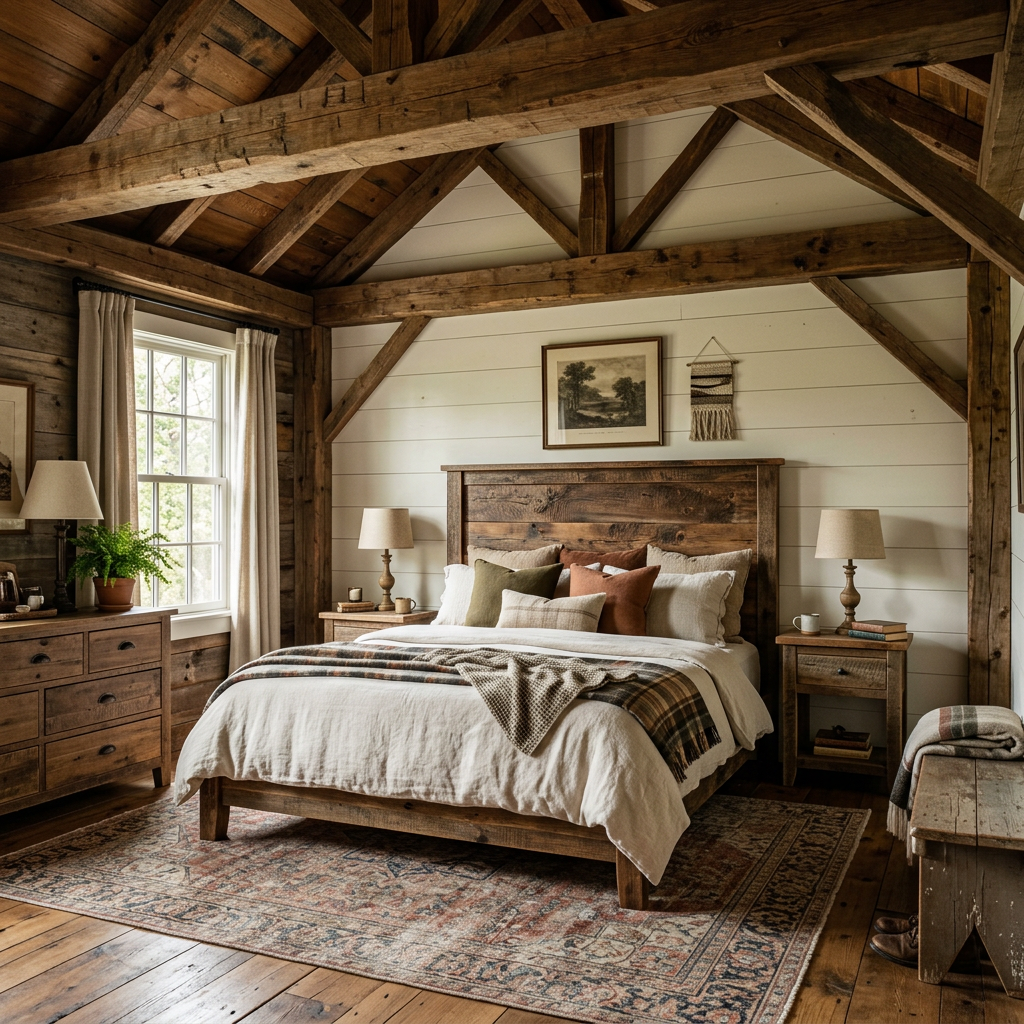
The foundation of any successful rustic bedroom is wood — and it needs to look like it came from somewhere real.
Reclaimed wood is the gold standard: barn wood, old floor planks, salvaged beams. The grain is irregular, the color uneven, the surface slightly rough. That imperfection is exactly what makes it feel authentic. A bedroom with a reclaimed wood headboard or exposed ceiling beams immediately reads as rustic in a way that no laminate panel can replicate.
If reclaimed wood isn't in the budget, look for wood with visible knots, strong grain, and matte or oil finishes rather than high-gloss lacquer. The more a piece of wood looks like it was cut from a tree recently, the better it works in a rustic interior.
IDA designers who score highest in the rustic category almost always use real wood as the dominant material — typically in the headboard, flooring, or ceiling. It's the anchor everything else builds around.
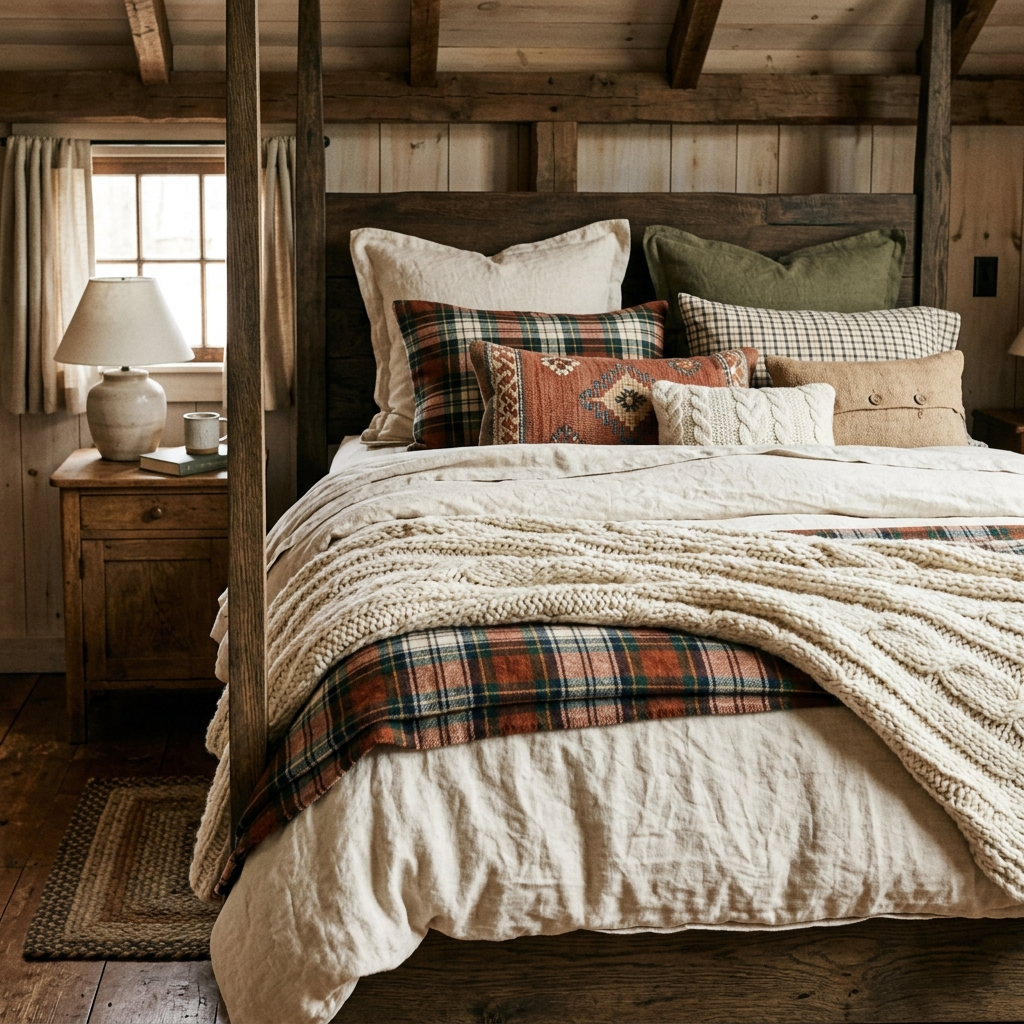
In rustic design, the bed isn't just a piece of furniture — it's the room's centerpiece, and it should look like the most comfortable place in the house.
The layering formula that works: start with a linen or cotton duvet in a neutral or muted tone (cream, oatmeal, warm gray). Add a folded plaid or flannel blanket at the foot. Layer two or three throw pillows in different textures — one smooth, one woven, one knit. Add a chunky knit throw draped naturally over one corner.
The key word is "naturally." Rustic bedrooms look staged when everything is perfectly symmetrical and pressed. They look right when the throw is slightly askew and the pillows have been casually arranged rather than militarily aligned.
The community votes tell the same story consistently: IDA bedroom submissions with layered, tactile bedding score significantly higher than those with a single flat duvet and two matching pillows.
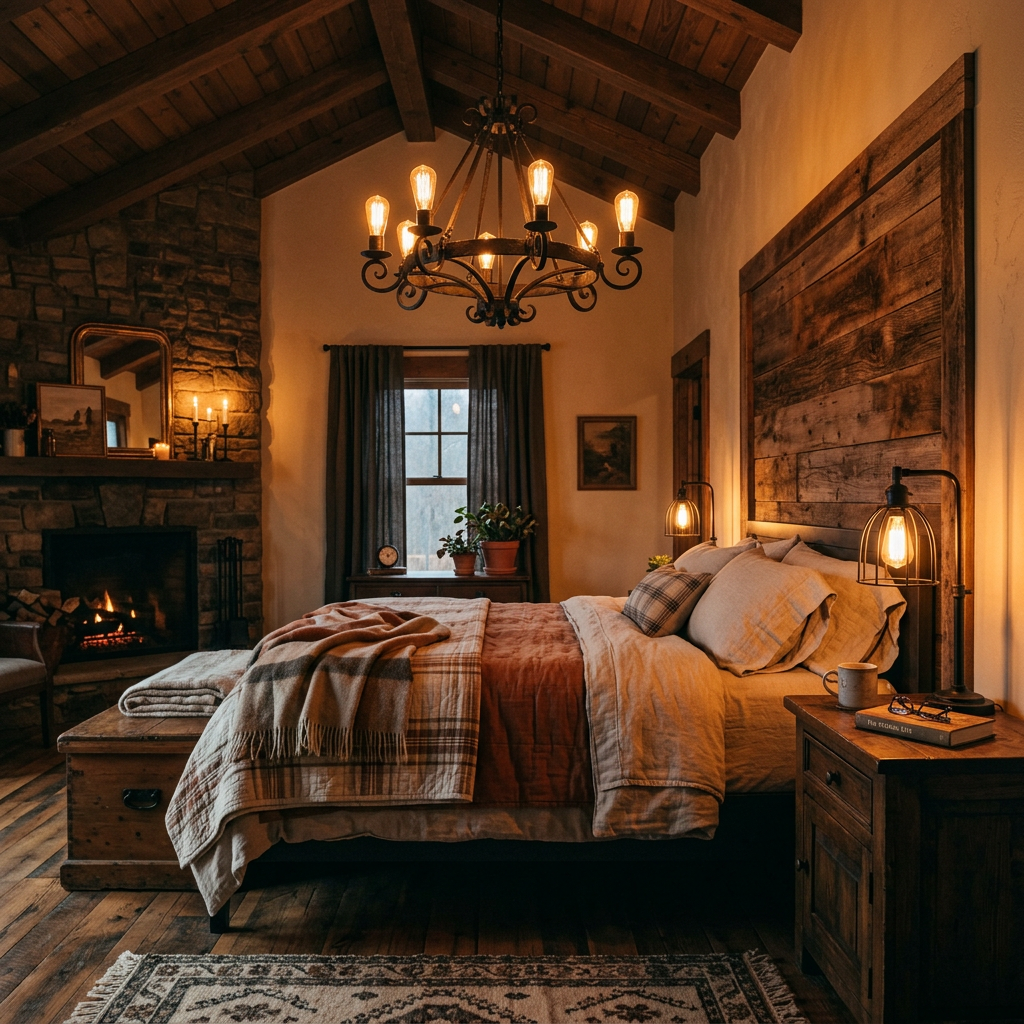
Lighting can make or break a rustic bedroom. The wrong light — cool white LEDs, recessed ceiling spots, anything that feels clinical — immediately undermines everything else in the room.
Rustic lighting means warm. Edison bulbs at 2200-2700K. Table lamps with linen or burlap shades. A wrought iron chandelier or a simple pendant with an exposed filament bulb. Candles on a nightstand or dresser. The goal is a warm amber glow that feels like firelight — not a room you could perform surgery in.
This is one of the details IDA designers get right when others don't. You can have beautiful reclaimed wood and perfect textiles, but if the light is wrong the room feels cold. Get the light right and even a simple room feels warm and considered.
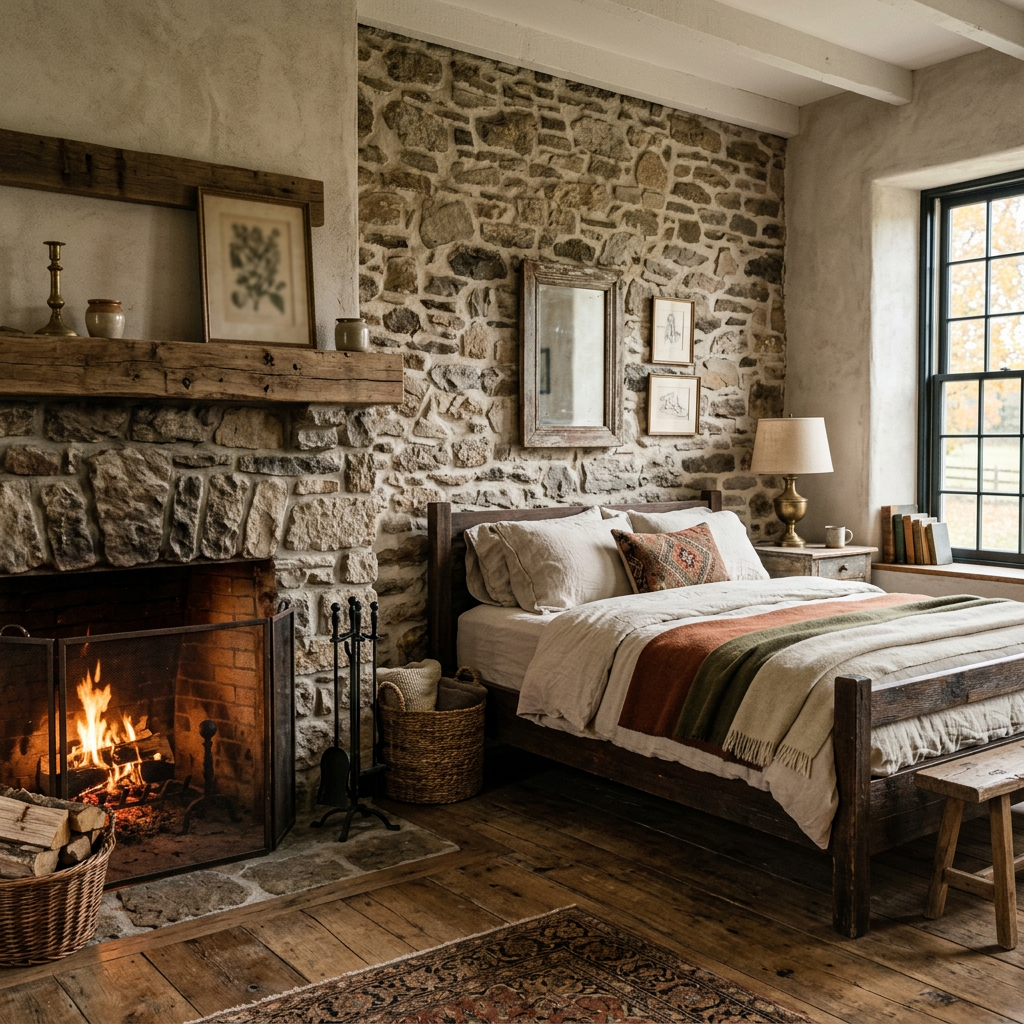
Wood and textiles carry most of the weight in rustic design, but the spaces that feel most complete usually include a third natural material: stone or brick.
This doesn't require a full stone wall. A stone fireplace surround — even a decorative one — immediately elevates a rustic bedroom. A single brick accent wall behind the bed creates depth and texture that wood alone can't achieve. Even a small stone side table or a collection of smooth river rocks on a windowsill contributes to the natural, gathered quality that rustic interiors need.
The visual principle: rustic style draws on the materials of old farmhouses and cabins, and those buildings used stone and brick alongside wood. When a bedroom references all three, it feels historically coherent in a way that reads as authentically rustic rather than a style exercise.
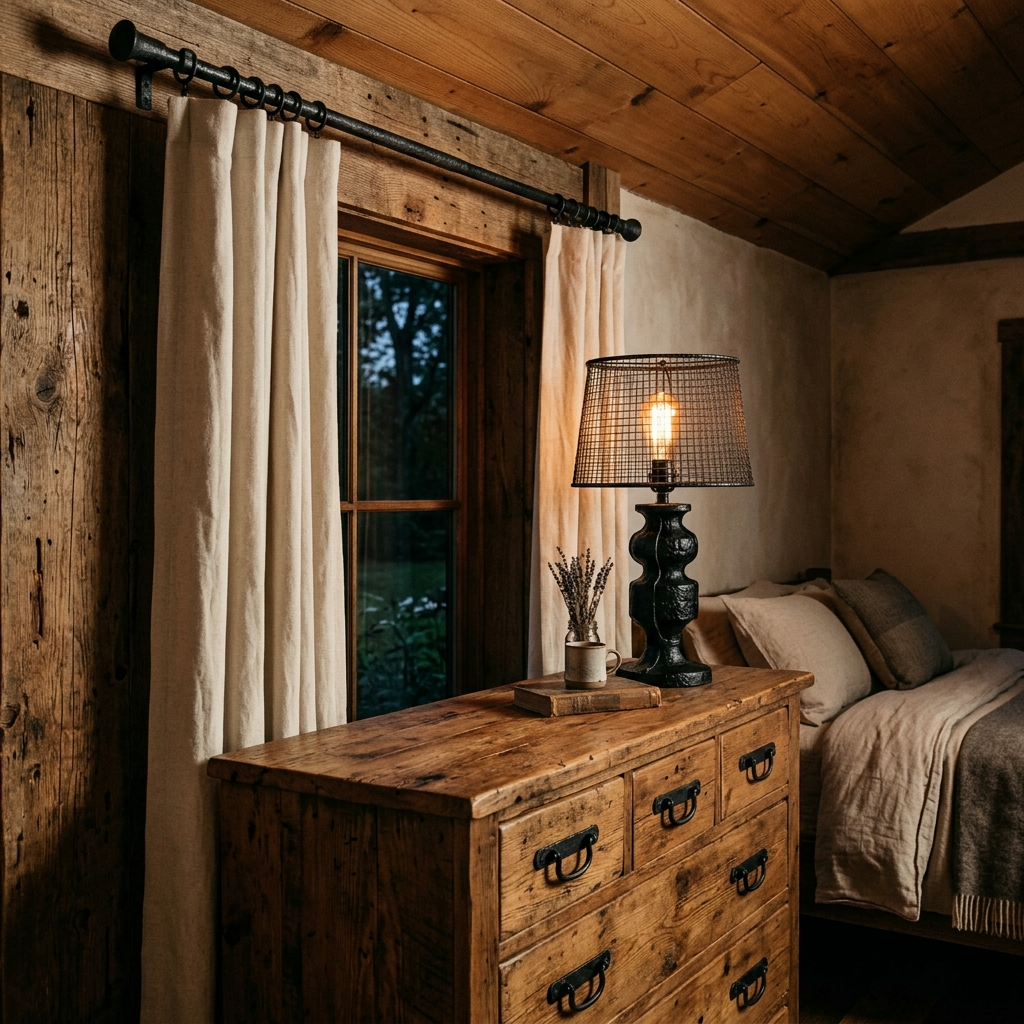
Every bedroom has metal: drawer pulls, curtain rods, light fixtures, bed frame hardware. In rustic design, these details matter more than they do in other styles because they either support or undermine the natural material palette.
The rule is simple: keep metal dark, matte, and slightly rough. Wrought iron is ideal — it has a handmade, old-world quality that fits perfectly. Matte black works well. Brushed bronze or antique brass in darker tones can work. What doesn't work: polished chrome, brushed nickel, shiny brass. These finishes feel contemporary and urban in a way that immediately pulls a room out of rustic territory.
Replace a set of shiny drawer pulls with matte black ones and the impact on a rustic bedroom is immediate and disproportionate to the cost.
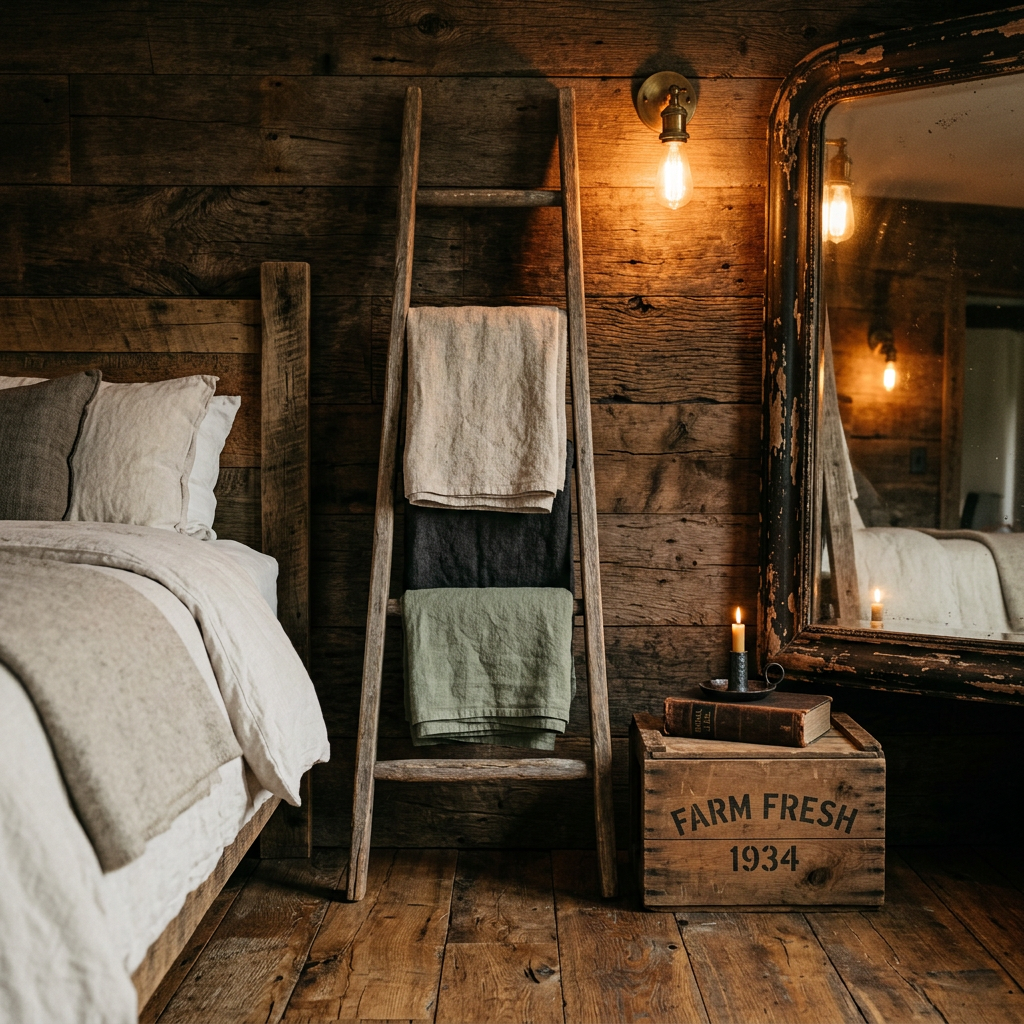
Rustic design has a long tradition of repurposing and reusing — old ladders as blanket racks, wooden crates as nightstands, vintage mirrors with weathered frames, antique clocks on mantels. These objects signal that the room has history, or at least respects the idea of it.
One well-chosen vintage or found object does more for a rustic bedroom than ten items from a "farmhouse decor" shopping list. It's the difference between a room that looks like it was styled and a room that looks like it was lived in.
The IDA community responds strongly to this quality. In the most-voted rustic submissions, there's almost always one element that clearly didn't come from a furniture retailer — something with a story, or at least the appearance of one.
The line between authentic rustic and rustic-themed is narrow but visible. Here's the distinction:
Authentic rustic uses real materials — actual wood grain, genuine stone, true linen. It layers slowly, adding objects that feel collected rather than curated. The imperfections are real.
Rustic-themed substitutes: smooth MDF printed with a wood pattern, plastic "stone" wall panels, polyester "linen" that wrinkles wrong. It tries to achieve the look in one shopping trip.
The IDA community votes reveal this distinction clearly. Rooms with one or two pieces of genuinely natural or vintage material consistently outperform rooms full of rustic-themed decor from mass-market retailers.
Every month, IDA designers submit their bedroom projects for community voting. The top 3 earn recognition and cash rewards.
If you're designing a rustic bedroom — or want to see what's earning the highest votes right now — browse this month's submissions.
→ Submit your rustic bedroom design
Interior Design Awards (IDA) is a platform where designers share room projects, the community votes monthly, and the top designers earn recognition and rewards. Based in the US, open to designers worldwide.