

Interior Designer for Bathroom Remodel: What to Look For and How to Find the Right One
6 min read
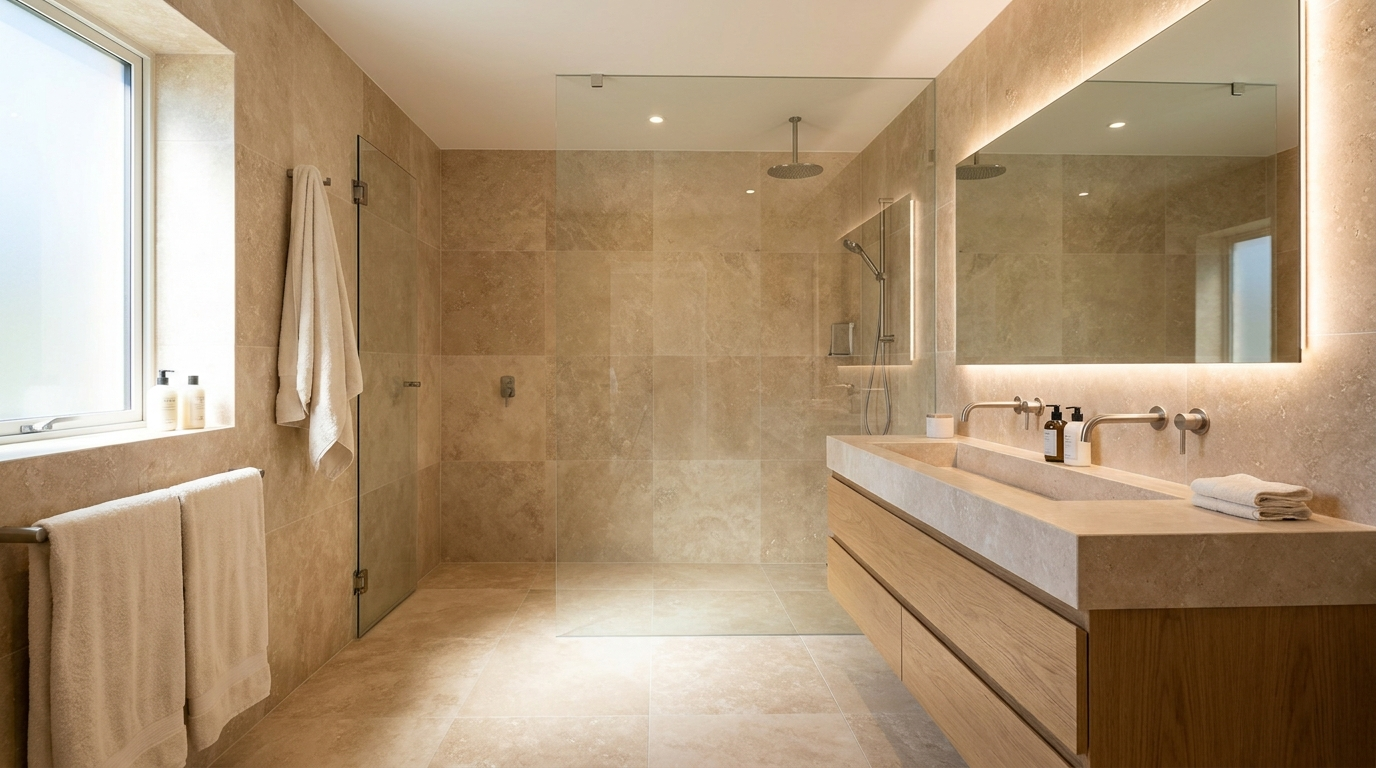
A bathroom remodel is the most technically complex project in residential renovation. It involves plumbing, electrical, waterproofing, tile installation, cabinetry, fixtures, and ventilation — all in a small space where every decision affects every other decision. Most homeowners manage this complexity by making selections sequentially — choosing a tile, then a vanity, then fixtures — without a unifying design logic connecting them.
An interior designer working on a bathroom remodel does something different: they establish the design logic first, then make every selection serve it. The result isn't just a more beautiful bathroom — it's a more coherent one, where the materials, proportions, light, and storage all work together in a way that sequential decision-making almost never produces.
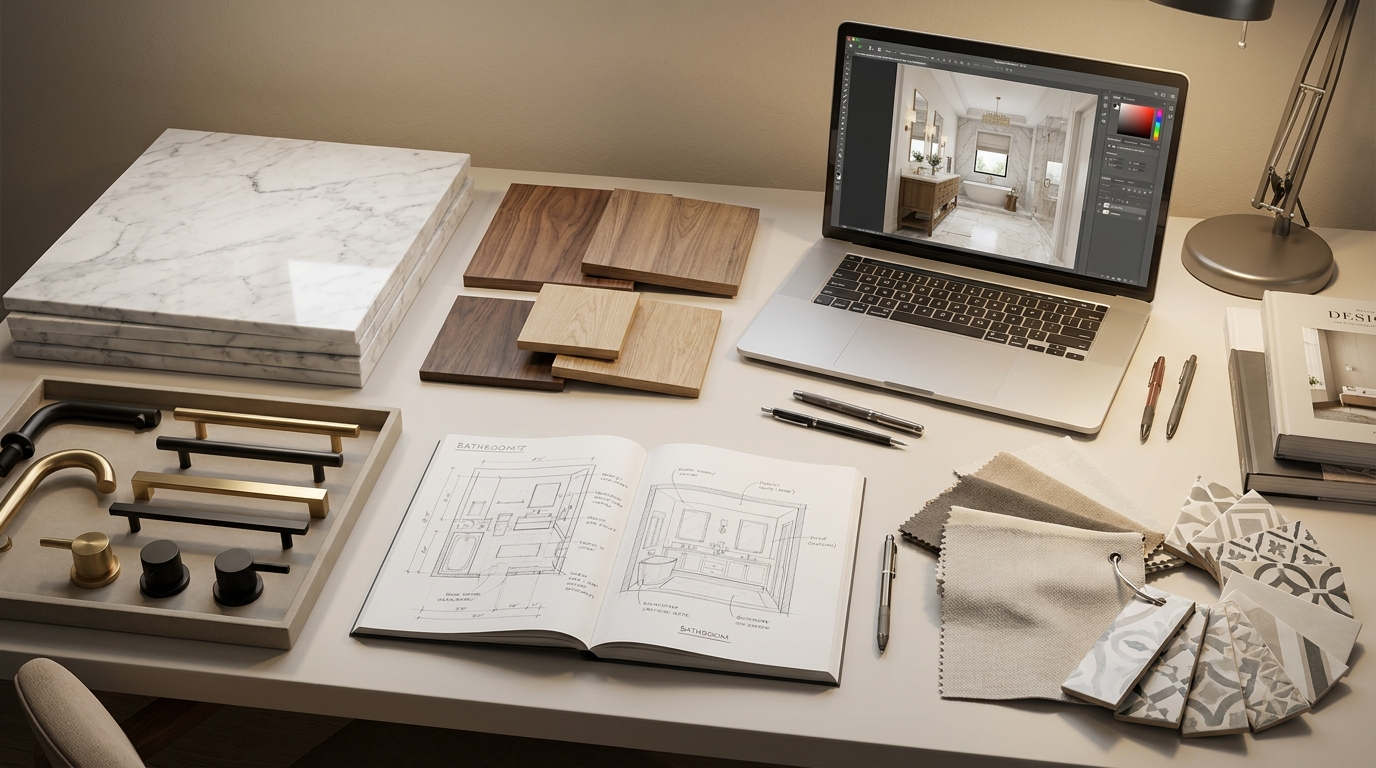
The scope varies by project, but a bathroom remodel designer typically covers:
Space planning and layout. Before any materials are selected, the designer evaluates the existing layout and determines whether it's the best use of the space. Moving a door, relocating the shower, or rotating the vanity wall are structural decisions that a designer can identify early — when they're still low-cost to execute.
Material selection and specification. Tile, stone, cabinetry, fixtures, hardware, mirrors, lighting — a designer selects these as a system, not as individual items. They understand how materials interact visually and practically: which tile grout color brings out the stone veining, which hardware finish reads as warm next to which cabinet color.
Contractor coordination. A designer with bathroom renovation experience knows what questions to ask contractors, which specifications need to be explicit in the contract, and which details get lost in translation between design intent and installation.
Problem-solving. Every bathroom remodel encounters surprises — unexpected plumbing configurations, structural elements in inconvenient locations, materials that arrive damaged or discontinued. A designer resolves these on the fly.
Budget management. A good designer helps allocate budget to where it matters most. In bathrooms, this usually means investing in natural stone and quality fixtures while finding savings on accessories and secondary finishes.
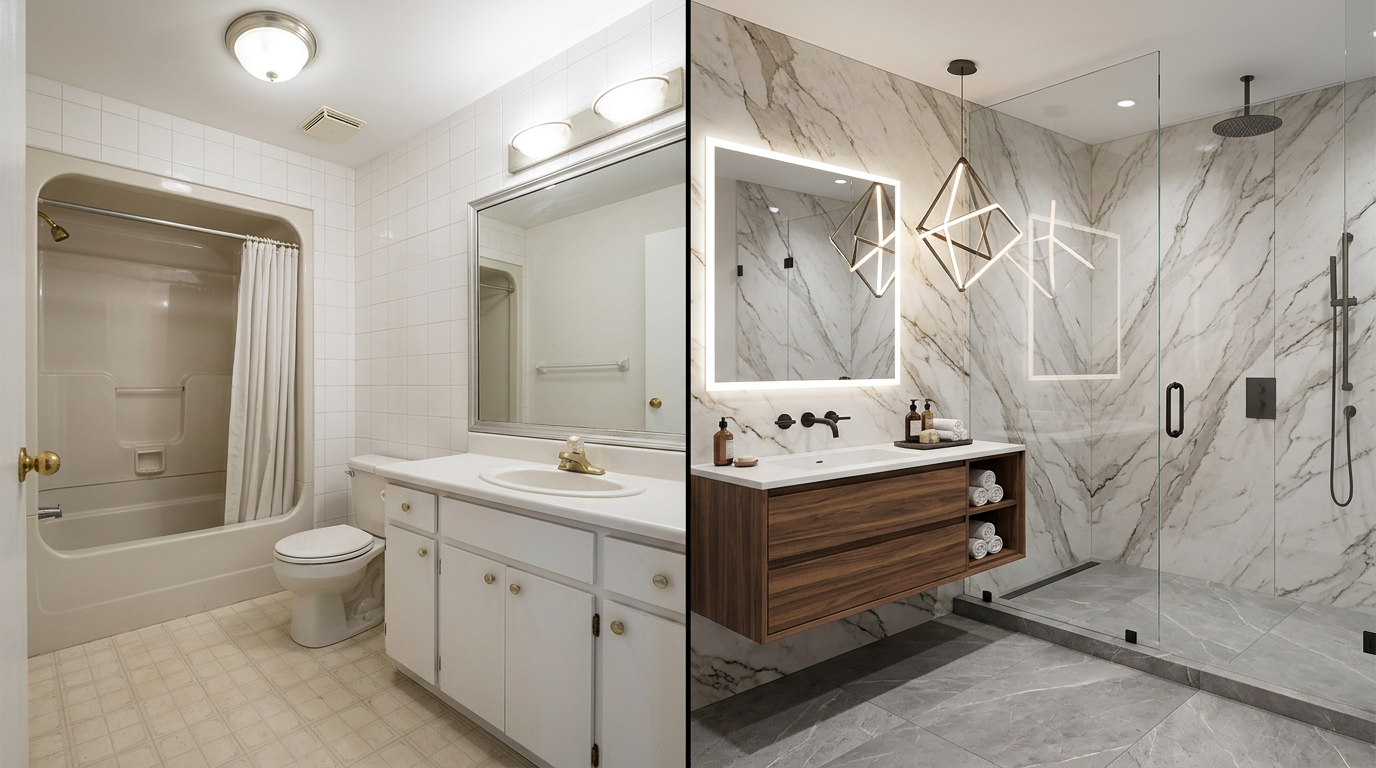
Not every bathroom remodel requires a designer. A straightforward update — new paint, new fixtures, replacement tile in the same pattern — can usually be managed without one.
You should seriously consider hiring a designer when:
The layout needs to change. Moving plumbing, expanding into adjacent space, or restructuring the shower and tub configuration requires design thinking before construction starts.
You have a budget above $25,000. At this level, the design decisions are significant enough that mistakes are costly. A designer's fee — typically 10-20% of construction cost — is recovered many times over in avoided specification errors.
The project involves natural stone. Stone selection, layout, cutting, and installation require specific expertise. Bookmatching, vein direction, grout joint width, and finish choice all affect how stone looks and performs.
You want a specific aesthetic result. If you have a clear vision — spa bathroom, art deco master suite, Japandi minimalism — and you're not sure how to translate it into specific materials and specifications, a designer bridges the gap.
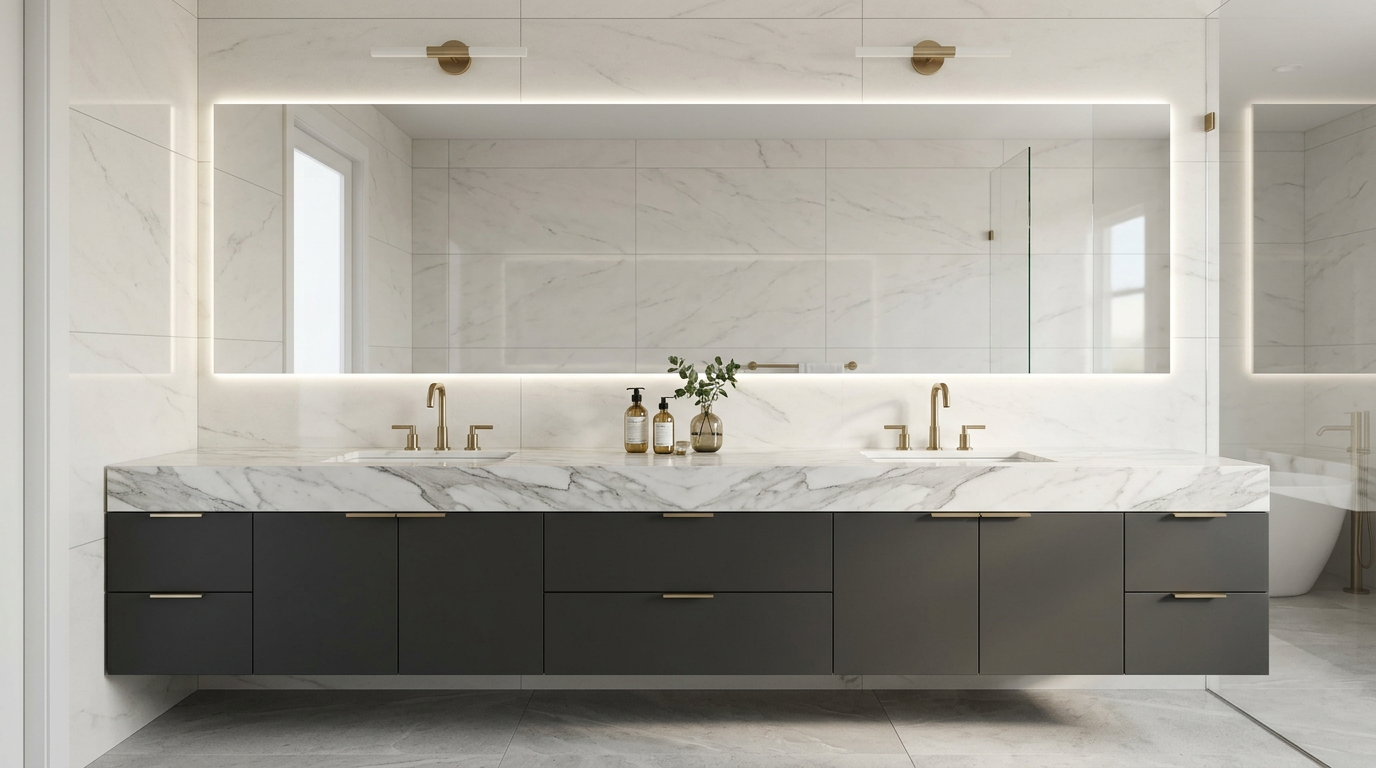
A portfolio that includes bathrooms. Bathrooms are technically specific — waterproofing, steam resistance, slip ratings — and a designer who works primarily in living rooms may not have the technical vocabulary to specify a bathroom correctly.
Projects at your budget level. A designer who works primarily on $100,000 master suites will struggle to make the right trade-offs on a $30,000 primary bathroom remodel.
Work you'd actually want to live with. Portfolios are a preview of the decisions a designer makes independently. If nothing in their portfolio resonates with you aesthetically, the collaboration will be an uphill negotiation.
Clear communication style. A bathroom remodel involves dozens of decisions over several weeks. A designer who communicates clearly and responds promptly is worth more than a more technically skilled designer who is difficult to work with.
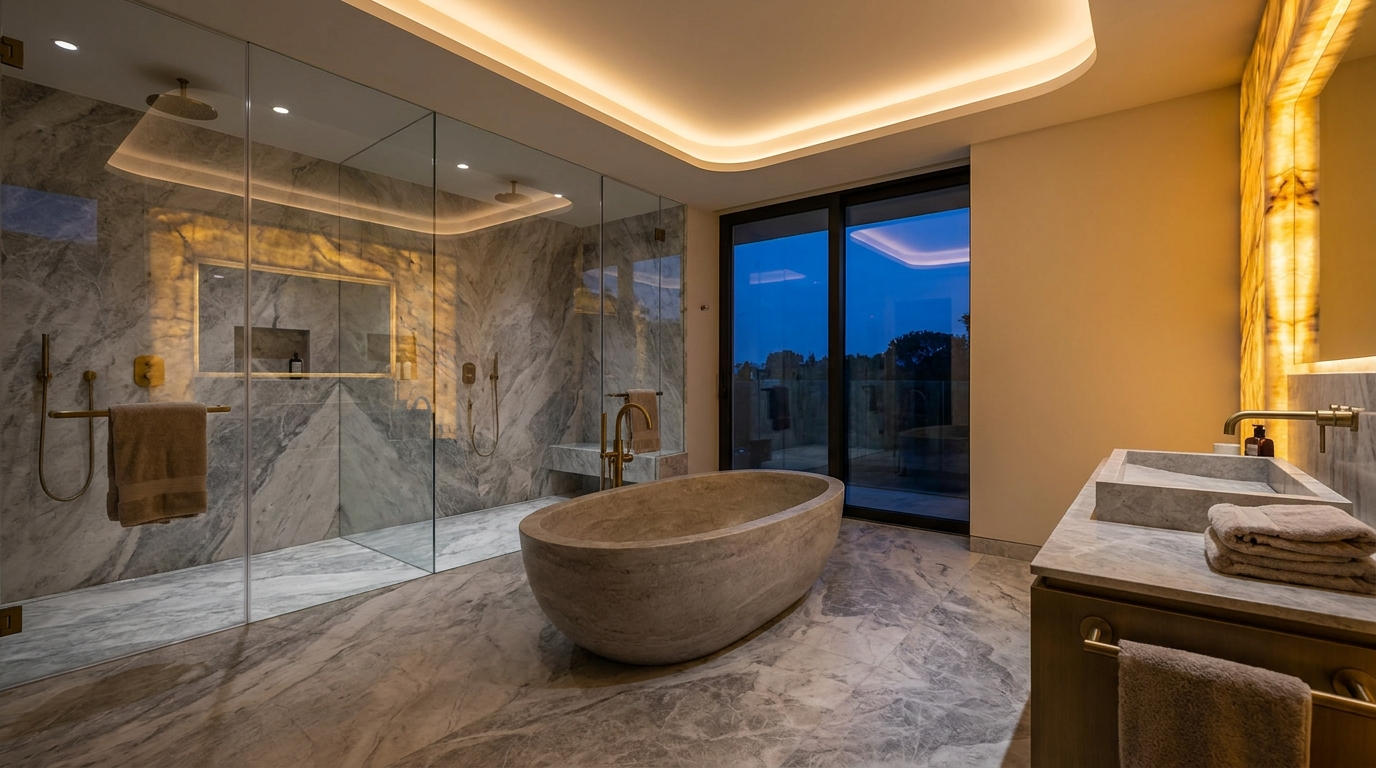
Platforms that show actual work. Interior Design Awards (IDA) is a useful starting point — designers submit their best projects for community voting, and you can browse bathroom submissions to find designers whose work resonates with you. Houzz and Behance also aggregate designer portfolios with project-level detail.
Local showrooms and suppliers. Tile showrooms, stone yards, and plumbing fixture showrooms that cater to the trade often have relationships with local designers. A referral from a supplier is a meaningful signal.
Contractor referrals. A skilled bathroom contractor who has worked with multiple designers will have opinions about which ones produce complete, accurate specifications.
What does your fee cover, and what's excluded? Understand exactly what the designer will produce — space plan, material specifications, contractor briefing, site visits.
Have you worked with bathrooms at this scale and budget before? And ask to see examples.
How do you handle specification changes during construction? Things change. The designer's answer tells you how much flexibility and problem-solving capacity they bring.
What happens if a material is discontinued or arrives damaged? A practical test of how the designer thinks on their feet.
Fee structures vary significantly. Common models:
Percentage of construction cost. Typically 15-20% of the total construction budget. On a $40,000 remodel, this is $6,000-$8,000. This model aligns the designer's incentive with the project quality.
Flat project fee. A fixed amount for a defined scope of work — space plan, material specifications, contractor briefing.
Hourly rate. Ranges from $100-$300+ per hour depending on experience and market. Works well for limited-scope engagements — a consultation to review your material selections or a single site visit.
For most bathroom remodels in the $25,000-$75,000 range, a flat project fee or hourly engagement is the most transparent structure for the homeowner.
The most efficient way to find a bathroom remodel designer is to start with work you genuinely want to live with. Browsing designer portfolios on IDA, Houzz, or Behance — looking specifically at bathroom submissions — lets you shortlist based on aesthetic alignment before any other qualification.
→ Browse bathroom projects from working designers
Every month, interior designers submit their best bathroom projects on Interior Design Awards. The community votes, and the top 3 earn recognition and cash rewards. Browsing these submissions is one of the most efficient ways to identify designers whose bathroom work you'd want to hire for your own remodel.
Interior Design Awards (IDA) is a platform where designers share room projects, the community votes monthly, and the top designers earn recognition and rewards. Based in the US, open to designers worldwide.