

Online Interior Design Competition: What to Look For and How to Win
6 min read
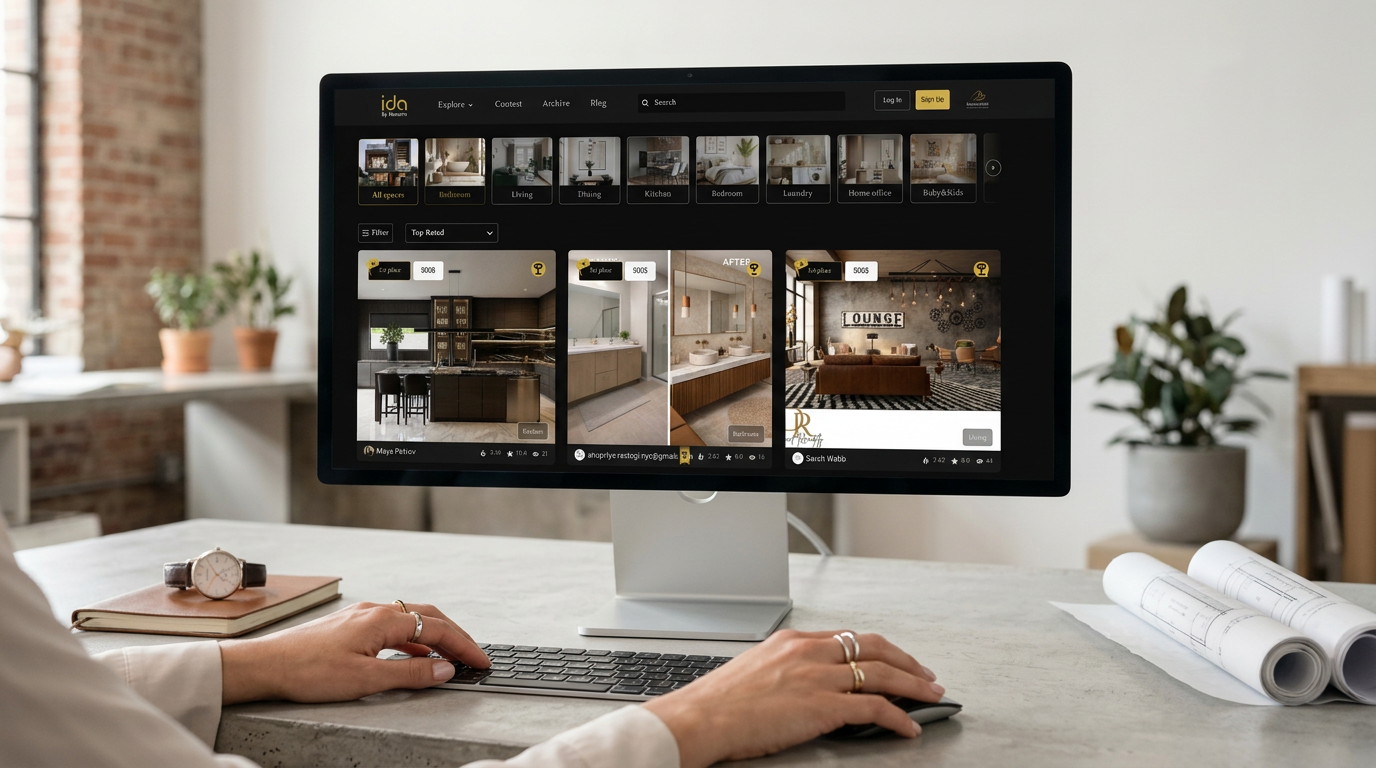
Online interior design competitions have fundamentally changed how designers build recognition. Before digital platforms, getting work in front of the right people required connections to specific publications, jury chairpersons, or local professional associations. Those connections were unevenly distributed.
Online competitions change this equation. A designer in Austin, Cape Town, or Kyiv can submit work to a global community on the same terms as a designer in New York with 20 years of industry relationships. The work is what gets evaluated — not the network behind it.
This guide covers how online design competitions work, what distinguishes the formats available, and what actually gives a submission the best chance of winning.
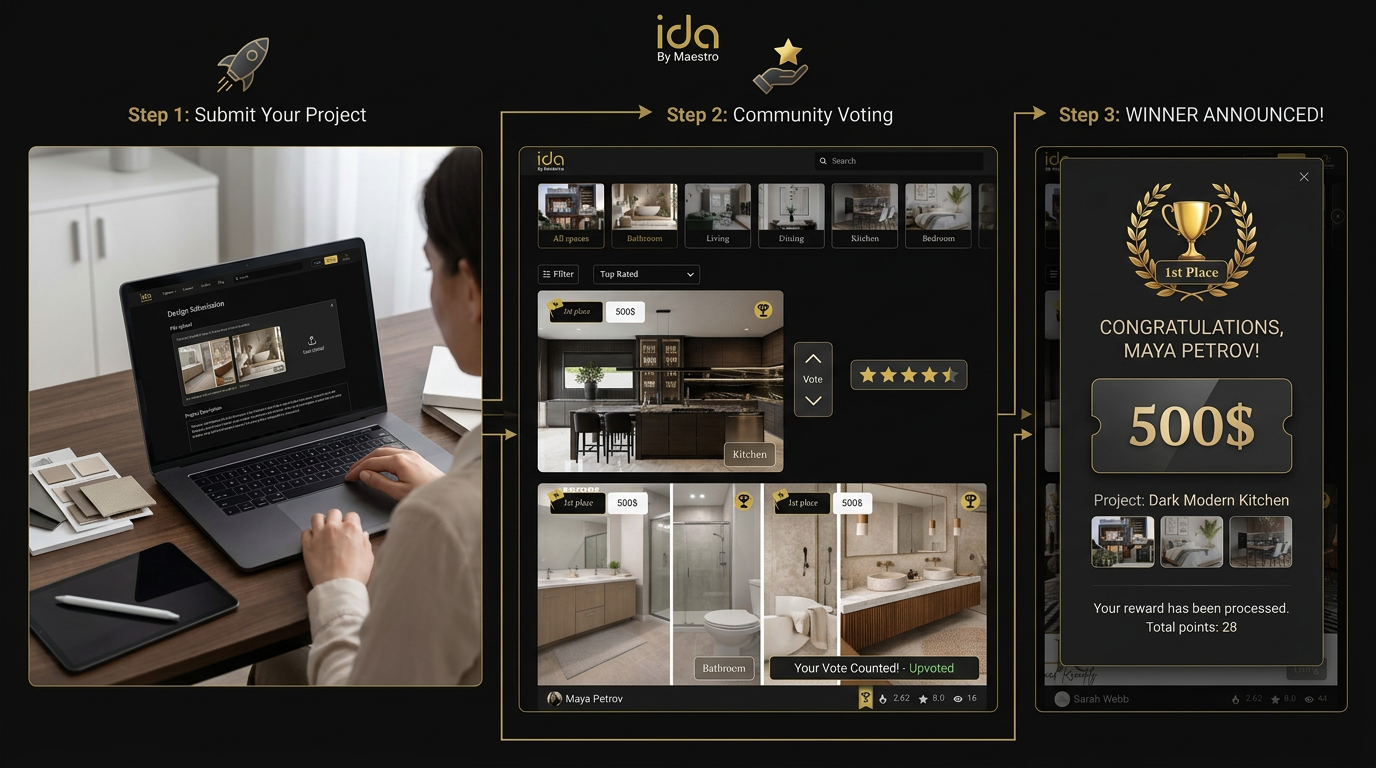
Online design competitions vary significantly in format, evaluation method, and what winning actually means. Understanding the differences helps you choose where to invest your submission time.
Community-voted platforms allow submissions to be evaluated by a broad audience of designers, homeowners, and design enthusiasts in real time. Interior Design Awards (IDA) operates this way — designers submit room projects across 17 categories, the community votes throughout the month, and the top 3 earn cash rewards and recognition. The feedback is immediate, the process is transparent, and results don't depend on reaching a specific jury member.
Online jury competitions use digital submission portals but maintain a panel of expert judges who evaluate entries. Programs like the A' Design Award and SBID accept digital submissions but judge them through a panel process. These carry more prestige but have longer timelines, entry fees, and less direct community feedback.
Social media competitions run through Instagram or Pinterest, typically with hashtag-based entry systems. These have the widest potential reach but the least structured evaluation criteria and rarely offer meaningful recognition beyond follower growth.
For designers who want substantive feedback alongside recognition, community-voted platforms offer the most useful signal: raw vote data tells you which projects resonate most broadly, independent of any single editorial perspective.
The submissions that consistently perform best in online competitions — whether community-voted or jury-decided — share specific qualities that go beyond surface aesthetics.
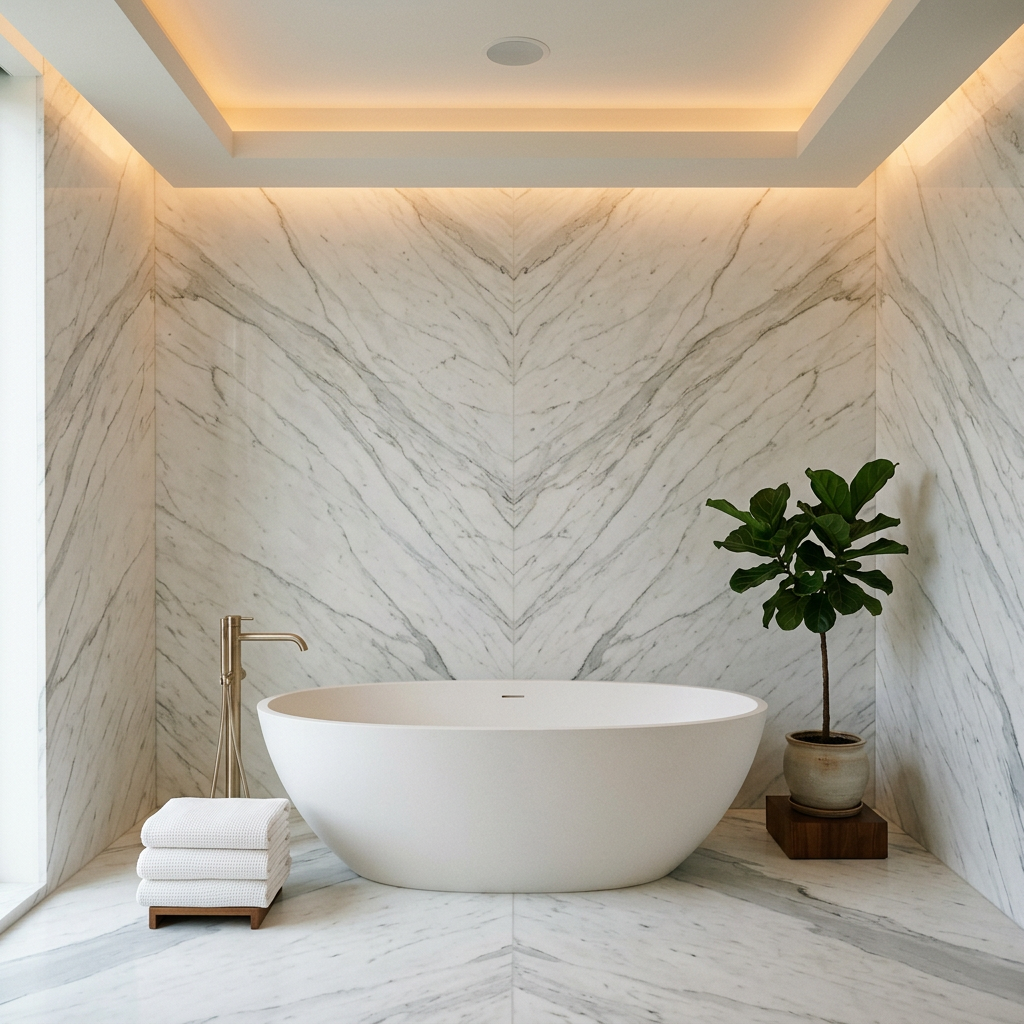
Coherence above all. A room where every element serves the same design intention performs better than a room of individually excellent elements that don't form a unified vision. A bathroom designed as a neuroaesthetic sanctuary — where the dark palette, the organic stone forms, the layered lighting, and the minimal accessories all serve the same atmospheric goal — reads completely differently from a bathroom with good individual choices assembled without an organizing logic.
Photography quality. In an online competition, the project exists only as images. Photography quality is not a secondary concern — it's the primary one. The most common reason excellent work doesn't place in online competitions is not the design itself but the photography representing it. Natural light, wide-angle lens, precise staging, and consistent color treatment are the baseline requirements.
A description that communicates thinking. Most online platforms provide a field for project description. The descriptions that perform best don't describe what you can see in the photos — they explain what you were trying to achieve and why the specific choices were made.
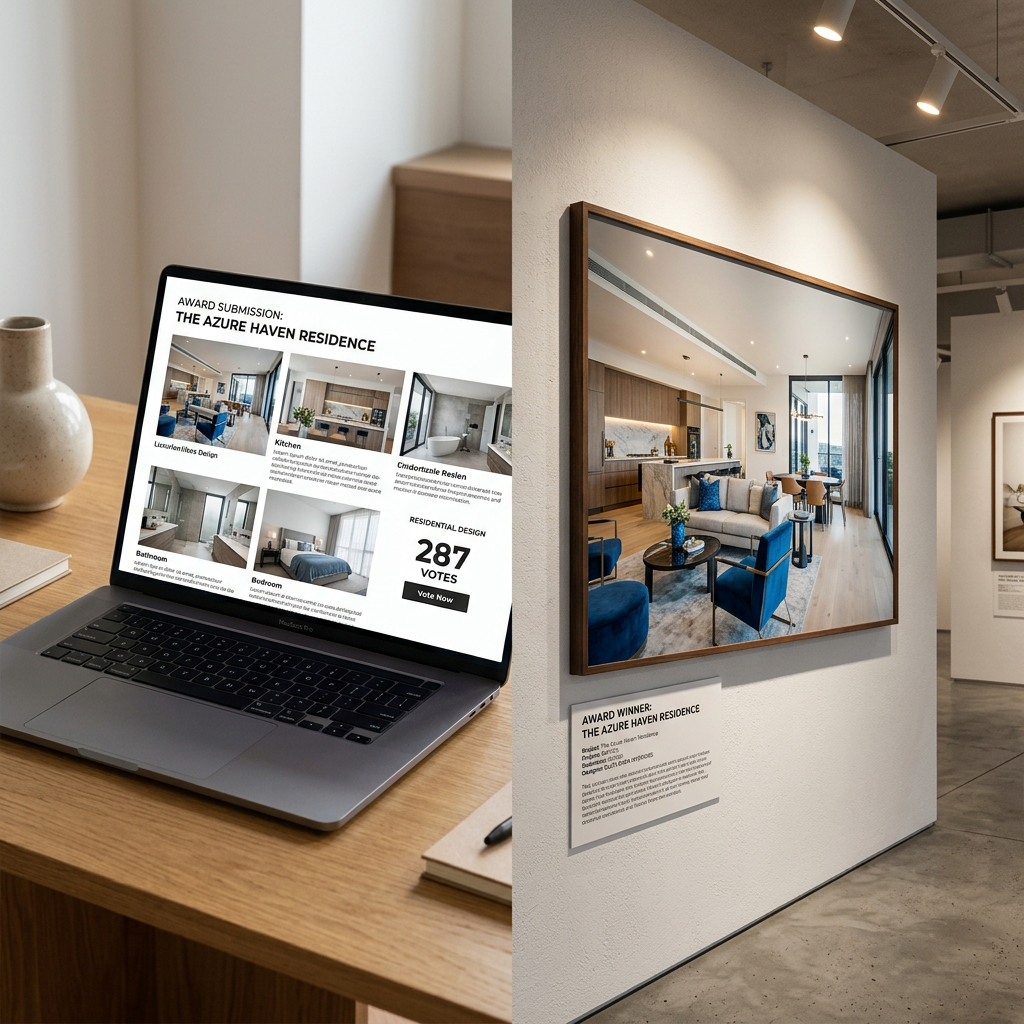
Online competitions offer advantages that in-person programs structurally cannot:
Immediate feedback. Community-voted online platforms give you vote data in real time. You can see within days whether a project is resonating or not — and adjust your approach for future submissions accordingly. Jury competitions typically provide results months after submission with little granular feedback.
Global reach with no travel. An online competition platform reaches designers and voters across every time zone. A regional in-person competition reaches whoever can physically attend.
Lower barrier to entry. Most online platforms — including IDA — have no entry fees. In-person jury programs typically charge submission fees that can range from $50 to several hundred dollars per entry.
More frequent cycles. IDA runs monthly competitions. Most major jury award programs run annually. Monthly cycles mean more opportunities to submit, more feedback loops, and faster development of your competition submission skills.
The primary advantage in-person programs retain is prestige — a jury award from SBID or the Andrew Martin carries a different kind of recognition than a community platform win. The most effective approach uses both: online community platforms for frequent feedback and ongoing visibility, jury programs for the annual prestige credential.
IDA runs monthly competitions across 17 room categories: Bathroom, Kitchen, Bedroom, Living Room, Home Office, Dining Room, Outdoor, and more. The submission process takes approximately 5 minutes.
Create your profile at maestroida.com. Your profile is your public designer presence on the platform — add a photo, bio, and location.
Choose your strongest project. Not your most recent — your best. The project where the design intention is clearest and the photography is strongest.
Upload your space. Add your project photos (multiple angles tell the full story), a project title, and a description that explains your design intention — not just describes what's visible.
Go live. Your project is immediately visible to the IDA community. Votes and views accumulate throughout the month.
Top 3 win. At the end of each month, the top 3 submissions in each category earn cash rewards and recognition.
No entry fees. No jury gate. Your work evaluated directly by a global community of designers and design enthusiasts.
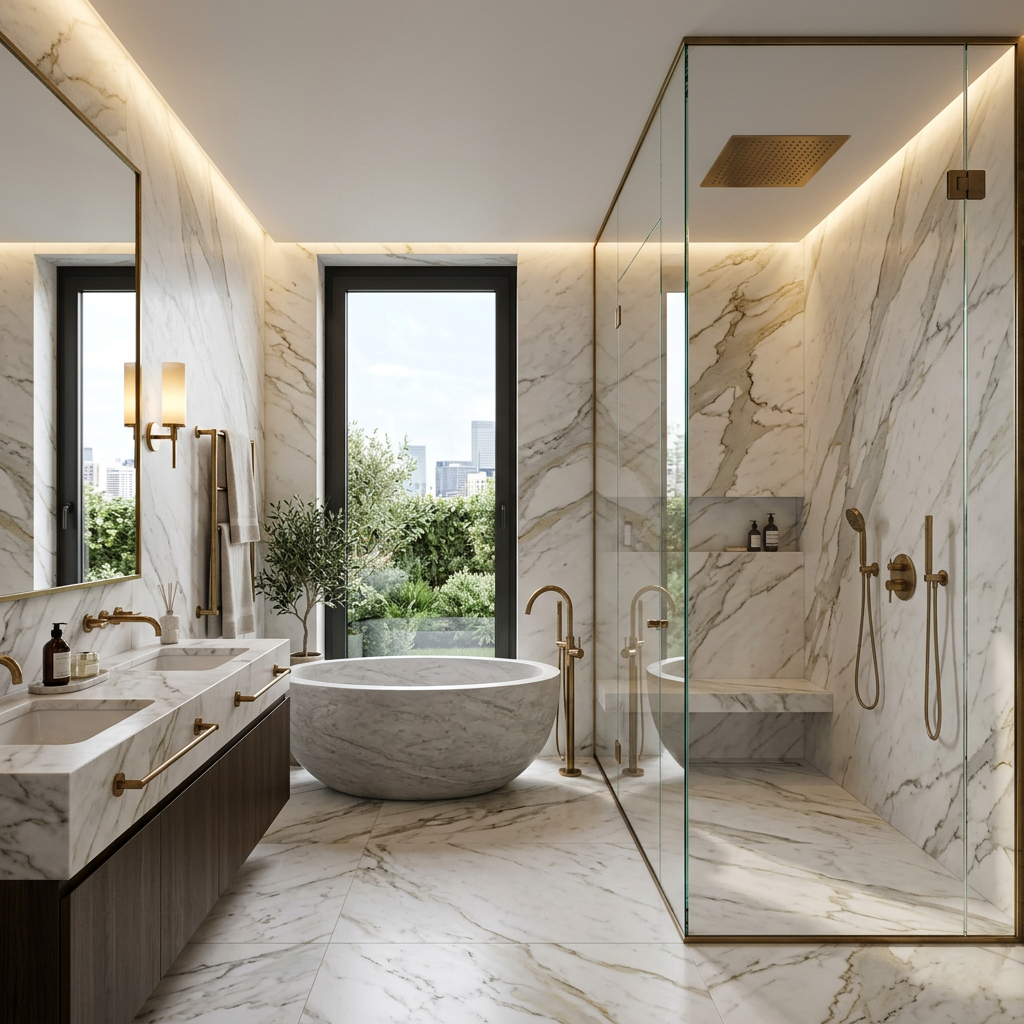
The difference between entries that place and entries that don't is rarely the overall quality of the design. It's more often one of three specific things:
Photography is the project. In an online competition, voters never walk into the room. The photographs are the room. A stunning space photographed in mixed artificial light with a phone camera will lose to a competent space photographed professionally with natural light. Before submitting, ask yourself honestly: do these photos represent this space at its best?
The description explains the thinking. Votes on community platforms respond to narrative — to understanding what a designer was trying to achieve and recognizing that they achieved it. A project with a description that communicates genuine design intention consistently outperforms the same project with a generic description of its materials.
The submission is made early. On community platforms, earlier submissions accumulate more votes simply because they're visible for longer. A submission made on day 1 of the competition month has 30 days to collect votes. A submission made on day 28 has 2.
Online interior design competitions reward designers who treat submission as an ongoing practice rather than a one-time event. The first submission teaches you what works and what doesn't. Each subsequent one builds on that learning.
IDA's monthly cycle is designed exactly for this: submit, get feedback, refine, submit again. Over a few months, the patterns in your vote data will tell you more about how your work resonates than any single award or jury decision.
→ Browse this month's submissions and see what the community is voting for
→ Submit your project for free
Interior Design Awards (IDA) is a platform where designers share room projects, the community votes monthly, and the top designers earn recognition and rewards. Based in the US, open to designers worldwide.