

Interior Design Trends 2027: What's Coming and What the Community Is Already Voting For
5 min read
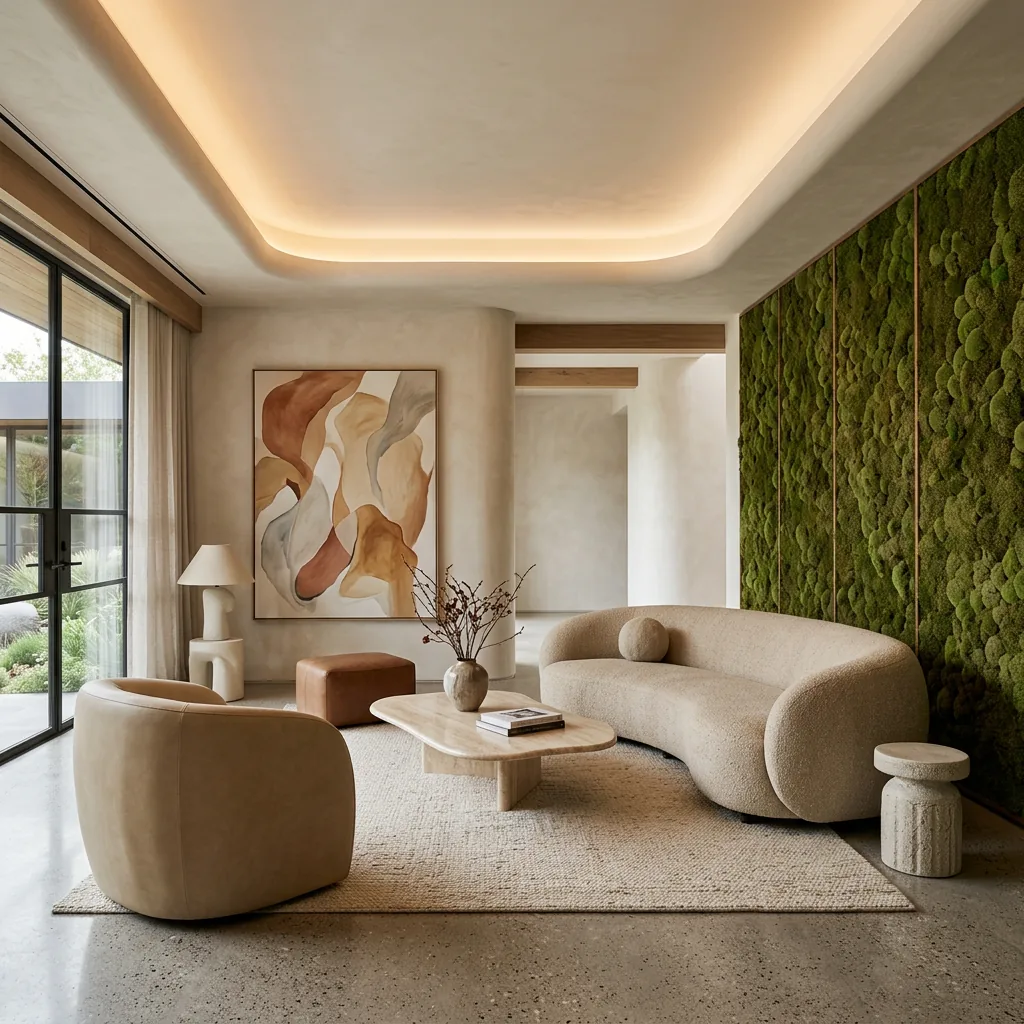
Trends in interior design don't announce themselves at a specific moment. They accumulate — in the submissions designers are making, in what communities are voting for, in the material choices that keep appearing across different projects in different cities. By the time a trend appears in a magazine, it's already been happening in studios for 18 months.
At Interior Design Awards (IDA), we see hundreds of room submissions every month from designers across the US and internationally. The patterns in what the community votes for — and what's starting to appear in the most talked-about projects right now — paint a clear picture of where interior design is heading in 2027.
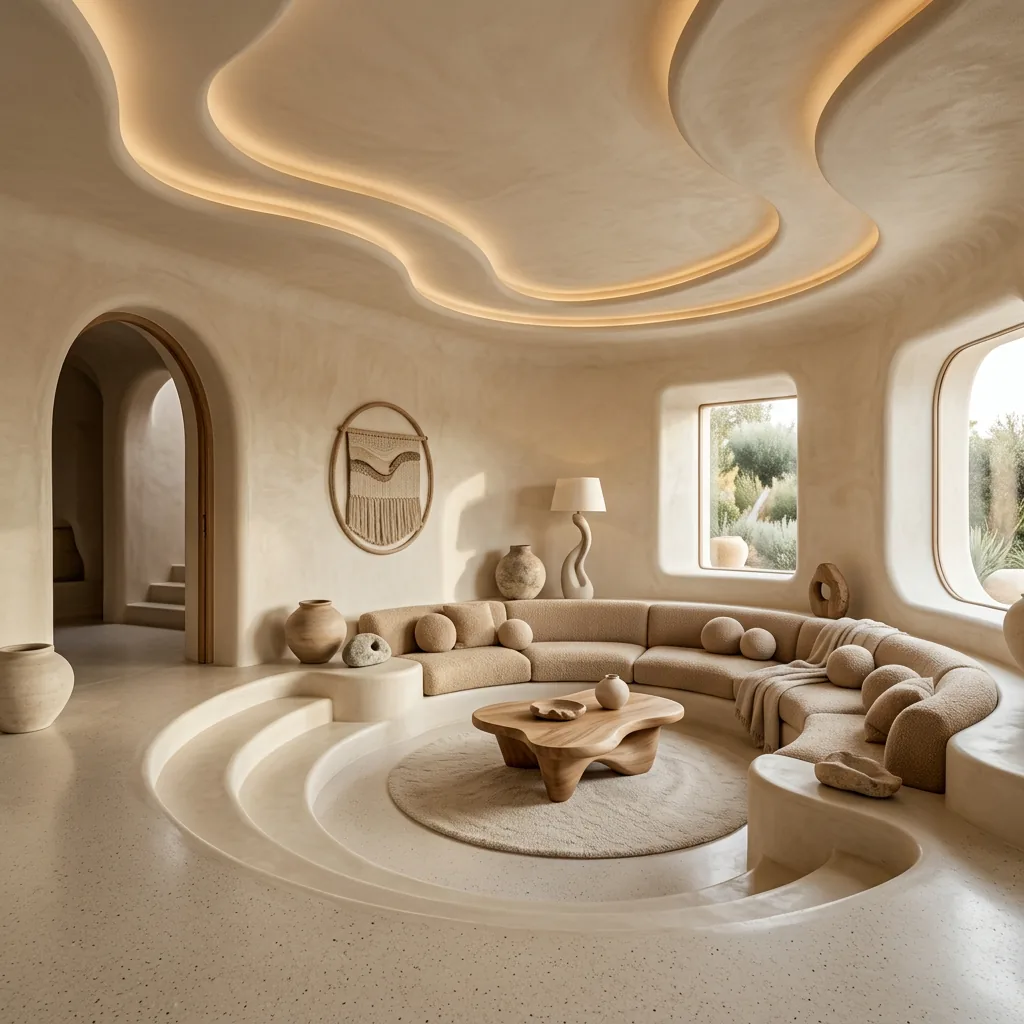
The sharp right angle is becoming less dominant in interior design — not disappearing, but giving way to organic curves that feel both ancient and forward-looking simultaneously.
This is showing up in built architecture (curved plaster walls, arched doorways with thick rounded edges, sunken conversation pits with curved steps), in furniture (sofas with rounded arms and backs, oval and circular coffee tables, curved dining chairs), and in ceiling design (undulating plaster forms, circular coffers, wave-like ceiling details that echo the biomorphic shapes seen in high-end architecture).
The reference point isn't 1970s conversation pits — it's closer to traditional North African and Middle Eastern architecture, where curved forms in plaster and clay create thermal and acoustic environments of exceptional quality. Contemporary designers are rediscovering this language and translating it into residential spaces.
In IDA submissions, curved architectural elements have been appearing more frequently in the highest-voted projects since late 2025. By 2027, this is expected to move from emerging to dominant in the luxury residential category.
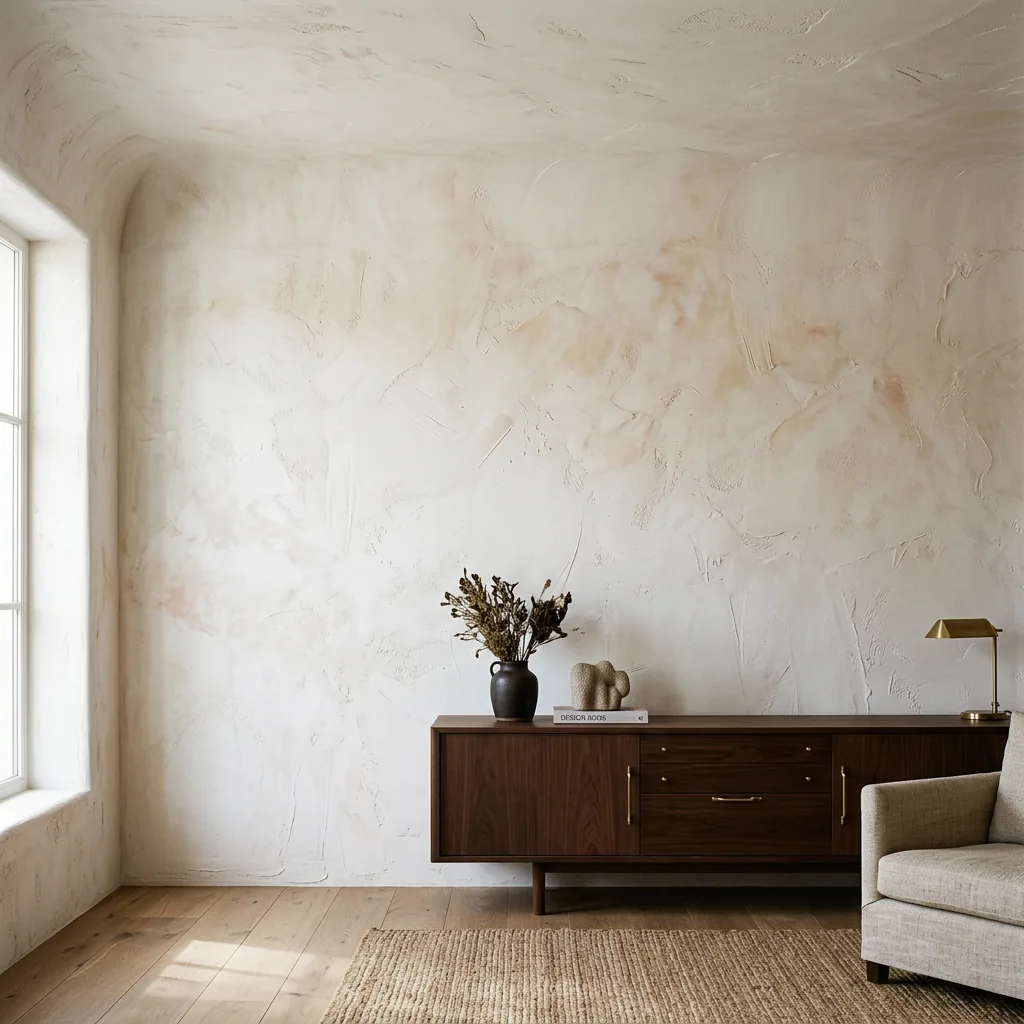
Plaster — specifically hand-applied, hand-troweled plaster with visible tool marks and intentional surface variation — is the wall treatment that is replacing paint in high-end residential design. It's been building for several years and will be fully mainstream by 2027.
The appeal is tactile and visual: plaster has depth that paint doesn't. A plaster wall in warm white catches directional light and reveals itself differently at different times of day. The visible trowel marks signal craft and handwork in a way that machine-applied finishes can't replicate. And plaster — unlike most wall treatments — improves with age: the patina it develops over years adds character rather than looking tired.
Marmorino, venetian plaster, and limewash are the specific finishes that appear most frequently in IDA's high-performing submissions. Each has a different quality: marmorino has a slight sheen that reads as sophisticated, venetian plaster is the most luxurious and the most labor-intensive, limewash has a soft chalky depth that works particularly well in bedrooms and bathrooms.
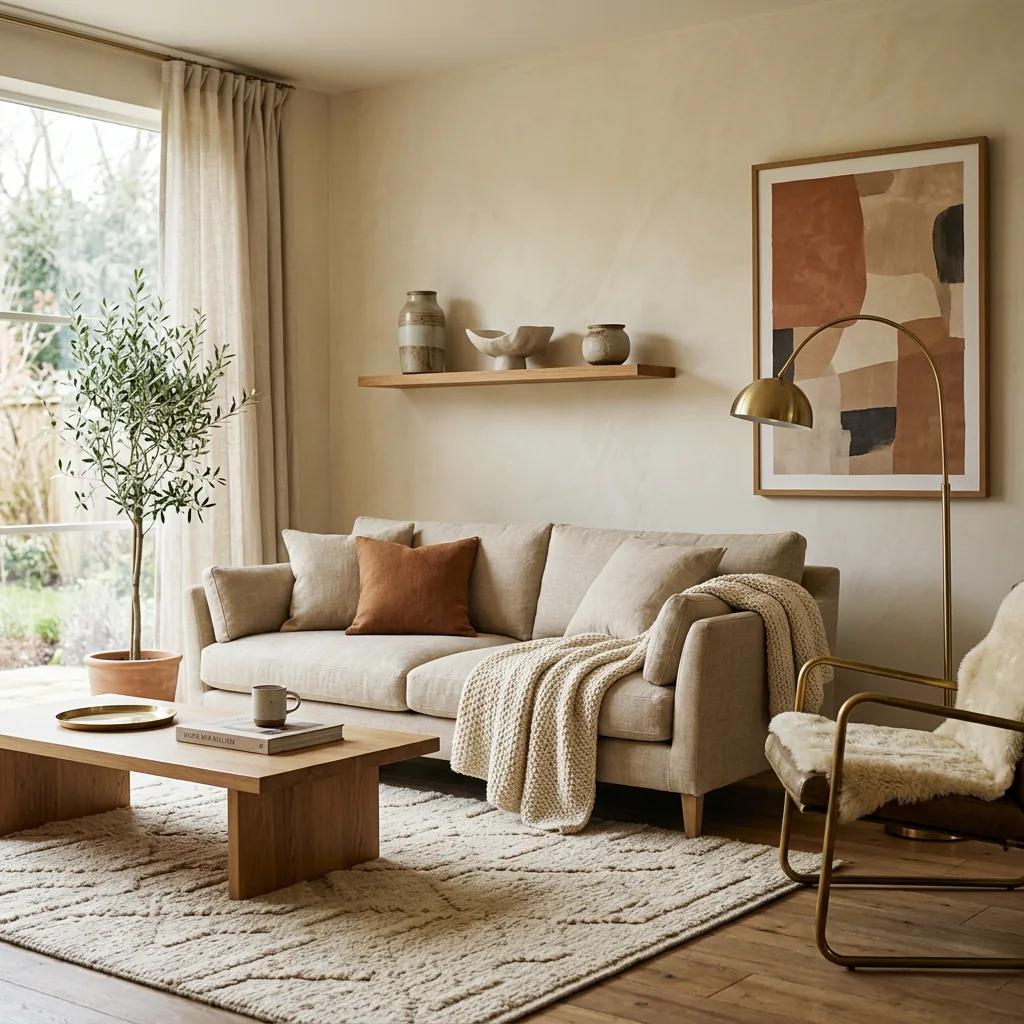
The white-walled, chrome-detailed, perfectly empty minimalism that dominated design publications for much of the 2010s has been losing ground for several years. By 2027, warm minimalism — the same restraint in object count and visual complexity, but with materials, colors, and textures that create genuine sensory warmth — will be the default mode of sophisticated residential design.
The distinction matters because it's not simply about adding warmth to minimalism. It's a different set of material decisions from the start: warm white plaster instead of white paint, natural oak instead of bleached or painted wood, brushed brass instead of chrome, linen instead of smooth cotton, handwoven rugs instead of machine-made. The same number of objects, arranged with the same restraint — but every object chosen for its warmth as much as its form.
IDA community voting data from 2025-2026 shows this pattern clearly: warm minimalist submissions consistently outscore cool minimalist submissions when the design quality is equivalent. The community is voting for warmth.
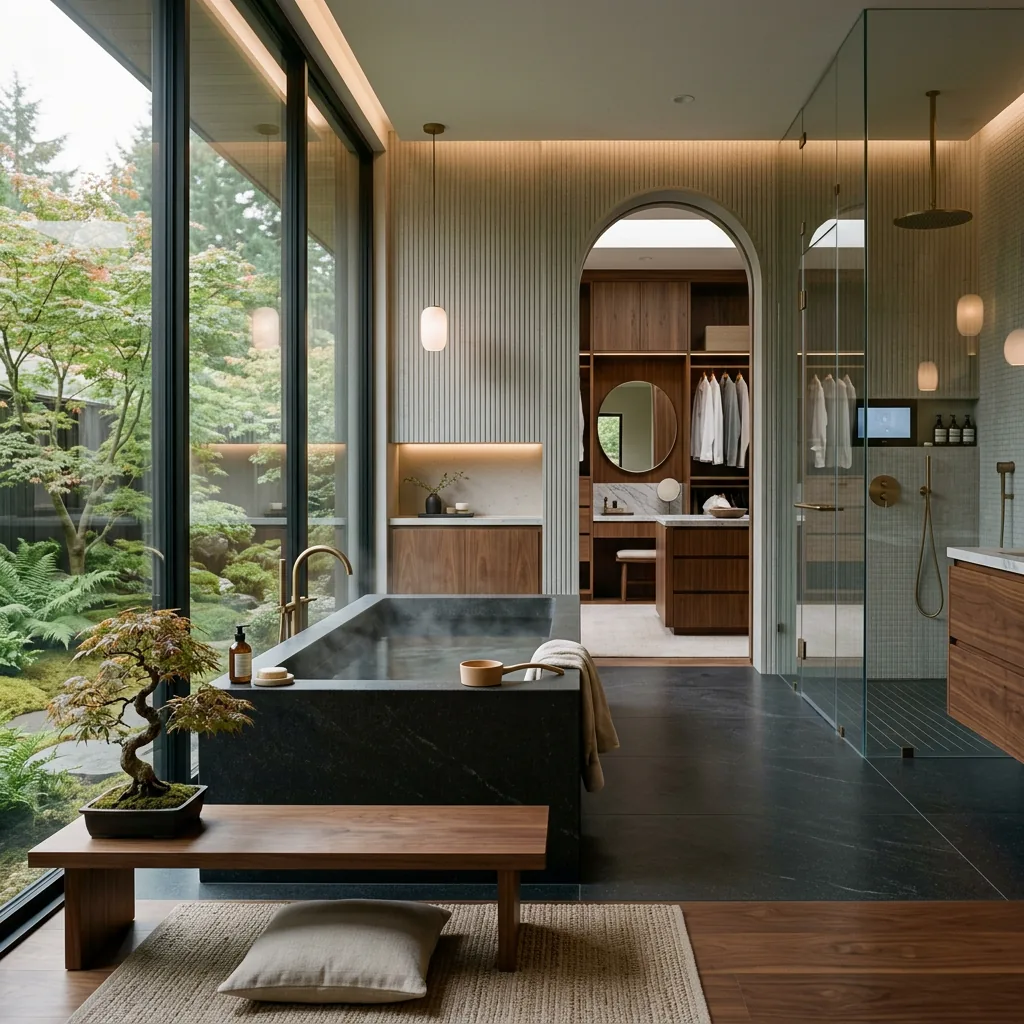
The bathroom has been gaining status as a luxury space for several years, but 2027 marks the point where it becomes the primary luxury investment in residential design — surpassing the kitchen in renovation spend and receiving the same spatial and material attention previously reserved for master bedrooms.
Several forces are converging: post-pandemic investment in personal wellness, the influence of high-end hotel design on residential expectations, and a cultural shift toward private retreat spaces within the home. The bathroom is the most private room in the house, and designers are responding to clients who want it to function as a genuine sanctuary.
What this looks like in practice: bathrooms getting larger through space borrowed from adjacent rooms, Japanese soaking tubs and steam showers appearing where standard bathtub-and-shower combinations previously sat, integrated technology (chromotherapy lighting, aromatherapy systems, digital temperature controls), and material investment — bookmatched stone, custom joinery, radiant heated floors — that would previously have been concentrated in living rooms and kitchens.
IDA's bathroom category already has the highest average submission quality of any category on the platform. This trend will only accelerate through 2027.
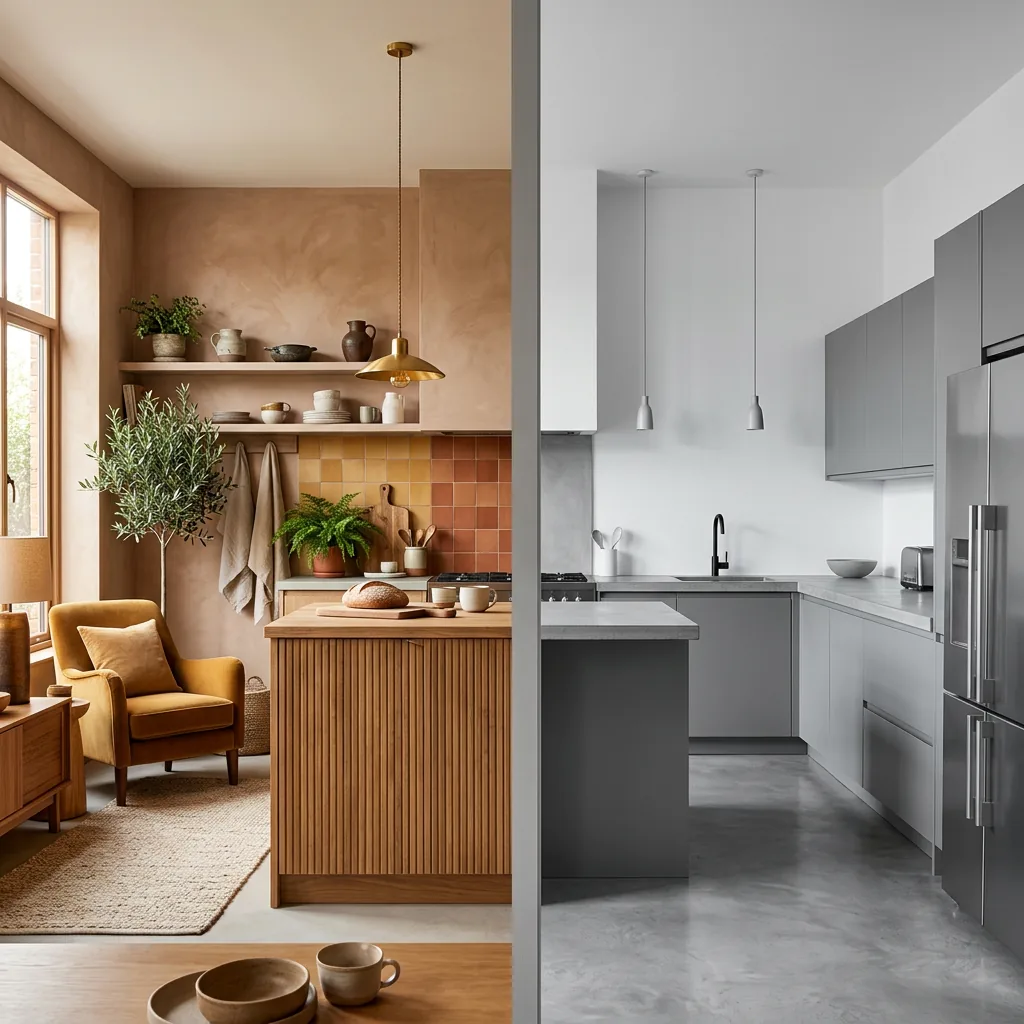
Gray has been the default neutral in residential design since approximately 2010 — in kitchen cabinets, bedroom walls, bathroom tiles, and living room furniture. The retreat from gray has been building since 2022, and by 2027 it will be effectively complete.
What replaces gray: warm earth tones rooted in natural pigments — terracotta, warm clay, dusty ochre, caramel, deep sand, muted sage green, warm mushroom brown. These are the colors of natural materials — stone, clay, dried vegetation, aged wood — and they're appearing across cabinet colors, wall treatments, furniture upholstery, and tile.
The shift is driven by the same forces as the warmth trend overall: a preference for materials and colors that feel connected to the natural world, and a reaction against the cool, urban aesthetic that gray represented. Earth tones photograph well in natural light and age gracefully — they look better over time rather than dated, which makes them a sounder long-term investment.
In IDA submissions, projects with earth-toned palettes have shown steadily increasing vote counts over the past 18 months relative to gray-dominant submissions.
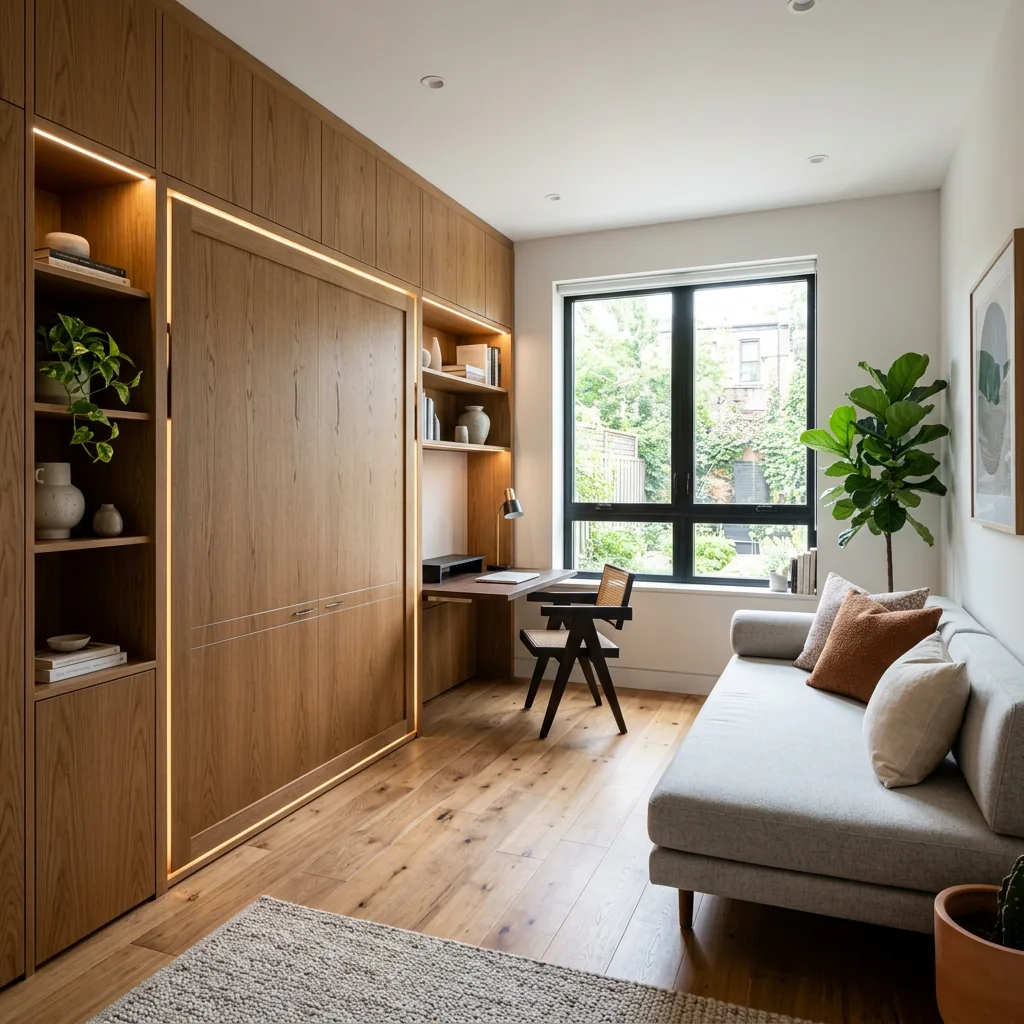
The post-pandemic work-from-home shift has permanently altered how people use residential space. By 2027, the majority of new and renovated homes in the US will incorporate at least one genuinely multipurpose room — not a room that sort of works for multiple purposes, but a room architecturally designed to serve two distinct functions at excellence.
The difference between a multipurpose room and a compromise: built-in joinery that conceals one function when the other is in use. A Murphy bed integrated into floor-to-ceiling paneling that reads as a beautiful built-in when closed. A home office desk that folds into the wall to reveal a guest bedroom. A dining room with a large built-in that conceals a home office setup behind matching cabinet doors.
The design challenge — making both functions feel complete rather than compromised — is producing some of the most interesting residential architecture of the current era. IDA's Home Office category has seen a 40%+ increase in submissions featuring integrated multi-function solutions since 2024. By 2027, this will be one of the most submitted categories on the platform.
Look across all six directions and a consistent logic emerges: 2027 interior design is moving toward the handmade, the warm, the tactile, and the deeply considered. Away from surfaces that look perfect and toward materials that feel real. Away from spaces that photograph well and toward spaces that feel well.
The IDA community has been voting for this direction consistently — and the designers whose work scores highest on the platform are the ones who understood it earliest.
Every month, interior designers submit their best room projects on Interior Design Awards across 17 categories. The community votes, and the top 3 earn recognition and cash rewards.
If you're designing with these directions in mind — or want to see what the community is responding to right now — this is where to look.
→ Browse this month's submissions
→ Submit your project and compete
Interior Design Awards (IDA) is a platform where designers share room projects, the community votes monthly, and the top designers earn recognition and rewards. Based in the US, open to designers worldwide.