

Japandi Living Room Design: How to Get the Balance Right
6 min read
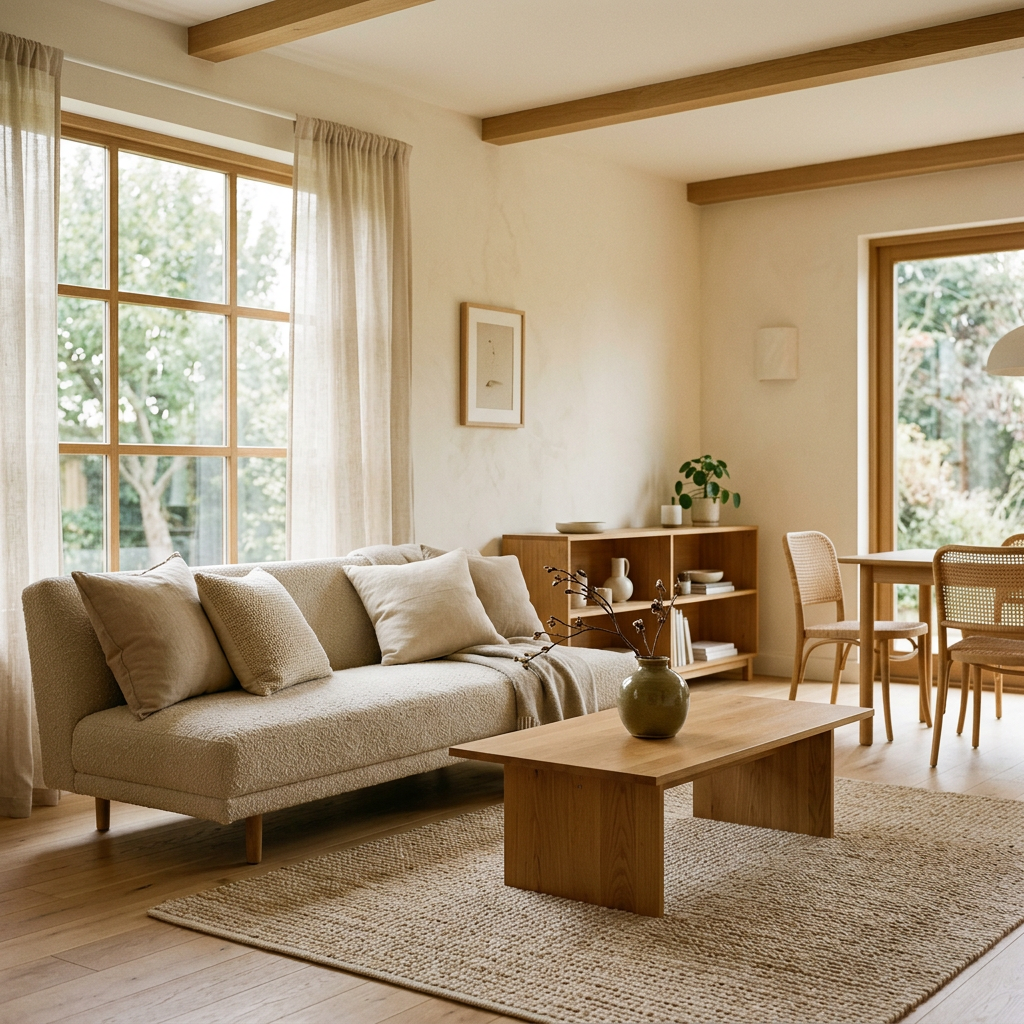
Japandi is the design style that emerged from combining two of the world's most admired approaches to interior design: the Japanese principle of wabi-sabi — finding beauty in imperfection and impermanence — and the Scandinavian philosophy of hygge — creating warmth, comfort, and togetherness through considered simplicity.
The result, when it works, is a living room that feels both calm and alive. Spare but not cold. Simple but not empty. Natural but not rustic. It's one of the most nuanced styles to execute well, and one of the most rewarding when the balance is right.
At Interior Design Awards (IDA), Japandi living room submissions consistently earn strong community votes — and the ones that score highest share a set of specific decisions. Here's what they are.
The most common mistake in Japandi living room design is interpreting "minimal" as "cool." Scandinavian design can veer toward cold grays and stark whites. Japanese minimalism can veer toward austere emptiness. Japandi occupies the space between both — and that space is warm.
The palette should be built on warm neutrals: whites with yellow or pink undertones rather than blue, woods that lean warm (light oak, ash, walnut) rather than pale and cool, textiles in natural linen, boucle, and cotton in oatmeal, cream, and warm gray.
The IDA community responds immediately to the temperature of a Japandi room. Submissions that get the warmth right consistently outscore those that are technically minimal but feel cold. The palette is the foundation — get it wrong and no amount of carefully chosen objects will compensate.
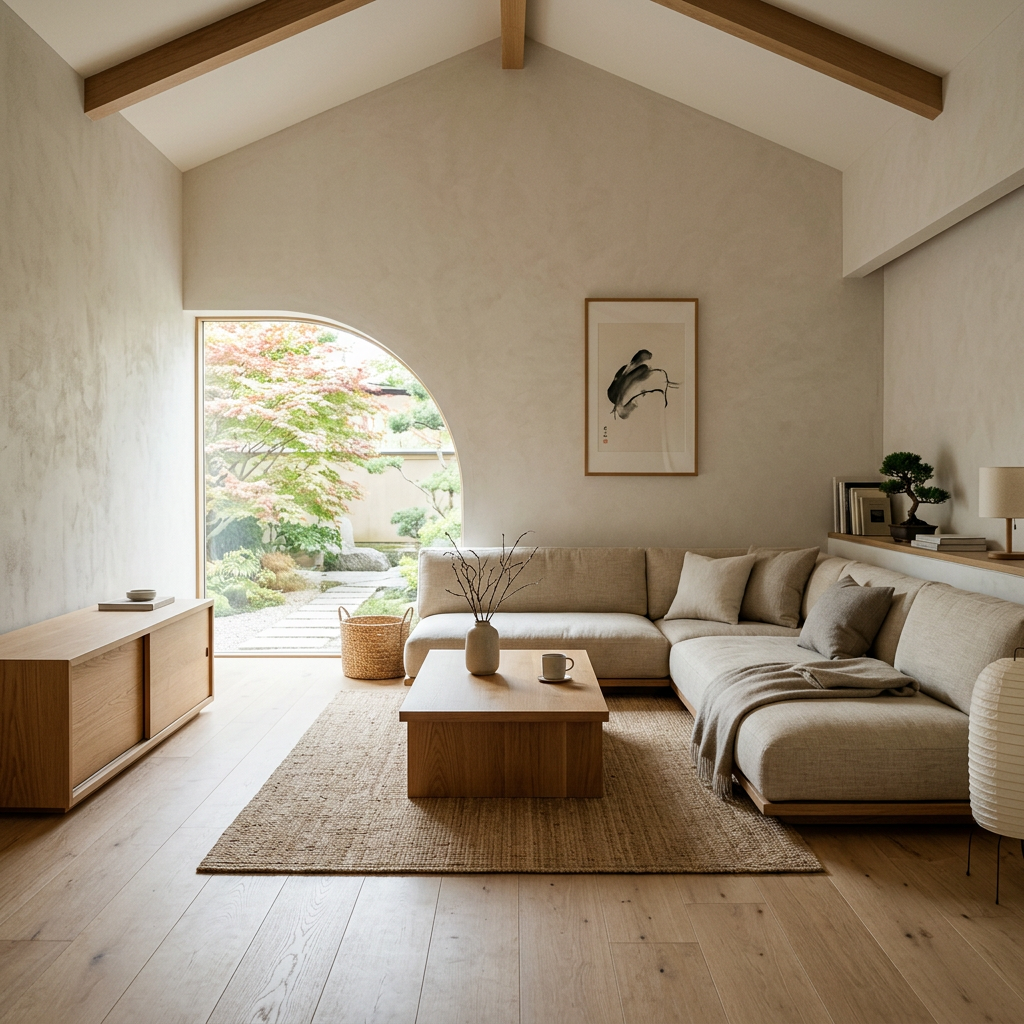
Japanese interior design has always favored low furniture — a relationship with the floor that creates a sense of groundedness and calm. Scandinavian design shares an appreciation for functional simplicity and clean lines. In Japandi, these two influences combine to produce living rooms where the furniture sits close to the ground and horizontal lines dominate.
A low sofa — 60-70cm seat height rather than the standard 80-90cm — changes how a room feels. The ceiling appears higher. The room feels more spacious. The atmosphere shifts from upright and formal to settled and calm. Paired with a low coffee table, a floor cushion or two, and a low media console with sliding panel doors rather than handles, the horizontal emphasis becomes the room's primary design language.
This is the element that most clearly signals Japandi to the eye — and the one most often omitted by designers who achieve the palette and materials but miss the proportional logic.
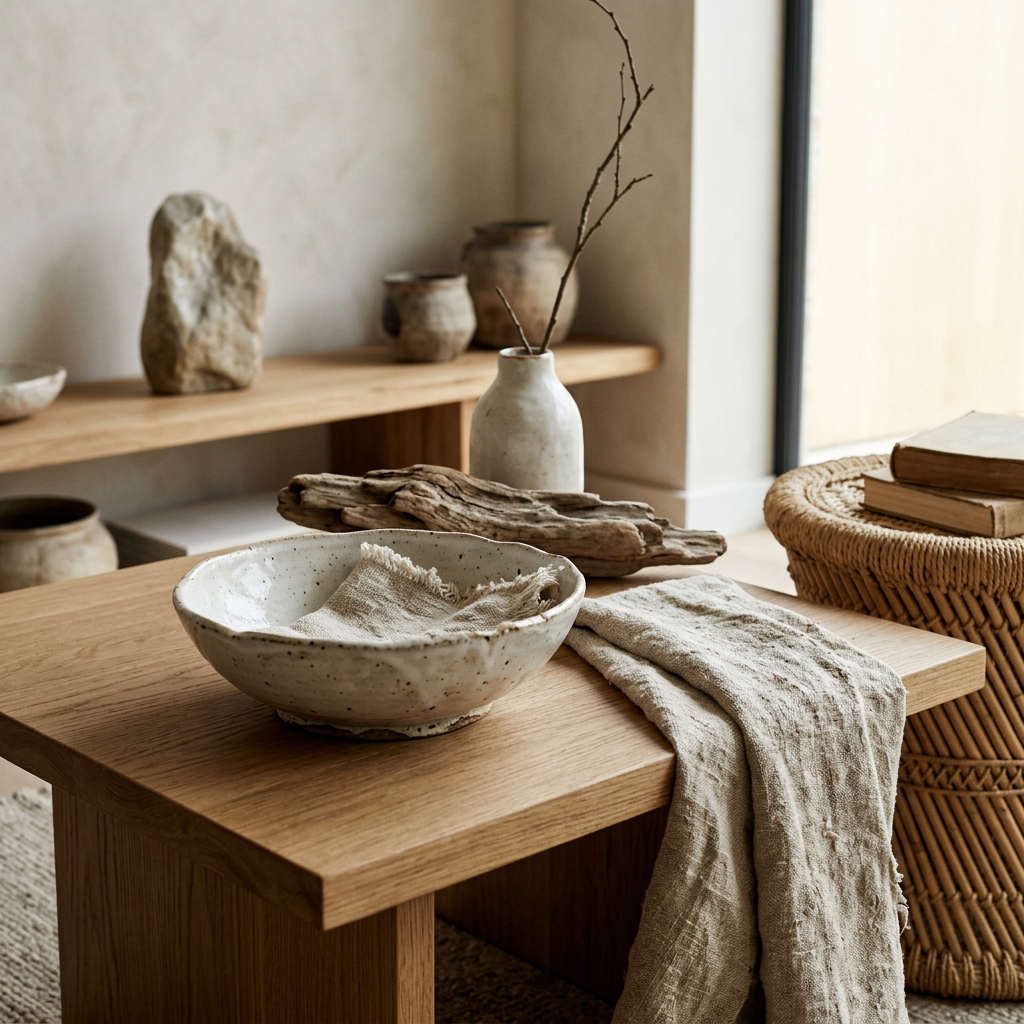
Wabi-sabi — the Japanese aesthetic philosophy that finds beauty in imperfection, incompleteness, and impermanence — is one half of Japandi's philosophical foundation. In practical terms, it means choosing objects that look handmade, found, or slightly irregular over those that are perfectly uniform.
A hand-thrown ceramic bowl with an uneven rim. A linen cushion with visible natural slub in the weave. A piece of driftwood used as a sculptural object. A ceramic vase with a glaze that varies across its surface. These objects introduce the quality of the natural world — which is never perfectly consistent — into an otherwise spare room.
This is what gives Japandi living rooms their warmth and humanity. Without the wabi-sabi element, the style risks becoming simply minimal — clean and considered but somehow lifeless. With it, the room feels like it contains things that matter, even when it contains very few things.
IDA designers who score highest in Japandi submissions consistently include at least one clearly handmade or found object as a counterpoint to the room's clean lines.
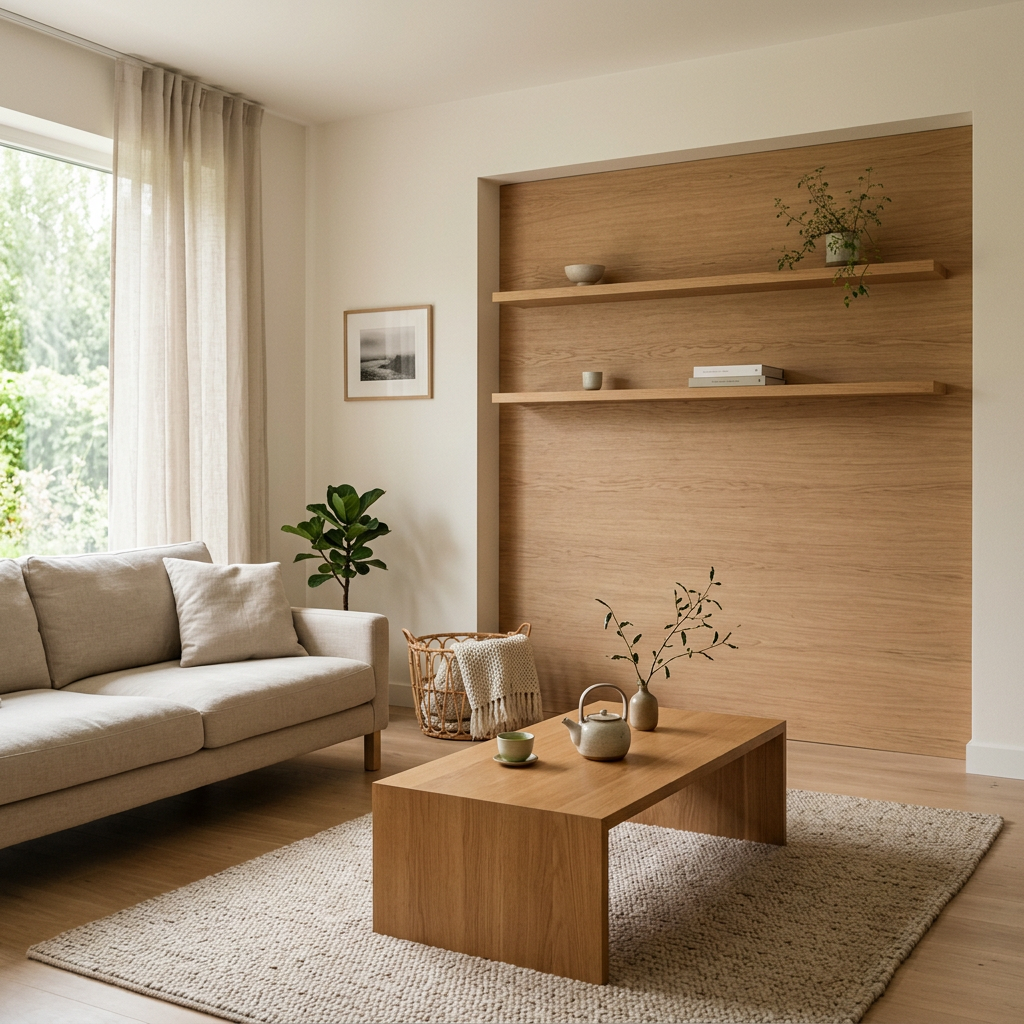
In a Japandi living room, wood is the primary source of warmth and the material that does the most visual work. The palette is quiet, the furniture is low and spare, the objects are few — and the wood is what prevents the room from feeling sterile.
The choice of wood species and finish is critical. Japandi favors lighter, warmer woods — natural oak, ash, light walnut — finished with oil or matte lacquer that allows the natural grain to show. High-gloss finishes are incompatible with the aesthetic. Very dark stained woods shift the room toward a different visual language.
The most effective Japandi living rooms use wood in one dominant application — a coffee table, a section of wall paneling, a floating shelf system — and let that single element provide all the warmth the room needs. Multiple competing wood elements in different tones or species create visual noise that undermines the calm the style is trying to achieve.
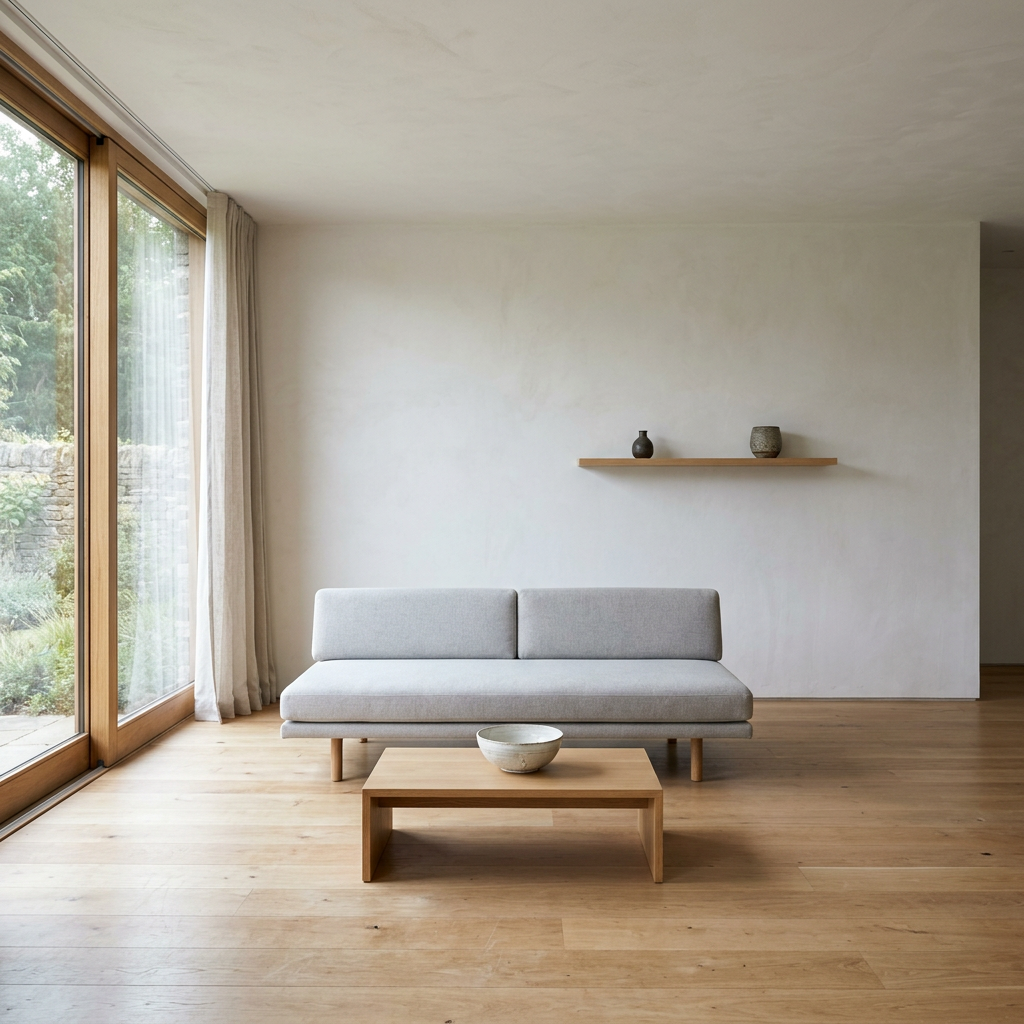
In Japandi design, what isn't there is as important as what is. Empty wall space, clear floors with visible wood grain, a coffee table with one object rather than five — the restraint in styling communicates confidence and intentionality.
This is the hardest part of Japandi for most people to maintain. The instinct when a room looks spare is to add something. In Japandi, the right response to a room that looks spare is usually to sit with it. The discomfort with emptiness is precisely what the style is training the eye to move past.
The practical approach: edit down to the minimum number of objects that make the room feel inhabited rather than empty, and then remove one more. What remains has a presence and clarity that a fully decorated room can never achieve. The IDA community votes reflect this — Japandi submissions with genuine negative space consistently outperform those that interpret the style as an excuse for restrained but still-full decoration.
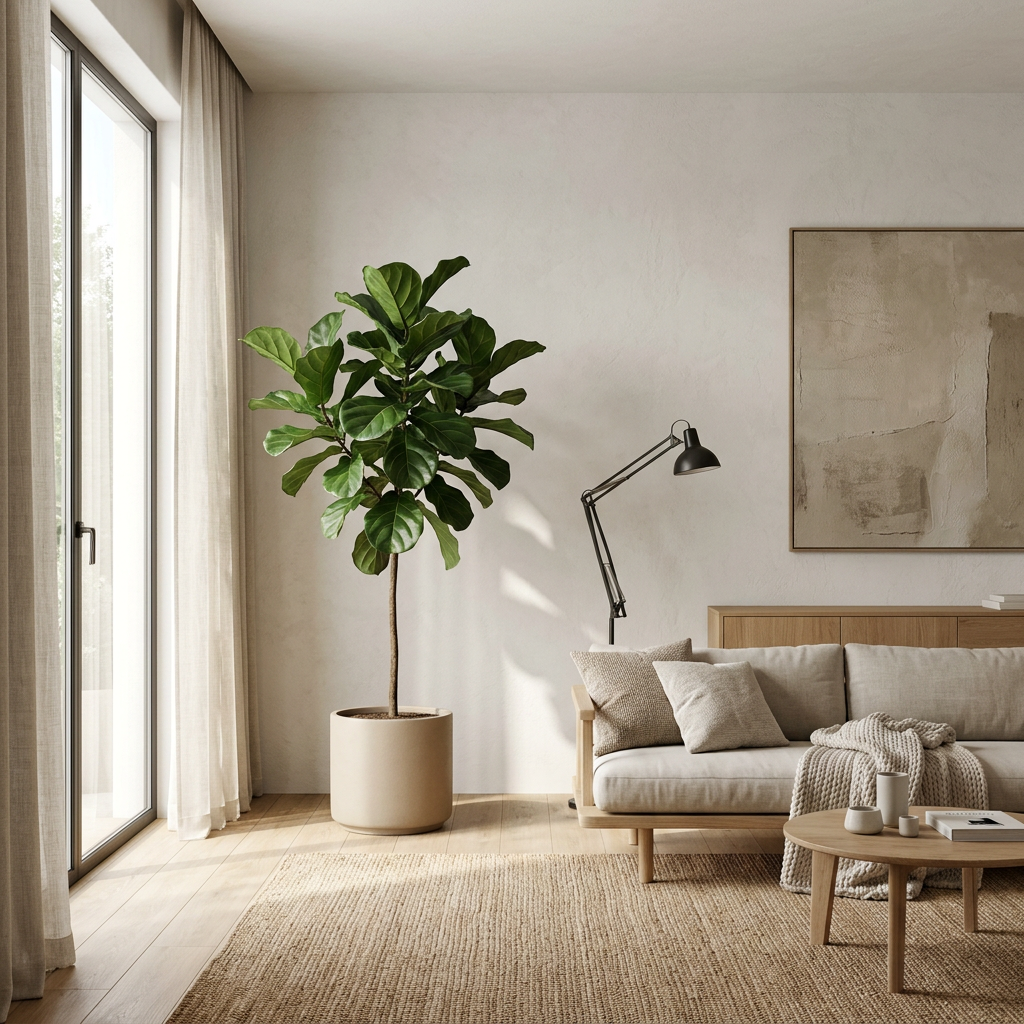
Both Japanese and Scandinavian design traditions have deep relationships with the natural world — but Japandi expresses this through restraint rather than abundance. One large, carefully chosen plant does more for a Japandi living room than a collection of small ones.
The logic is the same as for every other element in the style: one thing, chosen deliberately, given space to exist. A single large fiddle leaf fig in a simple matte ceramic pot. A snake plant with its strong vertical lines. A single bonsai on a low wooden stand. The plant becomes an object in the room — something with presence and intention — rather than decoration.
Multiple plants, particularly small ones grouped on shelves, shift the room away from Japandi and toward a different aesthetic. The biophilic impulse is correct; the restraint in its expression is what keeps the room in Japandi territory.
Japandi is a style in constant tension — between the spare and the warm, the handmade and the precise, the Japanese and the Scandinavian. Getting the balance right requires holding both sides of each tension simultaneously rather than resolving it in favor of one.
The living rooms that earn the strongest IDA community votes do exactly this. They're warm but not cozy in the conventional sense. Minimal but not empty. Natural but not rustic. The balance is unmistakable when it's achieved — and immediately recognizable when it isn't.
Every month, designers submit their best living room and interior projects on Interior Design Awards. The community votes, and the top 3 earn recognition and cash rewards.
→ Browse this month's living room submissions
→ Submit your Japandi design and compete
Interior Design Awards (IDA) is a platform where designers share room projects, the community votes monthly, and the top designers earn recognition and rewards. Based in the US, open to designers worldwide.