

Modern Kitchen Design Ideas: What's Actually Working in 2026
5 min read
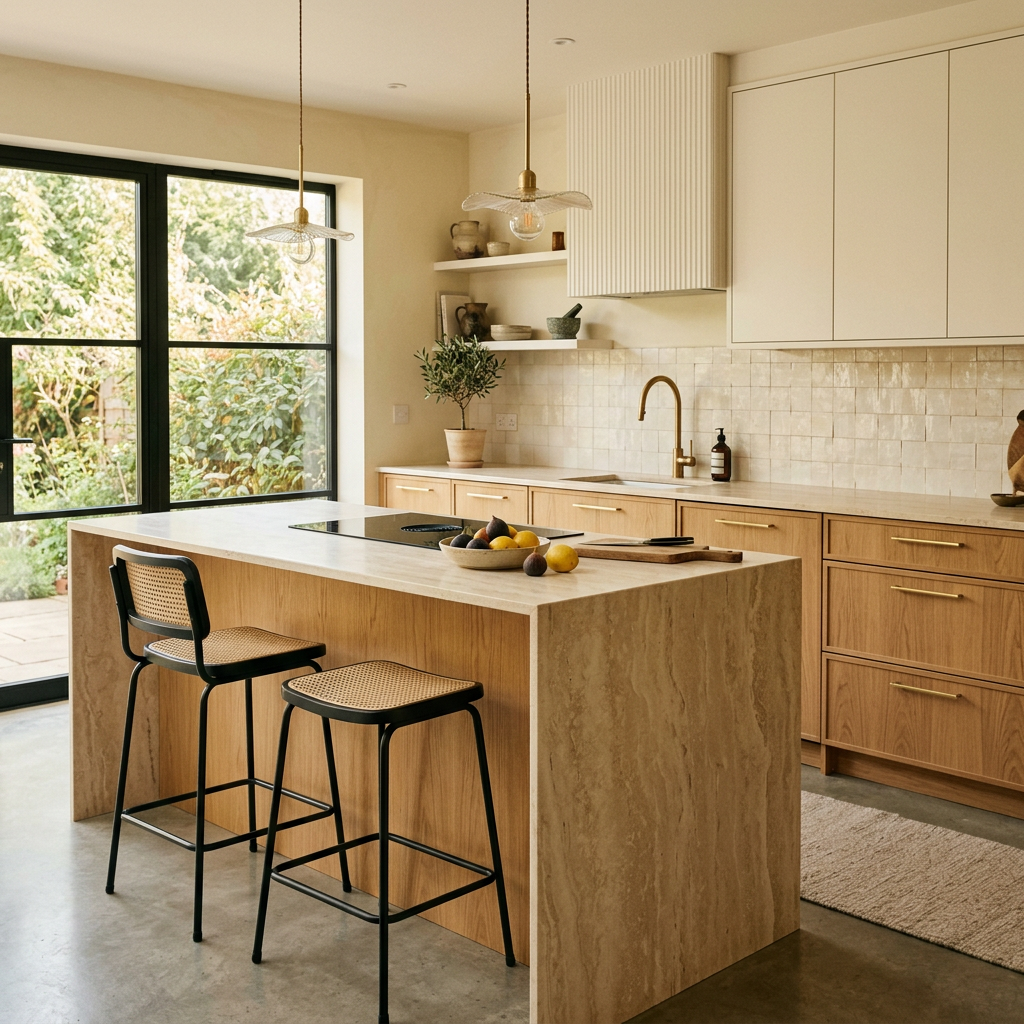
Modern kitchen design has shifted significantly in the past few years. The all-white kitchen with flat cabinet fronts and stainless steel appliances — the default "modern" kitchen of the early 2010s — has been largely replaced by something more considered, more material-rich, and more personal.
What's defined as modern in 2026 is warmer, more textural, and more deliberately human than its predecessors. It still values clean lines and functional clarity. But it's no longer allergic to warmth, color, or the kind of material depth that makes a kitchen feel like a room worth spending time in rather than a surface to clean.
At Interior Design Awards (IDA), kitchen submissions have become some of the most-voted in any category. Here's what the designs earning the strongest community response actually look like.
The most significant shift in modern kitchen design over the past three years is the rehabilitation of wood. After a decade of kitchens that treated natural materials as incompatible with modernity, warm wood cabinetry has returned as the dominant aesthetic — and it looks more contemporary now than the white kitchens it's replacing.
Light oak, ash, and warm walnut in flat-front or shaker profiles with matte or oiled finishes — not high gloss, not painted — create a warmth that white kitchens simply cannot achieve. Combined with a stone island countertop in warm beige or cream, and brass or bronze hardware, the result is a kitchen that photographs beautifully and feels genuinely pleasant to be in.
The IDA community responds to this shift clearly. Wood-toned kitchen submissions consistently outscore white kitchen submissions when everything else is equal — not because white kitchens are bad, but because a well-executed warm wood kitchen has a sensory richness that the community finds more compelling.
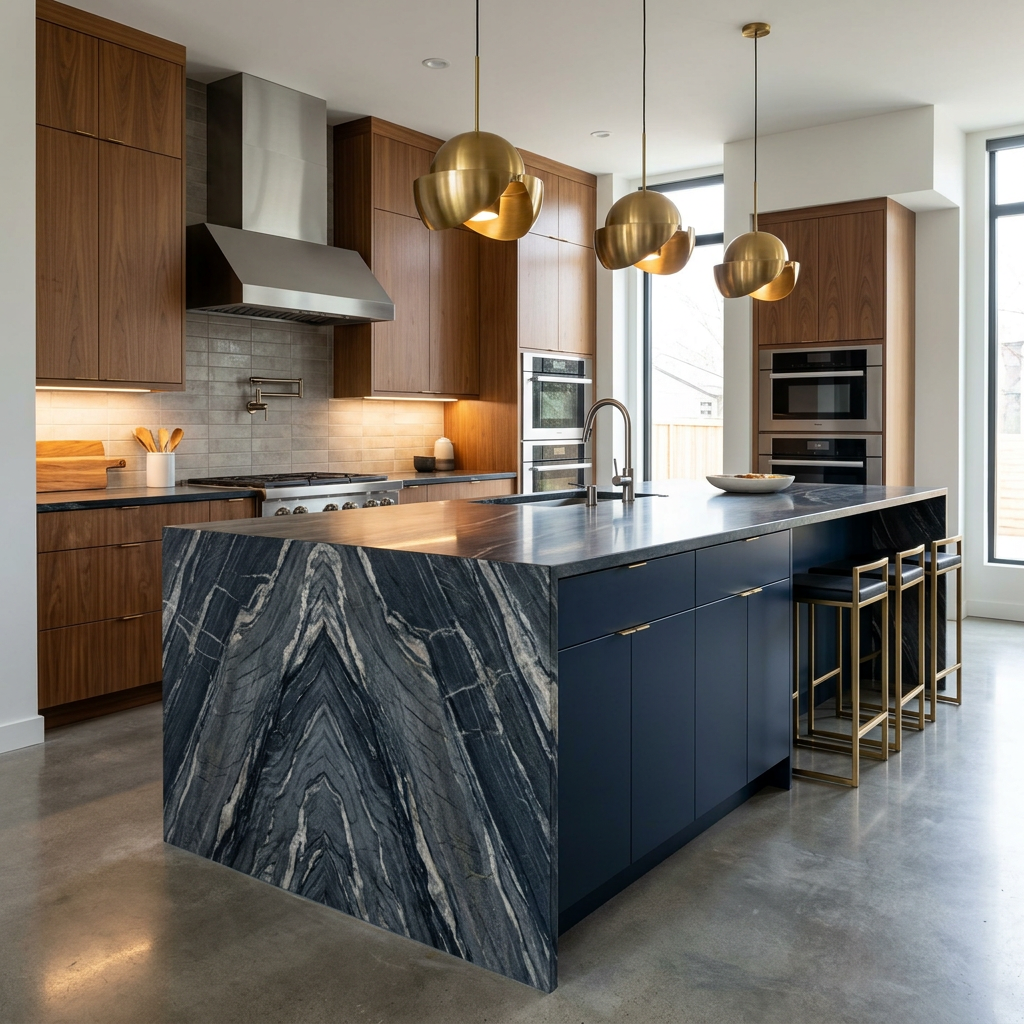
In modern kitchen design, the island has evolved from a functional work surface into the room's primary design statement — and the kitchens earning the strongest IDA community votes treat it accordingly.
A waterfall countertop — where the stone continues down the side panels of the island to the floor — elevates a functional piece of furniture to something architectural. Bookmatched stone, where two adjacent slabs mirror each other in their veining pattern, turns the island surface into a feature that anchors the entire room.
Contrasting the island cabinet color or material with the perimeter cabinetry is the design move that most clearly signals a considered modern kitchen rather than a standard one. Dark forest green or navy island against warm wood perimeter cabinetry. Black island against white or cream surrounding cabinets. The contrast creates visual hierarchy — the island becomes the hero, everything else supports it.
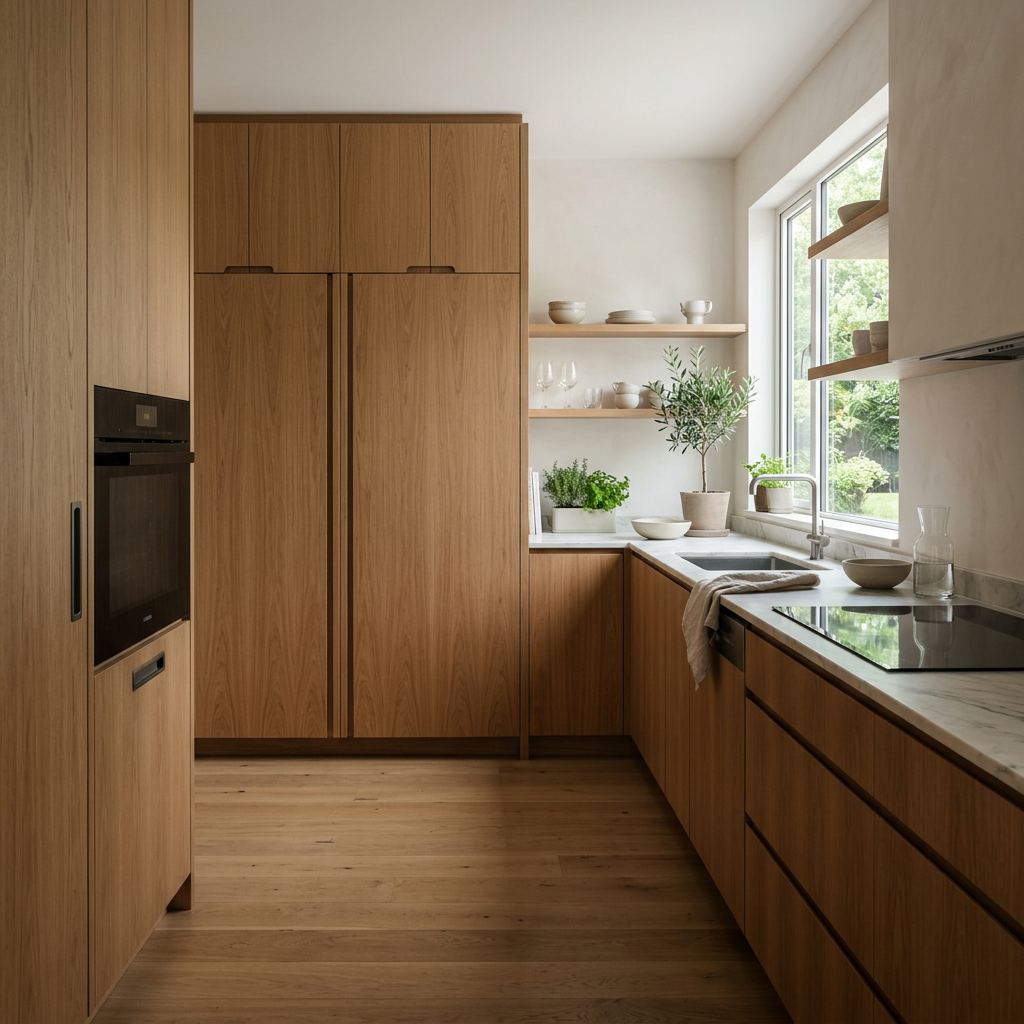
The most architecturally resolved modern kitchens treat appliances as something to conceal rather than display. Integrated refrigerators behind cabinet-height panels that match the surrounding cabinetry. Dishwasher panels that continue the line of the lower cabinets. Built-in ovens set into tall cabinet runs with flush handles.
When every appliance is concealed behind matching panels, the kitchen reads as continuous architecture rather than a collection of equipment with some storage around it. The lines are unbroken. The room has the visual calm of a library or a panelled study — organized, considered, complete.
This is a significant investment — integrated appliances cost more than freestanding ones, and the cabinetry to conceal them requires precise planning. But the visual payoff is immediate and total. IDA kitchen submissions with full appliance integration consistently earn higher votes than those where stainless steel breaks the cabinet line, regardless of the quality of everything else.
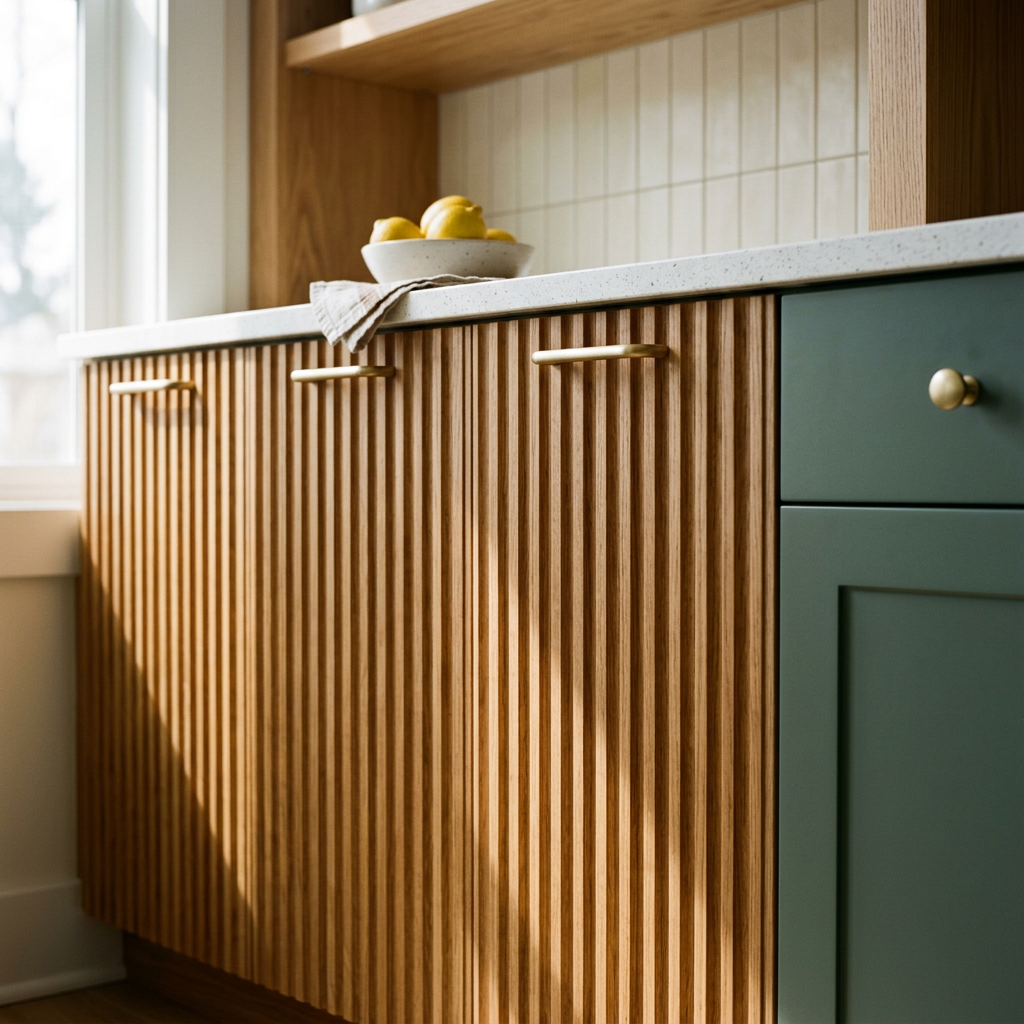
One of the defining cabinet trends in modern kitchen design since 2023 has been the reintroduction of texture — specifically fluted or reeded fronts, where vertical channels cut into the cabinet surface create shadow lines and tactile depth.
Fluted cabinetry solves a persistent problem with flat-front modern kitchens: they can look resolved but feel flat. The flat front is clean and contemporary, but it offers nothing for the eye to engage with at close range. Fluted panels add that texture without introducing the visual complexity of a traditional raised-panel door.
Used selectively — on the island base, on a pantry cabinet, on lower cabinets with flat-front uppers — fluted detailing adds the kind of material interest that makes a kitchen feel designed rather than specified. It photographs particularly well in directional light, which is one reason it has become a favorite in IDA kitchen submissions.
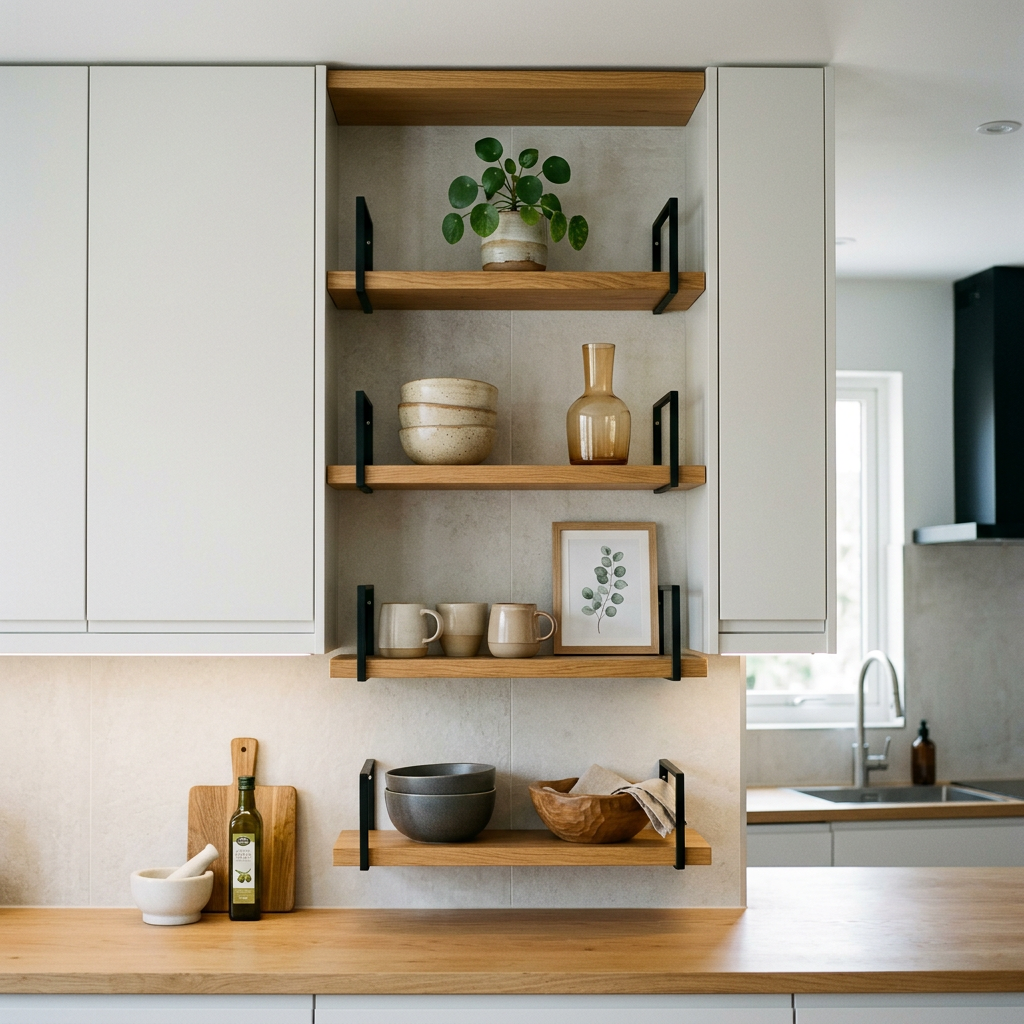
Open shelving in kitchens has been controversial for good reason: in most kitchens, open shelving means visible clutter. The dishes, the mismatched glasses, the bottles of oil — open shelving makes all of it public, and the result is a kitchen that looks lived-in in the wrong way.
The kitchens that make open shelving work treat it as a gallery rather than storage. One section of open shelving between closed upper cabinets, styled with three to five objects maximum per shelf — a stack of matching ceramic bowls, one piece of good glassware, one plant, generous empty space — creates a visual moment without the clutter of full open shelving.
The key distinction: closed cabinets for storage, open shelving for display. The objects on the open shelves are not the things you use daily. They're the things that look good being seen.
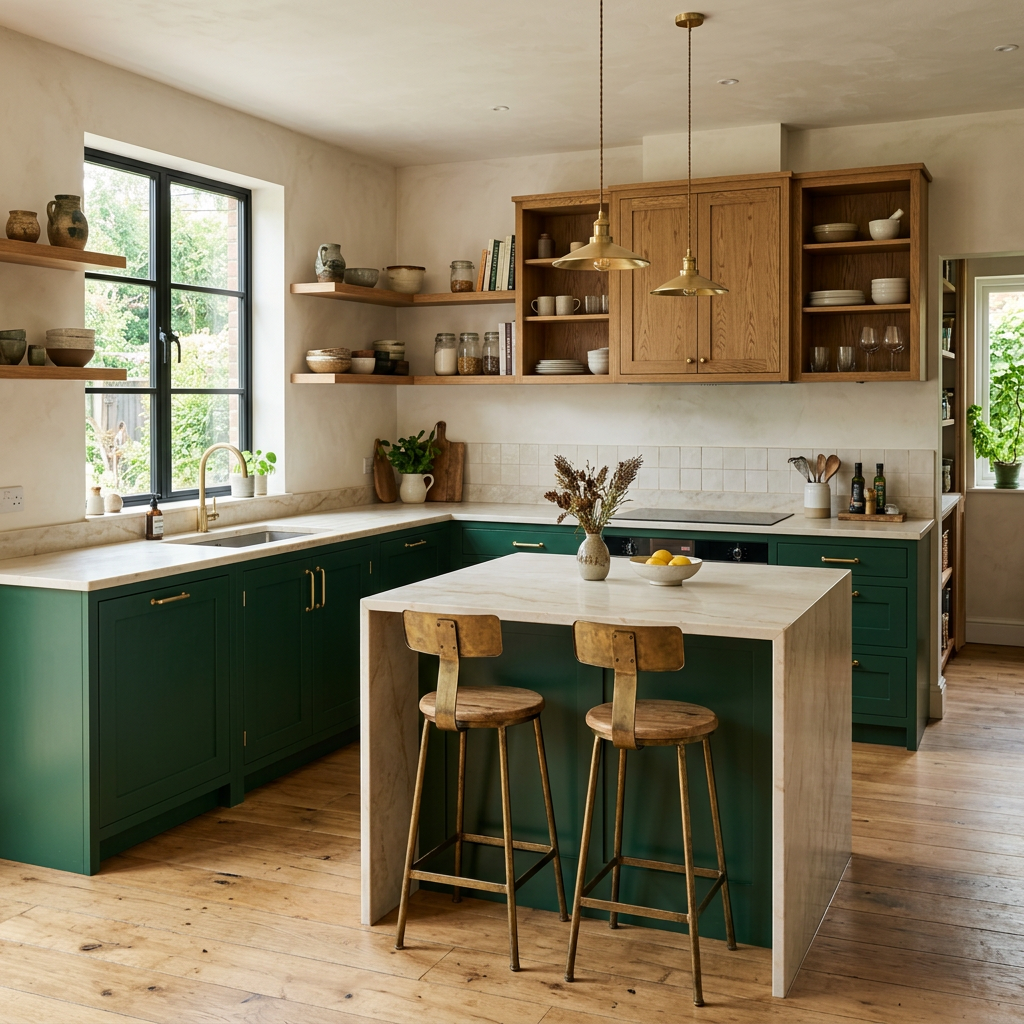
Modern kitchen design in 2026 has fully embraced color — not the cautious color of sage green islands and dusty blue accents that characterized 2020-2022, but something more committed and confident.
Deep forest green, rich navy, warm terracotta, charcoal black — these colors applied to a full run of lower cabinets or an island create kitchens that are immediately memorable. The move that makes this work: using one strong color and balancing it with a warm neutral for the remainder of the cabinetry.
Deep green lowers against warm oak or cream uppers. Navy island against white perimeter. The contrast is the design. It requires confidence to commit to a strong cabinet color in a room that costs as much as a kitchen to build, but the kitchens in the IDA community that have made this commitment consistently earn the strongest votes and the most sustained engagement.
The modern kitchens that are earning the most attention and the strongest community votes in IDA submissions share a single quality: they feel designed for people who love cooking, eating, and spending time in a kitchen — not designed to look impressive in a real estate listing.
Warm materials. Considered storage. A statement island. One strong color used with confidence. The technology concealed. The objects on display chosen deliberately.
That's what modern kitchen design looks like when it's done right in 2026.
Every month, designers submit their best kitchen and interior projects on Interior Design Awards. The community votes, and the top 3 earn recognition and cash rewards.
→ Browse this month's kitchen submissions
→ Submit your kitchen design and compete
Interior Design Awards (IDA) is a platform where designers share room projects, the community votes monthly, and the top designers earn recognition and rewards. Based in the US, open to designers worldwide.