
Spa Bathroom Design Ideas: How to Create a Real Retreat at Home
5 min read
A spa bathroom and an expensive bathroom are not the same thing. The most effective spa-inspired bathrooms aren't defined by how much was spent — they're defined by how deliberately every sensory experience was designed.
Temperature. Sound. Light. Texture. Scent. A genuine spa environment engages all five senses and resolves them in favor of calm. Most bathrooms address one or two of these at most — usually visual, sometimes tactile. The bathrooms that earn the highest votes in Interior Design Awards (IDA) spa and luxury categories do something different: they treat the entire sensory experience as a design problem.
Here's what that looks like in practice.
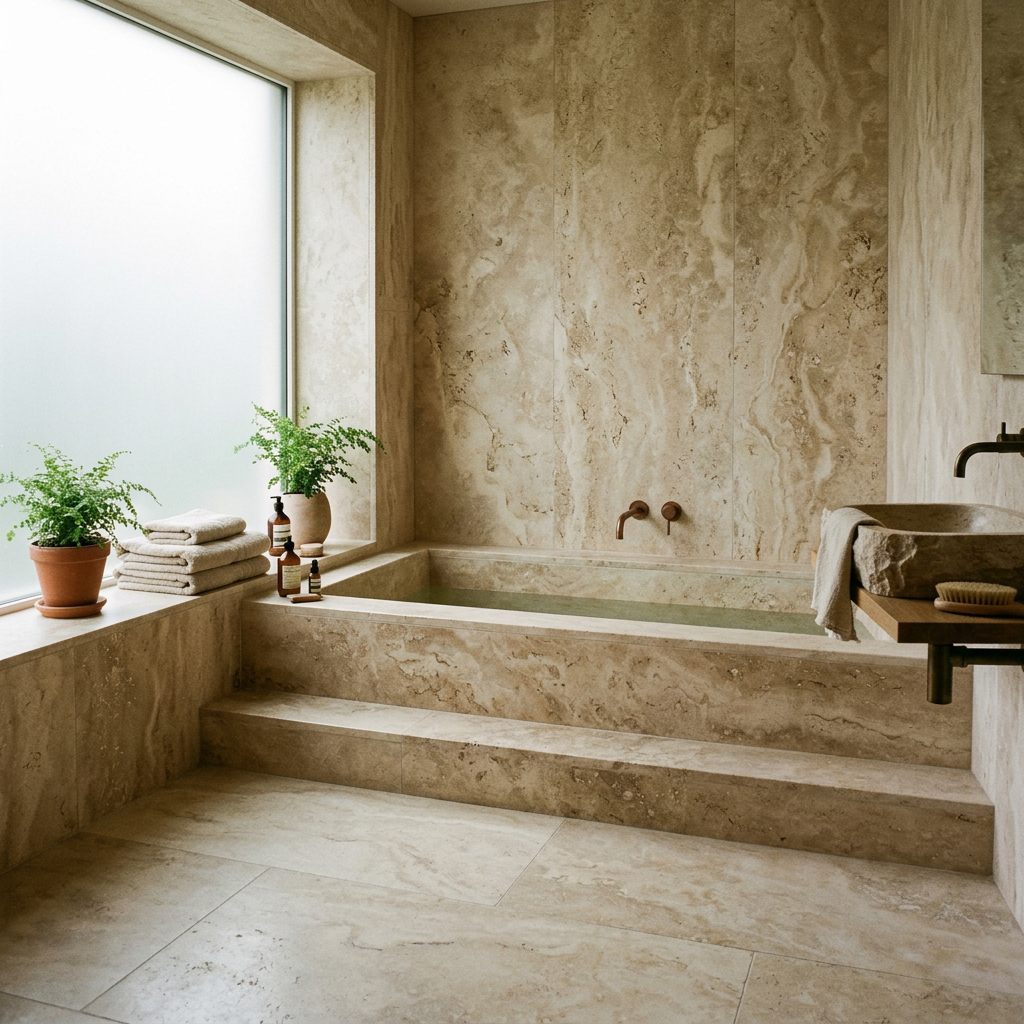
Natural stone is the material of genuine spa environments, and the reason is sensory rather than aesthetic. Stone is cool to the touch, has a slight sound-absorbing quality, and reads as ancient and permanent in a way no manufactured surface can replicate. It changes how a bathroom feels before you've noticed it consciously.
The most effective spa bathrooms use natural stone as a continuous surface — the same material on floor, walls, and tub surround — in a honed or matte finish rather than polished. Polished stone reflects light and looks impressive; honed stone absorbs light and feels calm. That distinction matters when the goal is a retreat rather than a showroom.
Large format slabs with minimal grout lines extend the spa quality across the full surface. The fewer the interruptions — grout lines, material changes, borders — the more the room reads as a single enveloping environment rather than a decorated box.
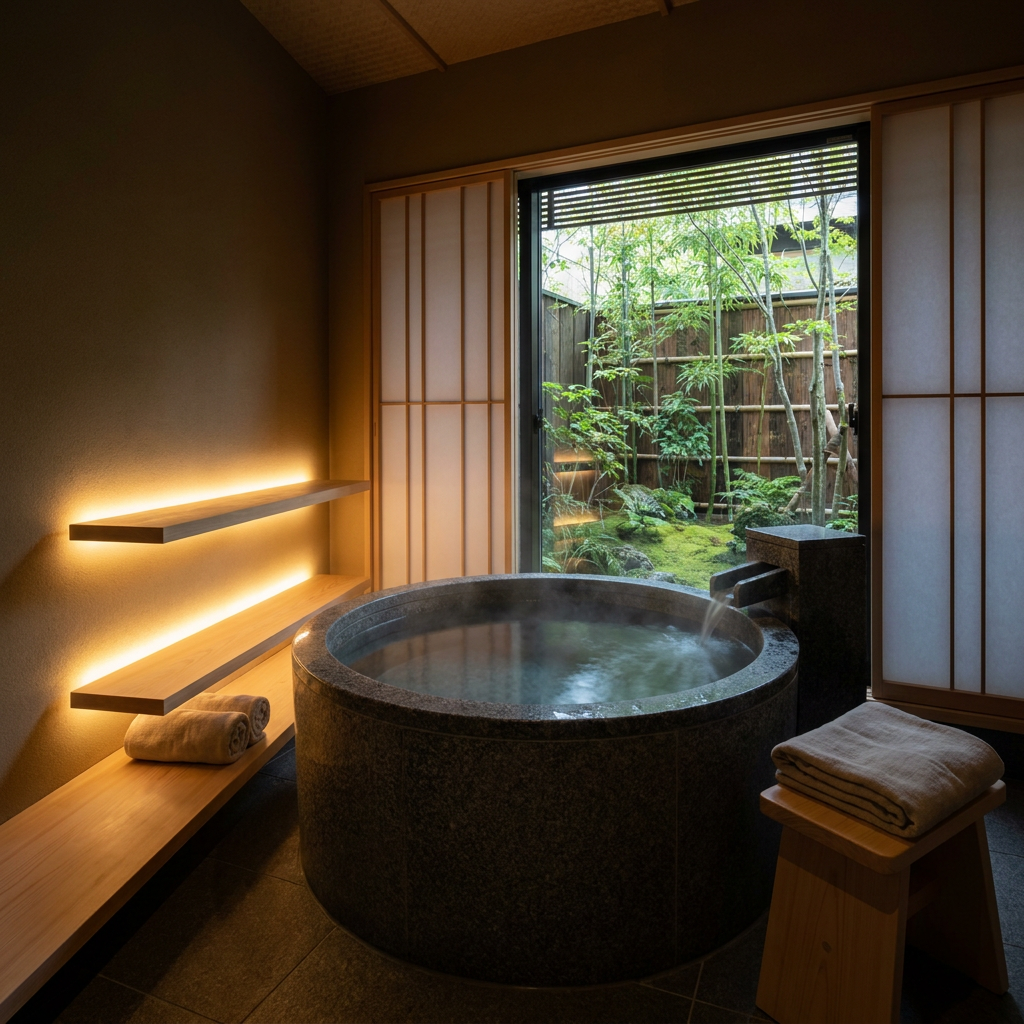
The defining fixture of a spa bathroom is a deep soaking tub — not a standard bathtub with a few inches of water capacity, but a vessel designed for full immersion, where the water level reaches the shoulders and the experience of bathing becomes genuinely restorative.
The Japanese ofuro is the archetype: deeper than wide, designed for sitting upright, made from stone or hinoki cypress wood, with a quality that feels ritualistic rather than functional. Contemporary versions in stone, concrete, and carved natural materials bring this sensibility into a Western bathroom context.
Placement matters as much as the tub itself. A spa soaking tub needs space around it — clear floor on all sides, ideally a view toward nature or a window with soft light. A tub positioned with consideration for the experience of lying in it, rather than simply where it fits, is the difference between a bathroom with a nice tub and a bathroom that feels like a spa.
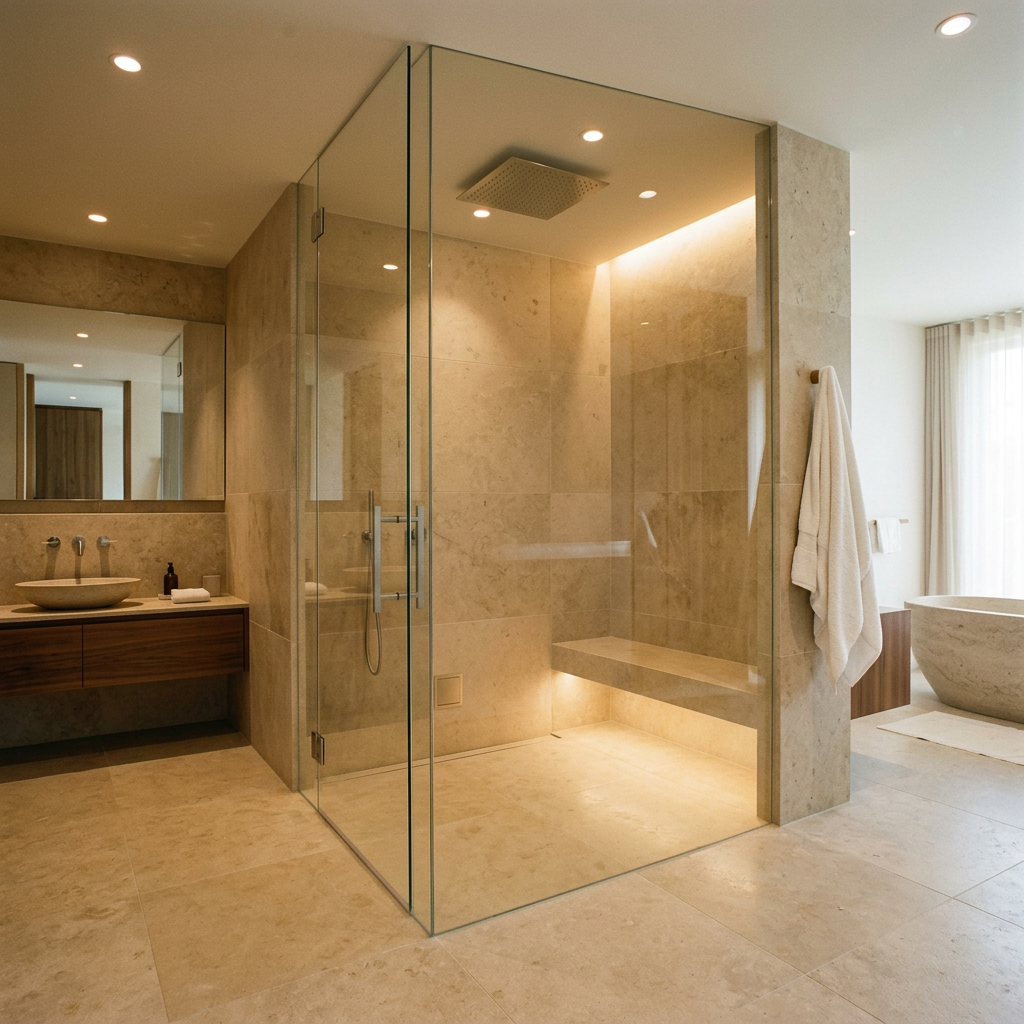
A steam shower is the single functional upgrade that most transforms a bathroom into a spa environment — the sensation of sitting in warm, herb-scented steam for ten minutes before work is categorically different from a standard shower, and it changes how the bathroom is experienced daily rather than occasionally.
In a spa bathroom, the steam shower should have minimal visual presence. The same stone that covers the bathroom walls continues into the shower. The glass is frameless. The steam generator is concealed in a cabinet or wall cavity, with only a small outlet visible. The controls are flush-mounted. A ceiling-mounted rain head is the only fixture that announces itself.
The effect: the shower reads as a continuation of the room, not as a separate enclosure. The transition from the bathroom into the shower happens at the glass threshold only, not through a change in material or visual character.
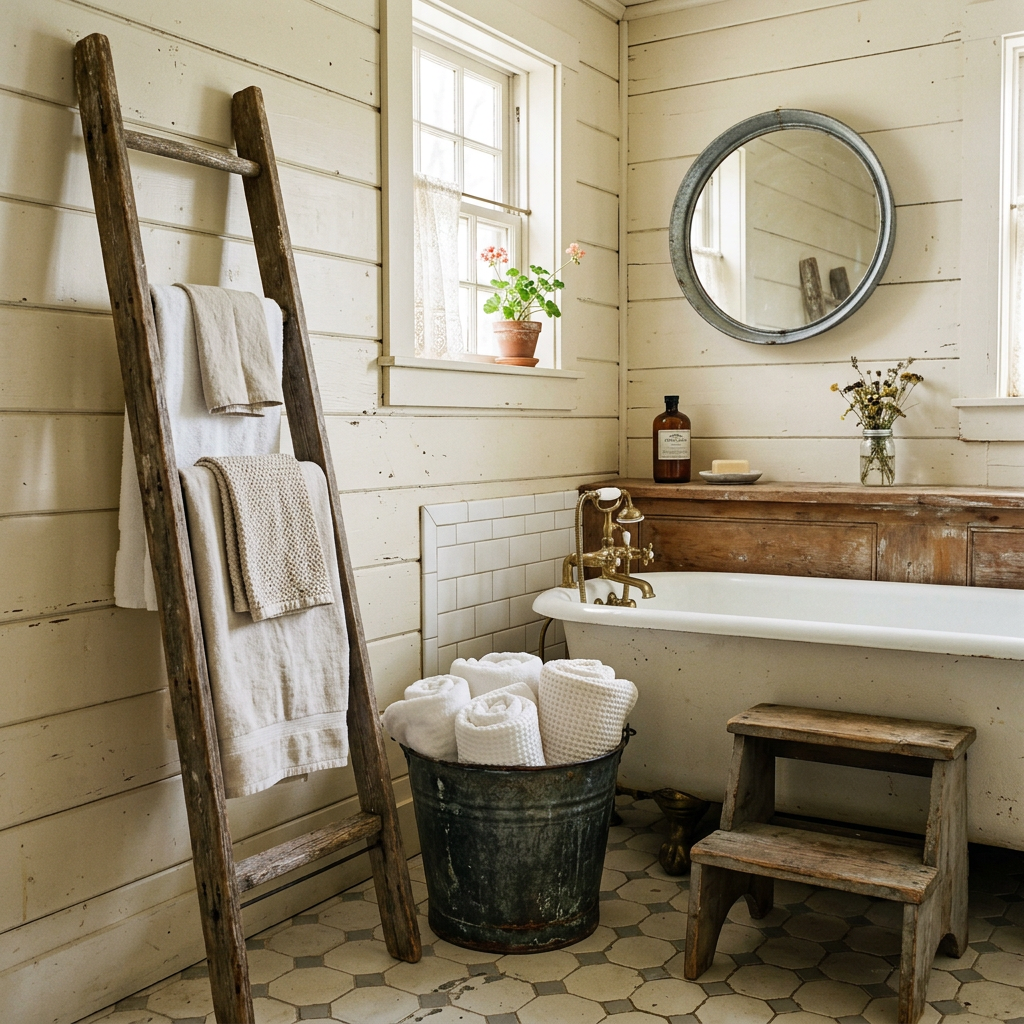
Genuine spa environments are warm — not just visually, but physically. Stepping onto a heated stone floor after a shower or a soak is a sensory experience that no amount of visual design can replicate. It's the kind of detail that isn't visible in photographs but is felt every single day.
Radiant underfloor heating beneath natural stone is the most impactful comfort upgrade in a spa bathroom — more impactful than any visual upgrade of equivalent cost. A heated towel rail in a considered metal finish keeps towels at body temperature and adds a sculptural element to the wall. A small wooden shelf near the shower with a teak sauna bucket introduces the scent and tactile quality of wood into a stone-dominant room.
These functional warmth elements — the ones that engage the body rather than the eye — are what IDA community members and judges identify most reliably as the markers of a bathroom that genuinely functions as a spa, rather than one that looks like one.
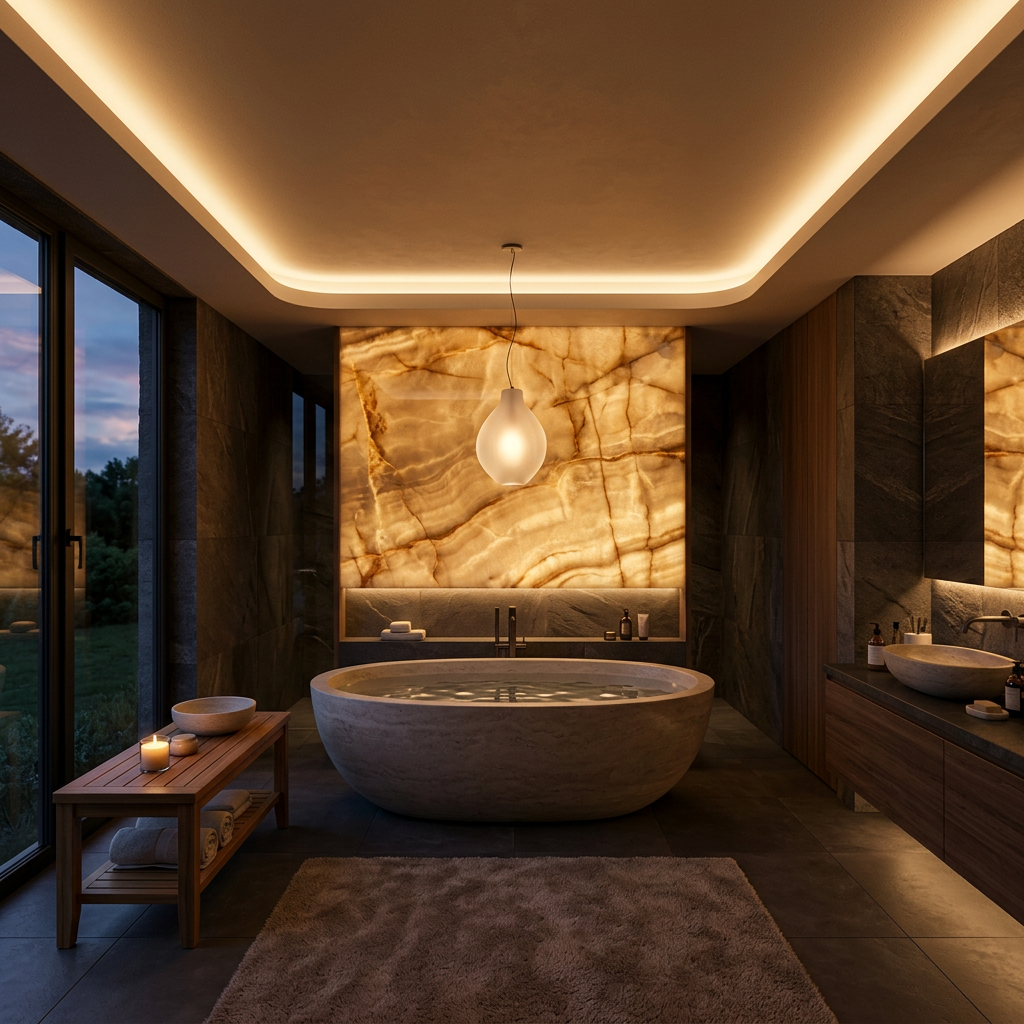
Spa lighting is indirect lighting. In every genuine spa environment, the source of light is hidden — it emerges from behind stone panels, from ceiling coves, from beneath floating elements — and the effect is a room that seems to glow rather than one that is illuminated.
This is achieved through architectural integration: cove profiles built into the ceiling before plastering, recessed channels behind stone panels, LED strips beneath floating vanities. None of these are additions after the fact — they're structural decisions made during design and construction.
The practical layering for a spa bathroom: continuous warm cove lighting around the ceiling perimeter as the ambient source, one or two backlit stone or glass panels as accent sources, and a single designed pendant above the tub as the focal point. All on independent dimmers. The ability to reduce every light source to near-darkness while keeping the backlit stone panel at full brightness creates an atmosphere that a spa would charge for.
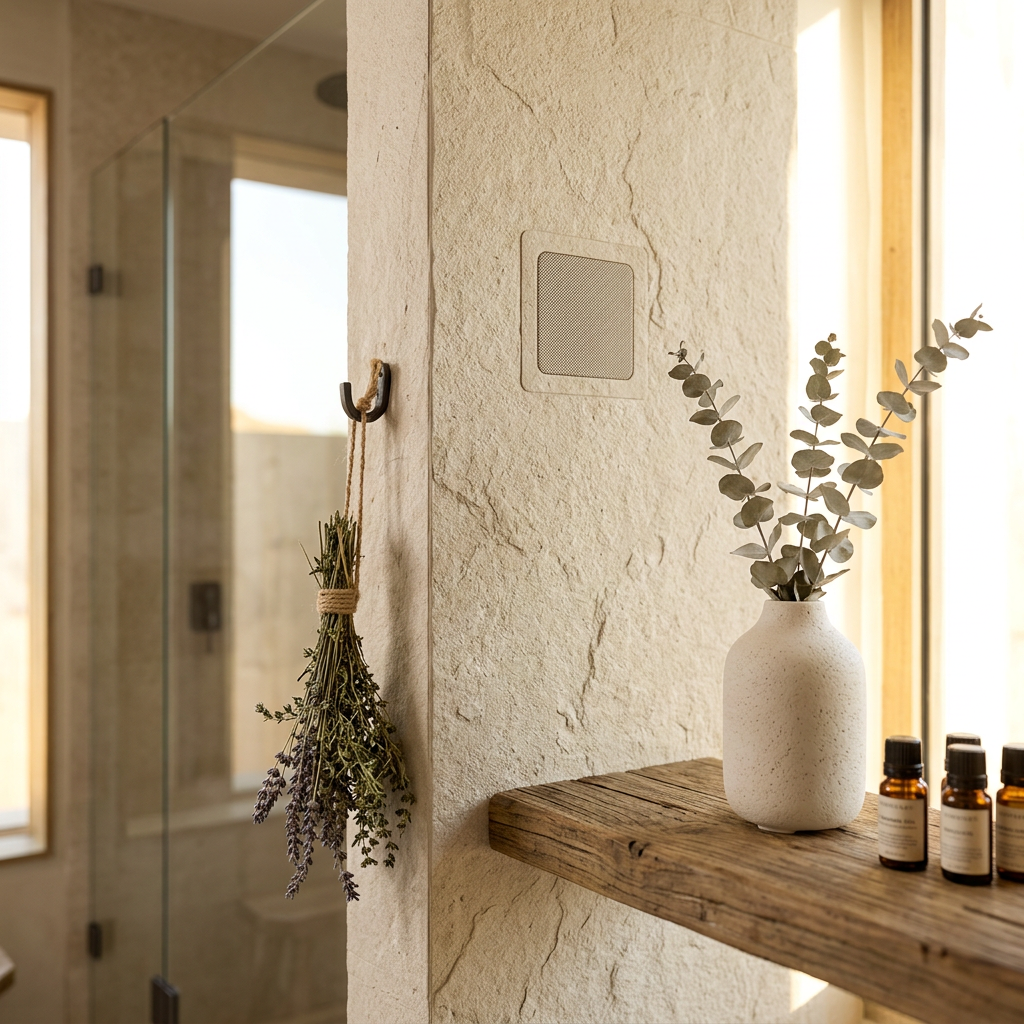
The two design elements most overlooked in spa bathrooms are the ones you can't see: scent and sound. Every genuine spa environment manages both — and the bathrooms that feel most deeply like spas do too.
For sound: a recessed waterproof speaker, flush-mounted in the ceiling or wall, allows music or ambient sound without a visible device. The absence of a Bluetooth speaker sitting on a shelf — however good the speaker — is the difference between a designed acoustic environment and a bathroom with music playing in it.
For scent: a steam shower with an aromatherapy function that introduces essential oils into the steam is the most immersive option. A ceramic diffuser on a teak shelf, eucalyptus hung near the shower so steam releases its scent, or hinoki cypress wood elements that release fragrance with warmth — these introduce scent as a designed element rather than an afterthought.
The IDA community can't smell or hear a submitted bathroom — but experienced designers and regular voters recognize the evidence of full sensory design in how a space is described and how it's photographed. The most complete spa bathroom submissions account for all of it.
A spa bathroom requires a commitment to the full sensory experience — not just the visual one. Stone that is cool and permanent. Water that is deep and warm. Steam that is fragrant. Light that is sourceless and warm. Sound that disappears into the room. Floor that is warm underfoot.
When these elements come together in a bathroom designed from first principles rather than assembled from a wishlist, the result is a room that genuinely changes how its occupants feel each day. That is what IDA's most celebrated bathroom submissions demonstrate — and what the community votes for most consistently.
Every month, designers submit their best bathroom projects on Interior Design Awards. The community votes, and the top 3 earn recognition and cash rewards.
→ Browse this month's luxury bathroom submissions
→ Submit your spa bathroom design and compete
Interior Design Awards (IDA) is a platform where designers share room projects, the community votes monthly, and the top designers earn recognition and rewards. Based in the US, open to designers worldwide.